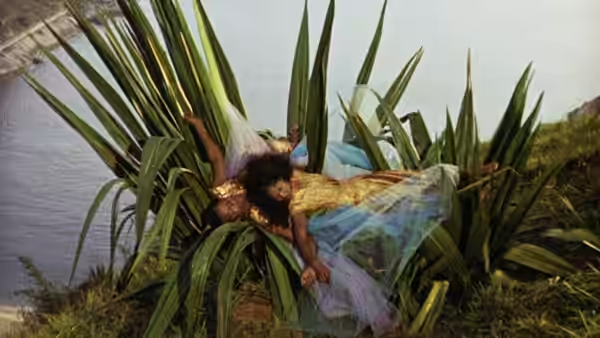
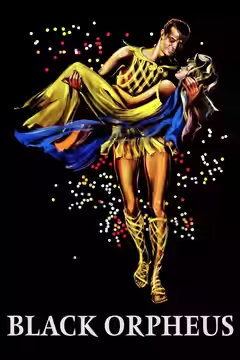
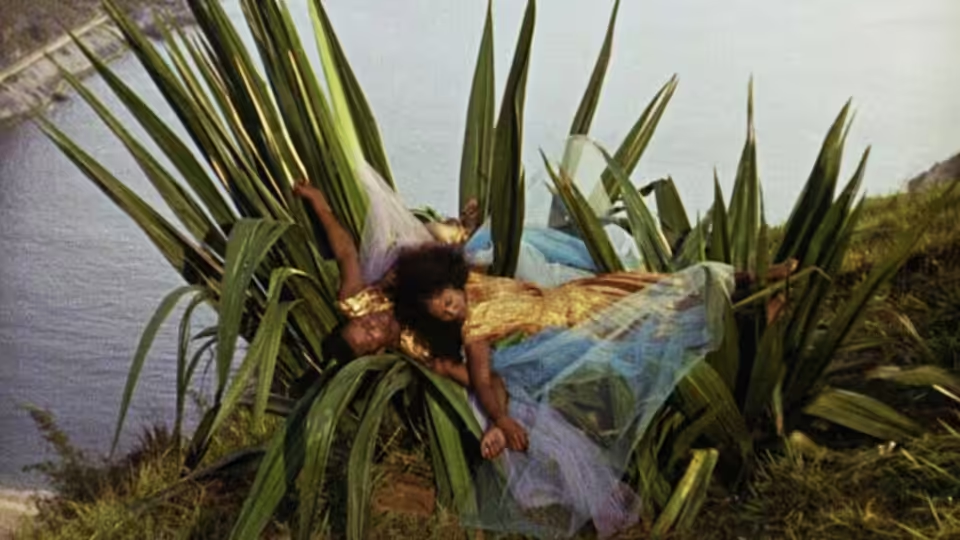
A man supports a woman in a blue dress among broad-leaved plants beside the water
Film review

Black Orpheus

1959 · Directed by Marcel Camus · 1h 40m

In a sentenceA romance in which the musicians do most of the courting

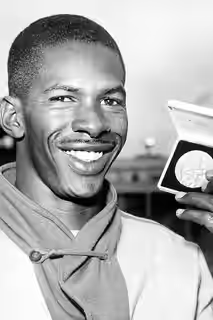
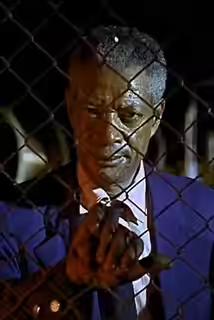
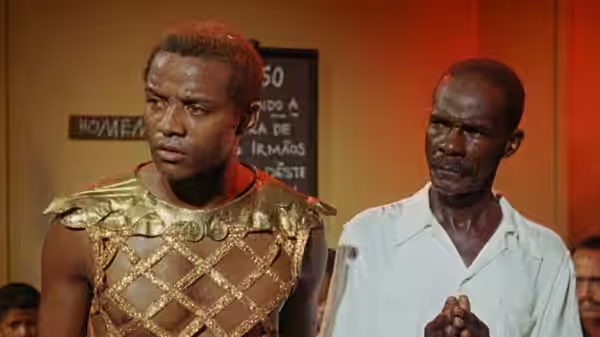
During the Carnival celebrations, music and dancing surround Orfeo (Breno Mello) and Eurydice (Marpessa Dawn), the lovers in a retelling of the Orpheus myth. Their romance plays out among the crowds, with Mira (Lourdes de Oliveira) and Serafina (Léa Garcia) sharing the city. Death (Adhemar Ferreira da Silva) also figures in the story. As the celebrations continue, the colour and movement of the daylight scenes give way to the more threatening city streets after night falls, bringing danger into the festivities.

Plays from YouTube when you press play; nothing loads from them until then.

Fi1m review

Marcel Camus’s musical romance is worth seeing for its dancing, colour and music. The lovers are less persuasive, and its prettified city needs questioning, but the pleasure of the Carnival scenes survives both objections.

Black Orpheus is worth seeing for the music and the Carnival dancing, though the love story is thin. Marcel Camus retells the Orpheus myth and makes the city’s celebrations the chief attraction. The lovers have to compete with so much colour and movement that we often find our attention wandering from them. The film gives us good reason to stay with the dancing.

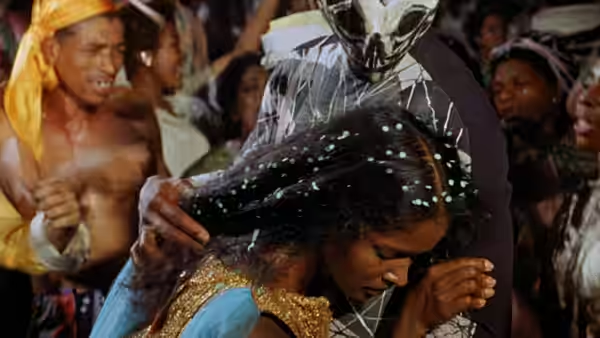
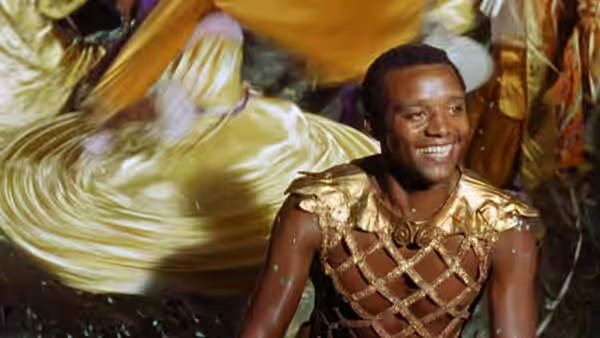
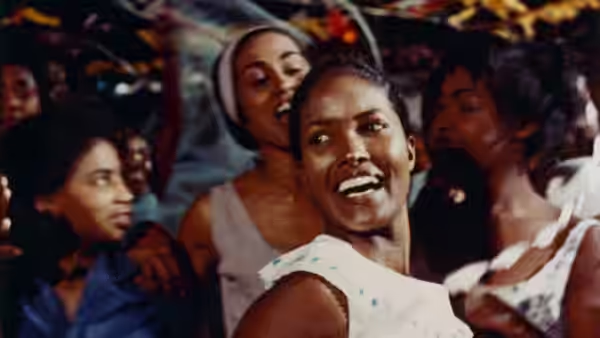
Jean Bourgoin photographs the daytime Carnival in strong colours that keep our attention on the dancers and the crowds. The pleasure comes from watching so much movement without needing every image to advance the plot. At night, the festive setting becomes threatening, and that change gives the mythical dangers a convincing setting. We found ourselves smiling through the Carnival dancing, caught up in the music and the pleasure of so many bodies moving together.

The music by Antônio Carlos Jobim and Luiz Bonfá supplies much of the feeling that the dialogue struggles to establish. Its melodies give the romance a tenderness we can hear more readily than we can find in the writing. Andrée Feix’s editing is most satisfying when it follows the celebration and lets the dancing hold our attention. Following the dancers may test anyone waiting for the story to hurry up, but cutting them short would cost the film much of its pleasure.

Marpessa Dawn helps the romance by giving Eurydice an appealing directness. Her presence makes the emotion credible even when Jacques Viot’s screenplay has done little to prepare it. Breno Mello is likeable as Orfeo, but the couple remain too dependent on our knowing what their names are meant to signify. We need more than recognition to care deeply about them. As a romance, this is frustratingly short of the small, particular things that make two people seem necessary to each other.

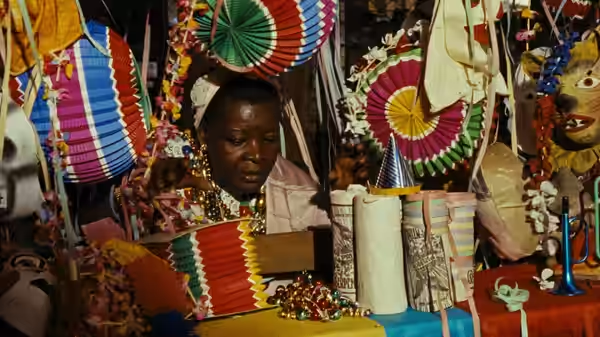
Pierre Guffroy’s production design and Isabel Pons’s costumes contribute to the Carnival’s abundance of colour. There is pleasure in simply looking, and nothing wrong with that until the film seems to ask us to accept prettiness as a sufficient account of a city. The place can seem arranged for our enjoyment, with too little sense of people having lives beyond the festivities. Even allowing for a mythical story and a Carnival setting, that narrowness is difficult to ignore.

Still, finding the city too picturesque need not mean dismissing everything the film does well. A musical romance deserves some freedom to let music carry its feelings, though here the writing asks for rather more help than it should. The Carnival scenes offer enough music, movement and human company to make that weakness bearable. At 100 minutes, it is an evening we would recommend to anyone willing to let dancing take precedence over dramatic detail. Do not mistake the celebration for the whole city.

Critical consensus AI synthesised

68
Positive
4
Mixed
3
Negative
1

The reviews lean towards admiration, with praise clustering around the music, colour and Carnival imagery rather than the storytelling. The more enthusiastic critics find the retelling of the Orpheus myth persuasive in its mixture of everyday life and fantasy, carried by bossa nova, dance and Rio’s scenery. The cinematography draws praise for its contrast between daylight celebration and nighttime menace. Variety also singles out Marpessa Dawn, finding that the cast’s fresh performances help a somewhat cerebral film.

The spread is wide: reservations range from idealised cultural tourism to doubts about whether the story has much force. Even some admirers acknowledge concerns about stereotyping. The Guardian offers the clearest dissent, finding the narrative weak and the film short of resonance beside Cocteau’s Orphée. The central divide is between critics carried along by the music and images and those who find the drama insufficient.

The AV Club
15 September 2010 · Keith Phipps
85*

Phipps praises the film as a brilliant, intoxicating retelling of the Orpheus myth. He singles out the bossa nova, Rio’s scenery, and the film’s vibrant blend of reality and myth, while noting its idealized cultural tourism.

Read the full review →
Empire
1 January 2000 · David Parkinson
80*

Parkinson calls the film an accomplished, eye-and-ear-pleasing musical melodrama. He singles out the cinematography’s contrast between the Carnival’s daylight vibrancy and the menace of its nighttime scenes.

Read the full review →
Slant Magazine
18 August 2010 · ★★★★ · Glenn Heath Jr.
80

The review celebrates the film as a rousing, visually rich interpretation of the Orpheus myth. It especially praises the vivid Carnival imagery and the way music, color, and dance turn communal celebration into a meditation on love and tragedy.

Read the full review →
The New York Times
22 December 1959 · Bosley Crowther
65*

The page content is inaccessible, so the critic’s verdict cannot be verified. I can’t reliably identify what the review singles out for praise or complaint.

Read the full review →
Time Out
1 November 2005 · TJ
64*

The available description suggests the critic sees some datedness in the film. The page text does not reveal what the critic praises or the full verdict.

Read the full review →
Variety
31 December 1958 · Variety Staff
60*

The review finds the film somewhat cerebral but says the cast’s fresh performances help it. It particularly praises Marpessa Dawn’s playing and the excellent color.

Read the full review →

Straight answers AI written, from our review

Is Black Orpheus worth watching?
Black Orpheus is worth watching for its music, colour and Carnival dancing, and we score it 78 out of 100. We recommend it to anyone happy to let the dancing take precedence over dramatic detail: the lovers are less persuasive than the celebrations around them, and the prettified city gives too little sense of life beyond the festivities.
How long is Black Orpheus, and what is it rated?
Black Orpheus runs 1h 40m. It is a drama and romance film.
Where can I watch Black Orpheus in Austria?
Black Orpheus is not on any streaming or rental service in Austria at the moment. It is available in 10 other countries; change your country at the top of the page to see where. Availability is checked daily.
How does Black Orpheus compare to The Red Shoes?
Black Orpheus is the film we recommend for Carnival dancing and musical pleasure, while The Red Shoes is the stronger drama. Both offer dance, colour and romantic obsession, but The Red Shoes makes its dancer’s ambition feel urgent and dangerous; Black Orpheus relies on music to supply feelings its thinly written romance struggles to establish.
What should I watch after Black Orpheus?
After Black Orpheus, try The Red Shoes (1948, Fi1m 92): Dance, colour and romantic obsession, with much firmer dramatic footing. Then Carmen Jones (1954, Fi1m 65): Another relocated tragedy, with music and desire driving the drama.

Cast

Awards

Academy Awards, 1960

Won
Best International Feature Film

International Submission to the Academy Awards, 1960

Nominated
International Submission to the Academy Awards

Cannes Film Festival, 1959

Won
Palme d'Or

If you liked this, try…

  1. The Umbrellas of Cherbourg (1964) · not on Fi1m yetAnother romance whose music makes the lovers’ ordinary troubles feel overwhelming.

  2. The Red Shoes (1948, Fi1m 92)Dance, colour and romantic obsession, with much firmer dramatic footing.

  3. Touki Bouki (1973) · not on Fi1m yetCity streets and restless lovers, viewed with considerably less reassurance.

  4. Carmen Jones (1954, Fi1m 65)Another relocated tragedy, with music and desire driving the drama.

  5. Devdas (2002) · not on Fi1m yetFor another romance told through lavish colour, music and movement.