Marcel Camus’s musical romance is worth seeing for its dancing, colour and music. The lovers are less persuasive, and its prettified city needs questioning, but the pleasure of the Carnival scenes survives both objections.
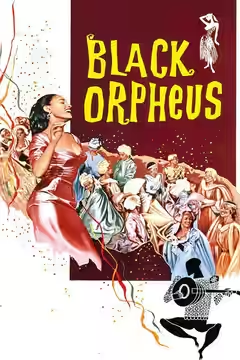
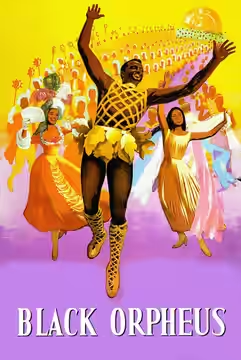
Black Orpheus is worth seeing for the music and the Carnival dancing, though the love story is thin. Marcel Camus retells the Orpheus myth and makes the city’s celebrations the chief attraction. The lovers have to compete with so much colour and movement that we often find our attention wandering from them. The film gives us good reason to stay with the dancing.
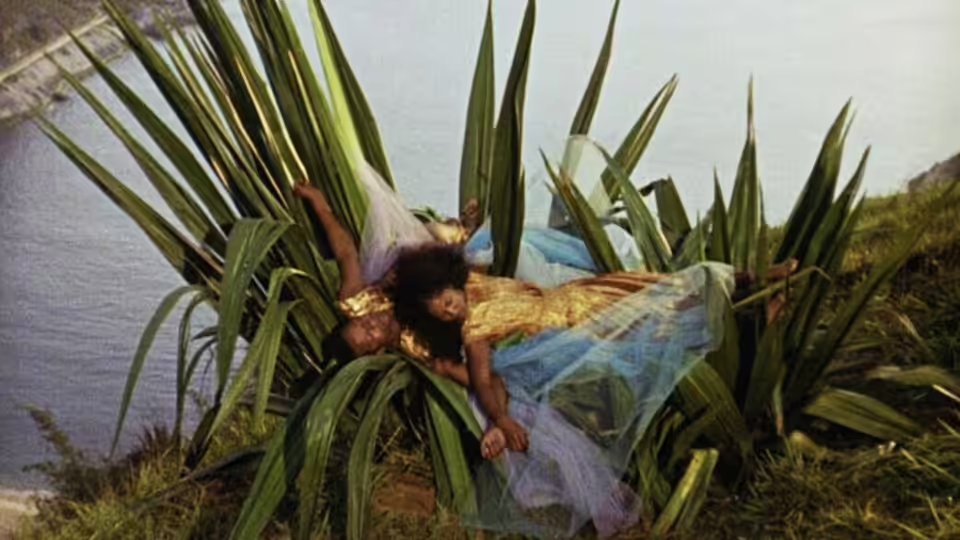
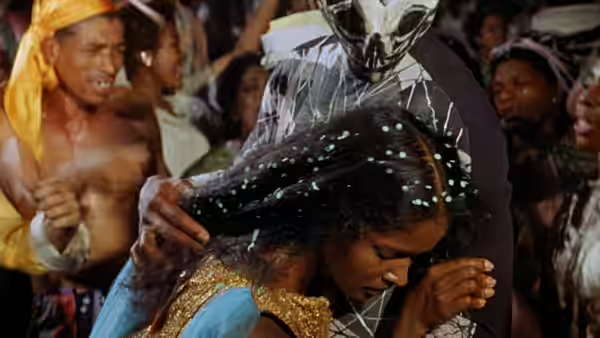
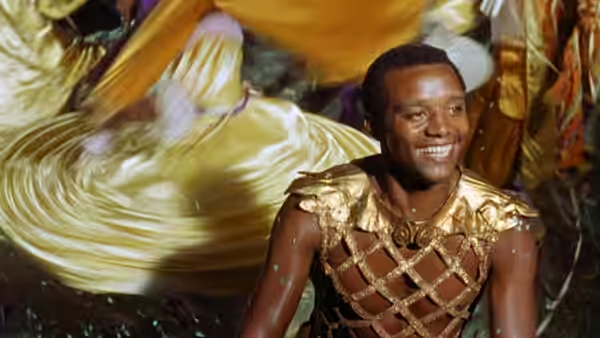
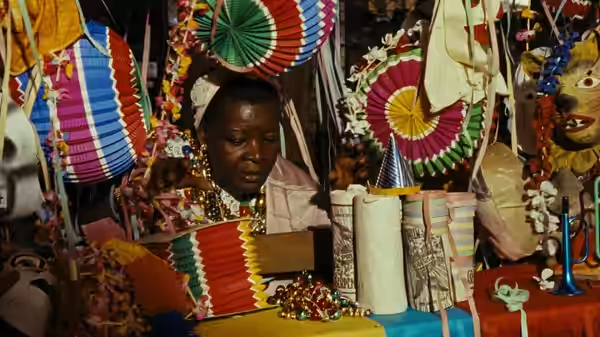
Jean Bourgoin photographs the daytime Carnival in strong colours that keep our attention on the dancers and the crowds. The pleasure comes from watching so much movement without needing every image to advance the plot. At night, the festive setting becomes threatening, and that change gives the mythical dangers a convincing setting. We found ourselves smiling through the Carnival dancing, caught up in the music and the pleasure of so many bodies moving together.
The music by Antônio Carlos Jobim and Luiz Bonfá supplies much of the feeling that the dialogue struggles to establish. Its melodies give the romance a tenderness we can hear more readily than we can find in the writing. Andrée Feix’s editing is most satisfying when it follows the celebration and lets the dancing hold our attention. Following the dancers may test anyone waiting for the story to hurry up, but cutting them short would cost the film much of its pleasure.
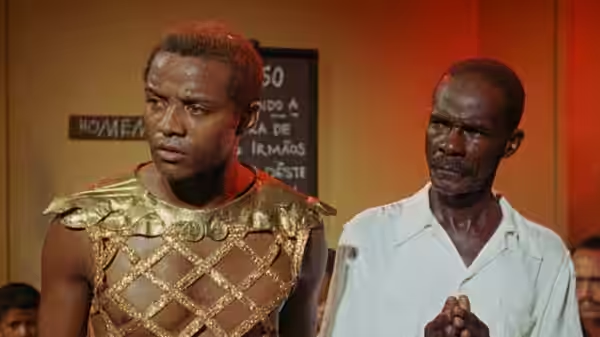
Marpessa Dawn helps the romance by giving Eurydice an appealing directness. Her presence makes the emotion credible even when Jacques Viot’s screenplay has done little to prepare it. Breno Mello is likeable as Orfeo, but the couple remain too dependent on our knowing what their names are meant to signify. We need more than recognition to care deeply about them. As a romance, this is frustratingly short of the small, particular things that make two people seem necessary to each other.
Pierre Guffroy’s production design and Isabel Pons’s costumes contribute to the Carnival’s abundance of colour. There is pleasure in simply looking, and nothing wrong with that until the film seems to ask us to accept prettiness as a sufficient account of a city. The place can seem arranged for our enjoyment, with too little sense of people having lives beyond the festivities. Even allowing for a mythical story and a Carnival setting, that narrowness is difficult to ignore.
Still, finding the city too picturesque need not mean dismissing everything the film does well. A musical romance deserves some freedom to let music carry its feelings, though here the writing asks for rather more help than it should. The Carnival scenes offer enough music, movement and human company to make that weakness bearable. At 100 minutes, it is an evening we would recommend to anyone willing to let dancing take precedence over dramatic detail. Do not mistake the celebration for the whole city.