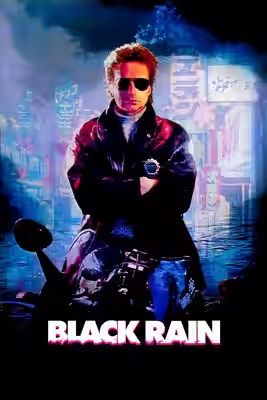
Ridley Scott’s Black Rain is worth considering for its neon-lit cityscapes and Ken Takakura’s restraint. The police story is familiar, and its treatment of Japan is too thin to match the care spent on the images.
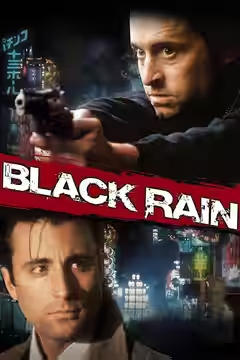
Ridley Scott’s Black Rain is a decent police thriller whose images are considerably more interesting than its story. It takes the promise of an American cop in Japan and gives the clash of rules and temperaments plenty of weight, without finding much that is surprising in it. There is pleasure here for anyone who likes a crime film to look carefully made. Expect less from the screenplay, which treats familiar material with a seriousness it has not quite earned.
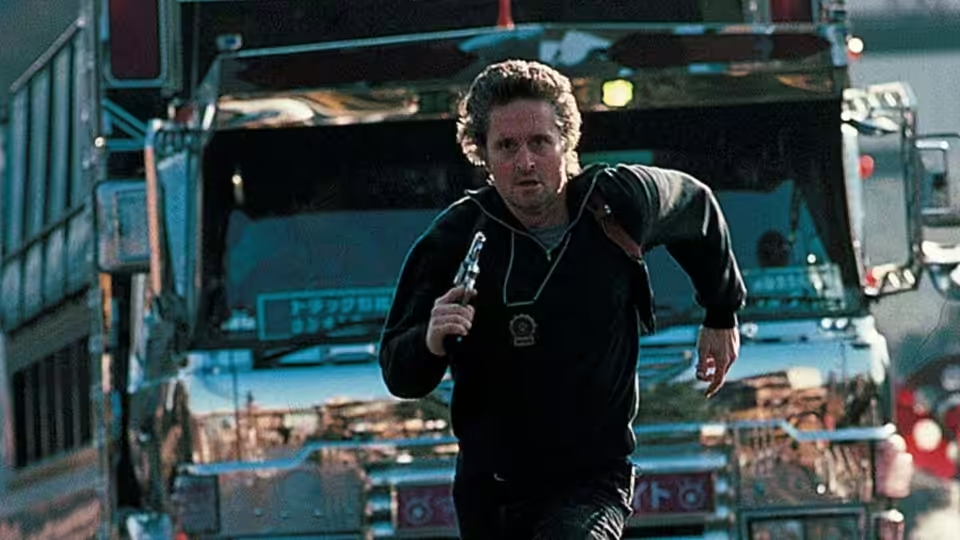
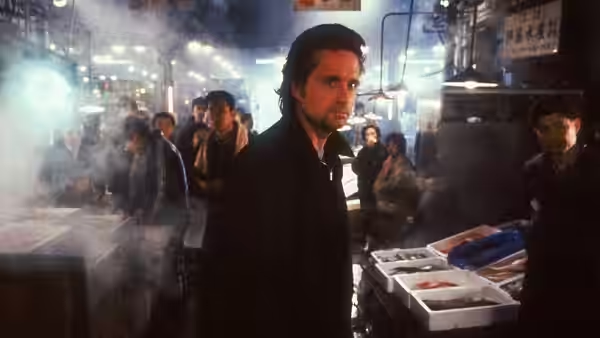
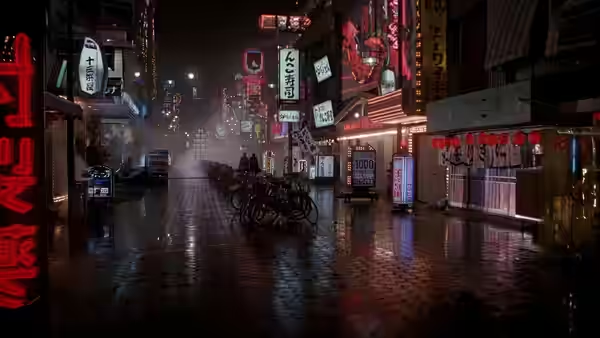
Jan de Bont’s cinematography is the reason to stay with it: the neon-lit cityscapes have colour and density that make us want to keep looking. We felt a small thrill simply at the sight of them. Norris Spencer’s elaborate production design gives those images enough detail to reward that attention, though the visual richness can also make the thin story more conspicuous. The surroundings seem worth exploring, and we kept wishing the film would give its people the same patient consideration.
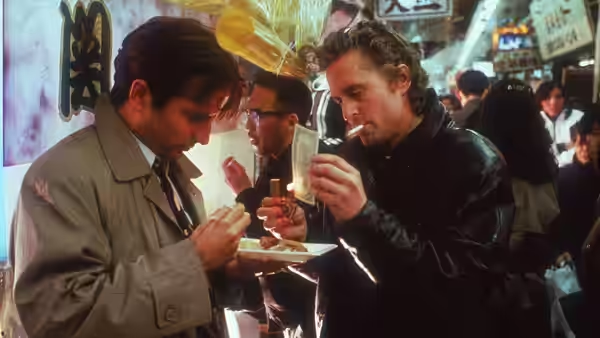
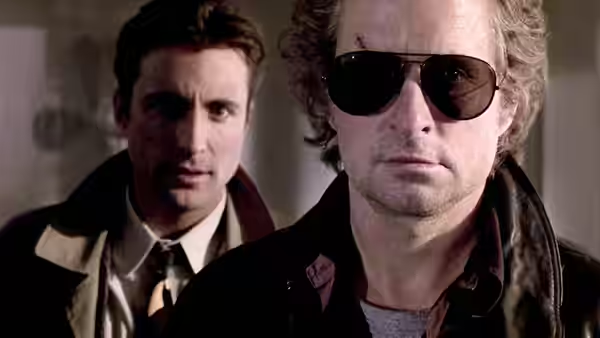
Michael Douglas gives Nick Conklin the force the premise requires, but force becomes a rather limited pleasure over a whole film. The character’s insistence on his own methods needs more scrutiny than the writing supplies. Andy Garcia, as Charlie Vincent, offers some welcome relief from that intensity, though the central performance still determines much of the film’s mood. We can understand why a thriller wants a difficult lead; it also needs to make his difficulties interesting.
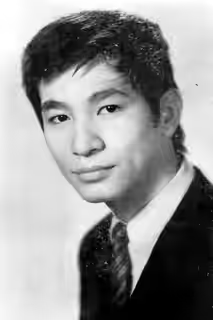
Ken Takakura makes the strongest impression as Masahiro, giving the film a steadiness it badly needs. His restraint allows us to watch a person thinking without having every thought underlined. It is a useful reminder of how much an actor can do without insisting on our attention. The script’s broad treatment of cultural difference is particularly frustrating when his performance suggests how much more there might be to explore.
Craig Bolotin and Warren Lewis have written a screenplay that leans too heavily on the appeal of an American policeman refusing to adapt. The conflict is easy to establish, but it grows less rewarding when cultural difference is asked to do the work of character. Japan deserves more curiosity than this, particularly in a film so attentive to how it looks. The familiar thriller formula would matter less if the encounters within it felt more searching.
Tom Rolf’s editing keeps the thriller serviceable, although it cannot make the predictable passages feel urgent. Hans Zimmer’s music adds drive, with much the same limitation: extra emphasis does not give us an extra reason to care. Neither contribution is the central problem, and both help the film remain watchable. The frustration is that so much skilled work has been applied to a story that rarely asks its audience to do anything beyond recognise the next familiar move.
A genre film does not need to reinvent police work to earn an evening. It does need to make the expected confrontations engaging, and the performances and visual detail do enough of that here to keep us watching. Go in for the atmosphere, with a little patience for the man at the centre of it.