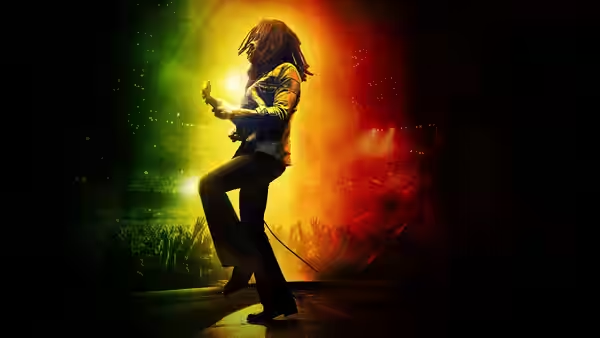
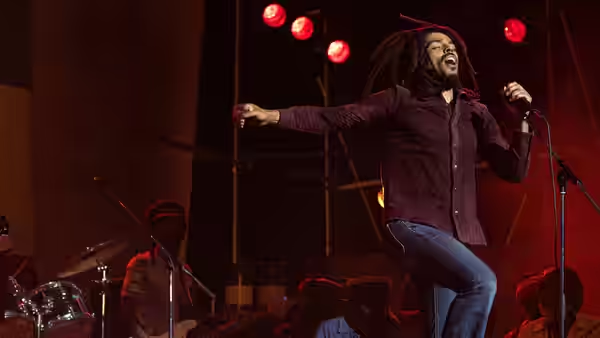
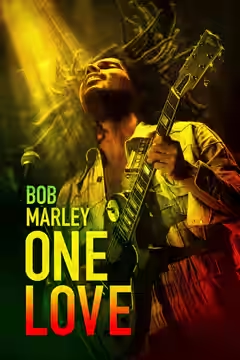
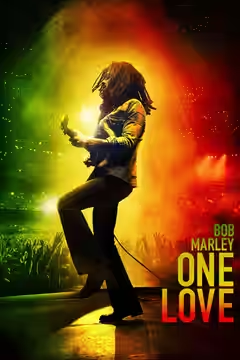
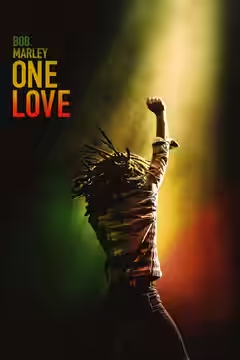
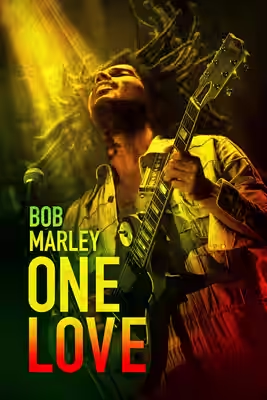
Bob Marley: One Love poster

Bob Marley: One Love

2024 · Directed by Reinaldo Marcus Green
1h 44mMusicHistoryDrama12A
48
Fi1m score
45
Critics · 11
Audience · not yet

Where to watch in the UK

Checked 10 September at 22:29. Prices and availability change; the service’s page is the last word.

Plays from YouTube when you press play; nothing loads from them until then.

Synopsis

Kingston, 1976. Jamaica is split between two political parties and their gunmen, and Bob Marley (Kingsley Ben-Adir) has agreed to play a free concert meant to calm the city. Two nights before it, men with guns come to his house on Hope Road, wounding him and his wife Rita (Lashana Lynch). He plays anyway, then takes his band to London, where Island Records boss Chris Blackwell (James Norton) gives him time to record what becomes *Exodus*. Around him are Tyrone Downie (Tosin Cole), manager Don Taylor (Anthony Welsh) and Cindy Breakspeare (Umi Myers), whose presence Rita is asked to accept. Rita Marley and Cedella Marley are among the producers; four writers, including director Reinaldo Marcus Green, share the script.

Fi1m review

In a sentenceEvery song is present and correct; the man who wrote them has been asked to wait outside

Kingsley Ben-Adir gets the walk, the voice and the stage, and Lashana Lynch gives the marriage what fire it has. Around them, four screenwriters and the Marley family have built a biopic that lists the achievements and hides the man.

Reinaldo Marcus Green’s film about Bob Marley covers a couple of years in the late 1970s, from a shooting at the singer’s house in Kingston to the making of Exodus in London. Rita Marley and Cedella Marley are among the producers, and four screenwriters are credited: Frank E. Flowers, Zach Baylin, Green and Terence Winter. That is a lot of hands and a good deal of family, and it shows. It is a list of the things Marley did, set to the songs he wrote, and the man doing them stays out of reach for 104 minutes.

It starts well. Kingston in 1976 has two parties and a lot of guns, Marley has agreed to play a free concert for peace, and gunmen come to the house two nights before it. Green stages the attack quickly and without music, and the concert that follows, with Marley wounded and singing anyway, is the best sequence here. Robert Elswit shoots it at night, hot light on the stage and the crowd a dark mass beyond, and Kingsley Ben-Adir moves through the songs like a man who has decided the bullet is somebody else’s problem. We sat forward for this, and a film that had opened like a thriller seemed about to become one.

It does not. In London the film settles into the recording studio, which is where music biopics go to die. Somebody plays a bass line, somebody else looks up, and a song we all know is born in front of us as if by accident. Pamela Martin and Nick Houy cut the years together as montage, a chorus over a tour, a verse over a newspaper, and Kris Bowers’s score sits under the records without getting in their way. We were bored by the second studio scene, and then cross about being bored, because these are some of the best songs anyone made in that decade and the film treats them as a checklist.

Ben-Adir has done the work. He has the walk, the swaying shoulders, the accent that softens for Rita and hardens for money men, and on stage he is convincing enough that we stopped comparing. What he has not been given is a scene in which Marley is wrong about something. The script allows him a temper twice, once at his manager Don Taylor (Anthony Welsh) and once at the world, and both times it hurries him back to serenity. A man several people here have good reason to be angry with appears as a prophet with a football.

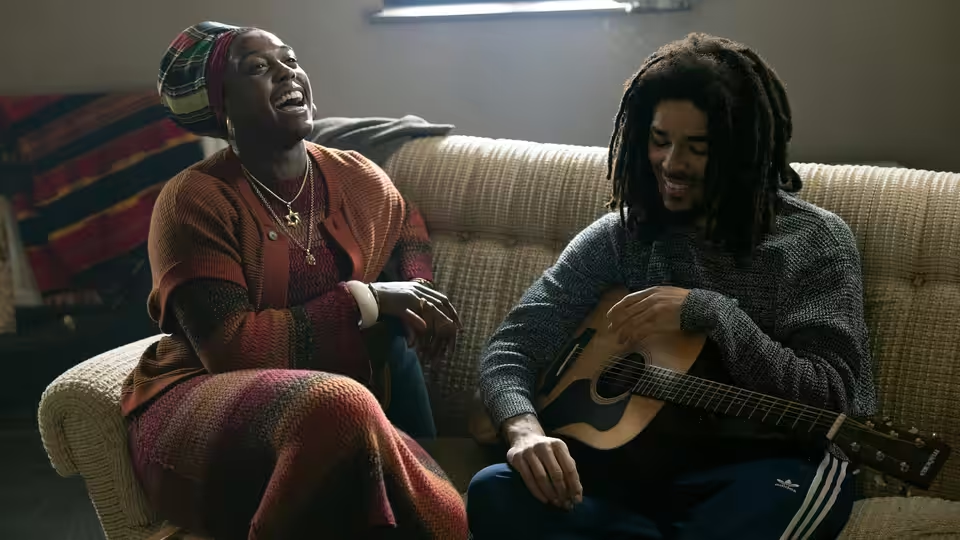
Lashana Lynch is the reason to stay. Her Rita has been shot at, moved countries and watched her husband’s girlfriend (Umi Myers, as Cindy Breakspeare) arrive, and Lynch plays it as pressure building rather than a list of grievances. When she lets go, in a row we will not describe, it is the one scene in which two people say what they actually think, and it moved us more than the rest of the picture put together. Then the film cuts to the next song.

The rest get costumes rather than parts. James Norton’s Chris Blackwell is a sympathetic man in linen. Tosin Cole’s Tyrone Downie and Aston Barrett Jr.’s Family Man Barrett stand at the edges and rarely get a scene. Anna B. Sheppard’s clothes, the denim and knitted tams and football shirts, are right, and Chris Lowe’s house on Hope Road, all open doors and people on the stairs, is the film’s most believable place. The flashbacks to a boy in a burning cane field are its least believable, and they keep coming back.

Green and Baylin made King Richard together in 2021, another authorised family portrait, and it let its hero be exhausting, vain and occasionally right. This one is more frightened of its subject. Nobody here lacks sincerity, but meaning to honour a man is not the same as showing him to us.

If you want the songs, they are here and sung with care; watch at home with the volume up and let the montages pass. If you want to know why the man on the posters mattered, the film assumes you already do.

Critical consensus AI synthesised

45
Positive
0
Mixed
3
Negative
8
The Telegraph
14 February 2024
60*

A predictable biopic that lacks originality and oomph, but is elevated by Kingsley Ben-Adir’s gorgeous, vibrant performance as Marley that captures his musicality and charisma.

Read the full review →
Time Out
7 February 2024 · ★★★ · Ian Freer
60

The film mixes authentic elements with broad, clichéd biopic tropes resembling Bohemian Rhapsody, often leaning into the trite despite sincere intentions. It is redeemed by strong central performances from Ben-Adir and Lynch, plus the music, which stands out above the surrounding material.

Read the full review →
Little White Lies
8 February 2024 · 3/2/2 · David Jenkins
40

The critic finds it an ultra-conventional jukebox biopic that prioritizes celebrating the music over exploring the man, resulting in hagiography that buffs away rough edges. Ben-Adir's performance is solid but feels like cosplay, with the film leaning into generic structure and avoiding controversy.

Read the full review →
Radio Times
★★ · James Mottram
40

This misfiring biopic offers a superficial tribute that talks about Marley's achievements rather than dramatizing them, relying on clichés in music use and montages. Strong performances from Ben-Adir and Lynch provide some highlights amid the corny elements and miscasting.

Read the full review →
Screen Daily
8 February 2024
40*

The biopic struggles to locate the man behind the legend despite a likeable central performance and a focused narrative on a key period leading to Exodus. It lionizes rather than illuminates, glossing over details with melodramatic flashbacks and failing to deliver sharp insights into the music or life.

Read the full review →
The Guardian
8 February 2024 · Peter Bradshaw
40*

The authorised biopic is a ploddingly solemn and reverent account that serves up the hits but skirts big questions about Marley’s life. It lacks euphoria and feels unrelaxed and sanctified despite some strong musical moments.

Read the full review →

Cast

Lashana Lynch
Rita Marley
James Norton
Chris Blackwell
Tosin Cole
Tyrone Downie
Umi Myers
Cindy Breakspeare
Anthony Welsh
Don Taylor
Nia Ashi
Teen Rita Marley
Aston Barrett Jr.
Family Man Barrett

Stills

If you liked this, try…

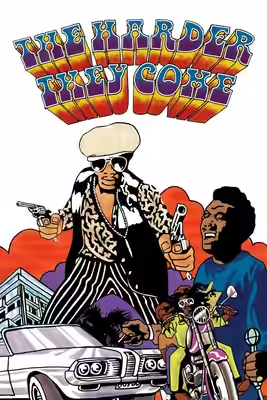
The Harder They Come poster

The Harder They Come

1972 · Jimmy Cliff in the Kingston this film keeps tidying up, with the rough edges left on.

Marley poster

Marley

2012 · Kevin Macdonald’s documentary asks the questions the biopic declines to, and gets some answers.

Rockers poster

Rockers

1978 · Reggae musicians playing themselves in a loose Kingston caper; the music sounds like it lives there.

Control poster

Control

2007 · Anton Corbijn’s Ian Curtis film shows how a music biopic can be unflattering and still tender.

Love & Mercy poster

Love & Mercy

2014 · Brian Wilson in the studio, and for once the recording scenes are the point rather than the padding.