Expressive hand-drawn animation and Joaquin Phoenix’s warmth give Brother Bear some feeling. The familiar story and over-insistent songs keep it from becoming the absorbing family adventure its plea for understanding deserves.
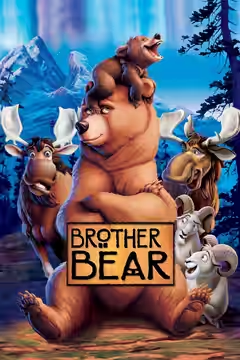
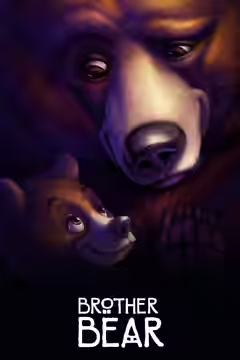
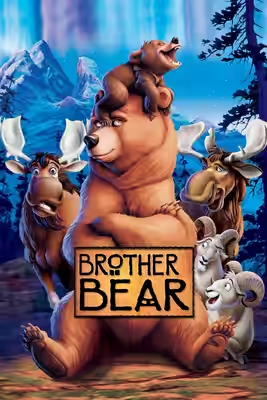
Robert Walker and Aaron Blaise’s Brother Bear is a warm, carefully drawn family adventure that struggles to make its familiar lessons interesting. The central reversal is worth a film: humans can look monstrous when a bear does the looking. There is room in that idea for discomfort, humour and a proper change of mind. Too often, though, the film settles for reassuring us that understanding others is good, as if agreeing with it were enough to keep us involved.
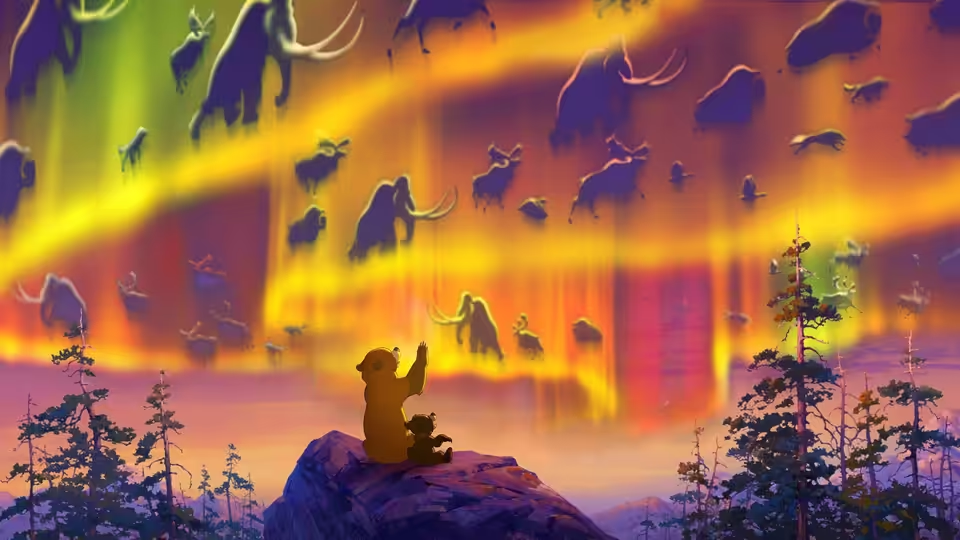
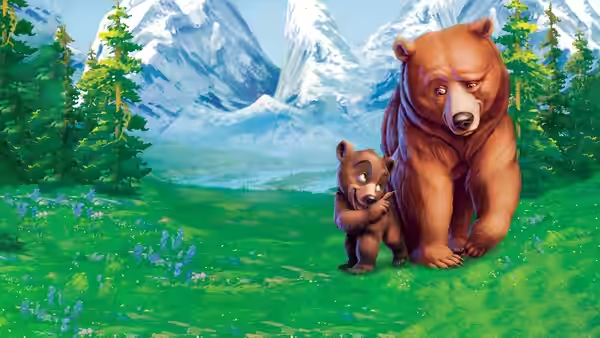
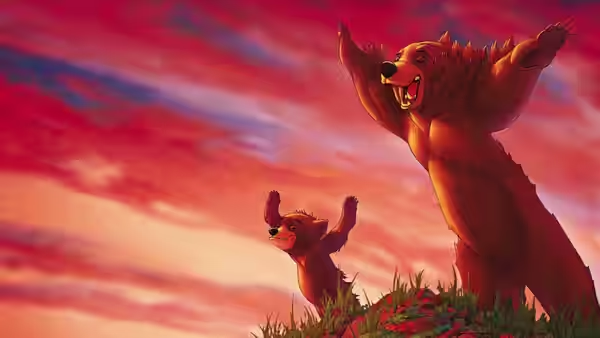
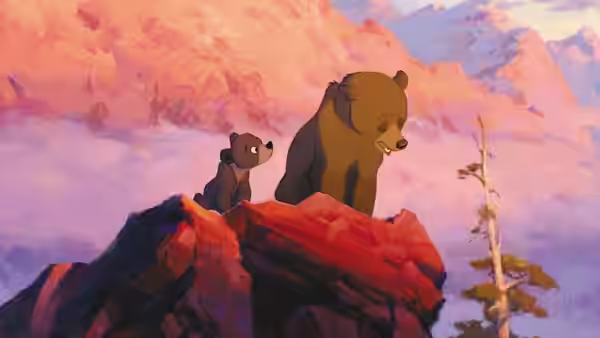
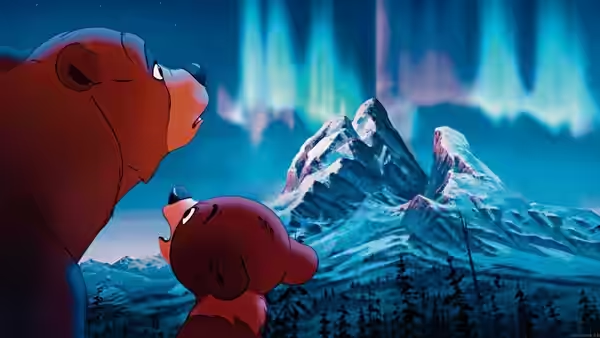
The hand-drawn animation is the strongest reason to stay, with expressive characters and painterly scenery that deserve more attention than the story gives them. Colour becomes especially rich in the spirit world, where the film allows itself something stranger than its otherwise familiar storytelling. We wanted more of that willingness to make the images do the explaining. Even when the drama is sluggish, the fluid drawing gives us something worth looking at while we wait for the story to move.
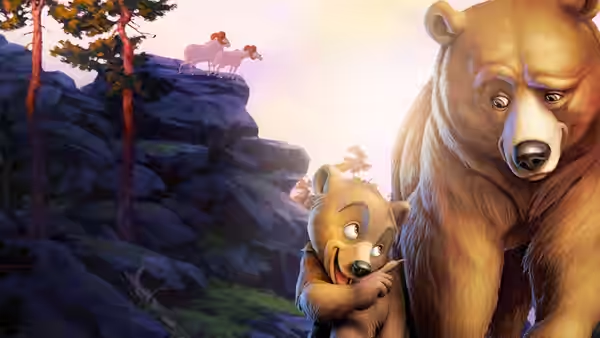
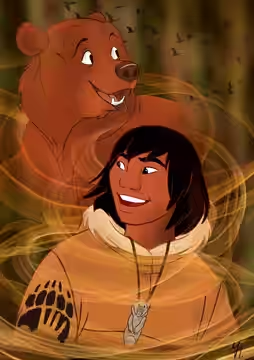
Joaquin Phoenix is the other considerable asset. His Kenai has emotional weight, and the friendship with Koda, voiced by Jeremy Suarez, gives the film a relationship worth following amid the spiritual business. We were touched by their warmth together, because Phoenix puts enough feeling into Kenai’s voice to make the familiar plea for understanding matter. Their companionship can hold our attention without another statement of the moral. The film does not seem confident enough to leave it at that.
Ron J. Friedman, Lorne Cameron, David Hoselton, Tab Murphy and Steve Bencich share the screenplay credit, and their fable needs fewer reminders of its own lesson. Familiarity need not spoil a family adventure, but it leaves the characters needing enough distinct life to surprise us. Here the moral instruction too often gets ahead of the people and animals meant to be learning from it. The darker material also sits awkwardly with the gentleness, without making the story much more involving.
Tim Mertens’s editing does not find enough urgency in the journey to disguise that repetition. At 85 minutes, this ought to be an easy evening, yet stretches feel longer because so little about the next emotional step seems uncertain. A leisurely pace would be welcome if it gave the friendship more room or allowed us to linger over the stranger images. Instead, the story can feel stalled even while the animation remains lively, leaving the drawings to sustain our interest.
The music, credited to Phil Collins and Mark Mancina, is a further source of unevenness. Collins’s songs have some welcome percussive energy, but the power ballads press too hard on emotions the voices can already convey. We found ourselves resisting the insistence of the soundtrack, even when we were sympathetic to what the characters were meant to feel. A little musical restraint would have helped the friendship more than another attempt to make it sound momentous.
As a family adventure, this is gentle and watchable, but short of surprises. Its warmth deserves credit, and the hand-drawn images offer pleasures that do not depend on being young enough to overlook a predictable story. Those qualities are not enough for an unqualified recommendation. Give it an evening if expressive animation is the main attraction; expect to supply some patience for the storytelling.