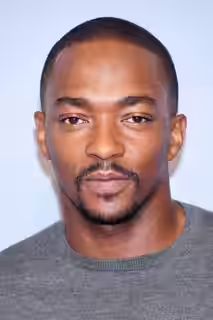
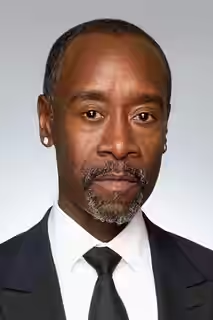
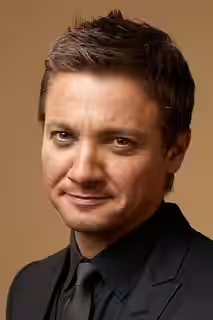
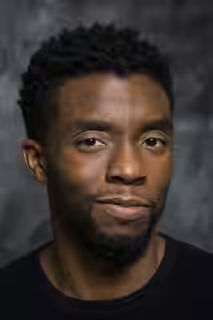
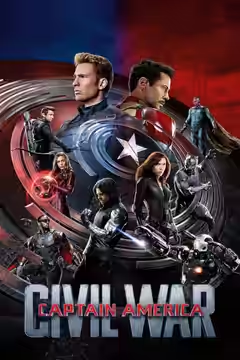
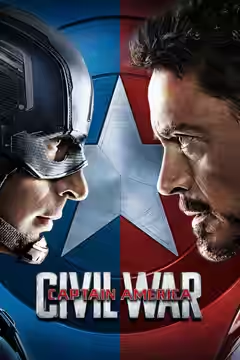
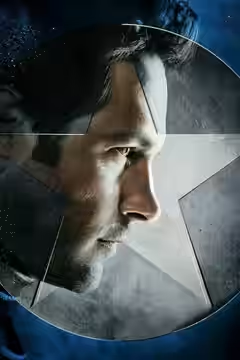
The Russo brothers set their heroes against each other over who should be allowed to tell them what to do, and get one of the best action sequences in the series out of it. The question they start with is dropped the moment the punching improves.
Christopher Markus and Stephen McFeely open their script with a real question. The Avengers have knocked down a good deal of the world by now, and somebody ought to answer for the rubble. Tony Stark thinks that somebody should be a committee. Steve Rogers thinks committees have agendas and he would rather answer to himself. For the first forty minutes Captain America: Civil War takes this seriously, and it is a better film for it. Then the argument turns into a fight, and the fight is so good that nobody, on screen or off, remembers what it was about.
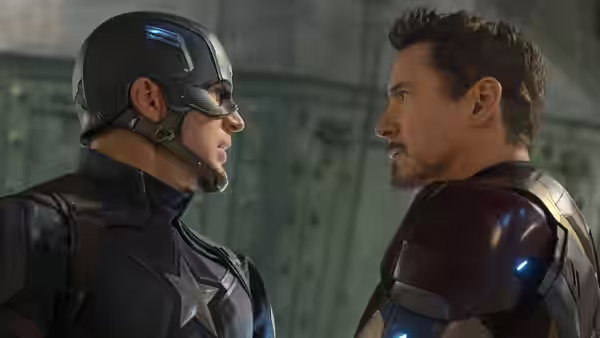
Chris Evans and Robert Downey Jr. carry the first stretch, and they are worth watching. Evans plays Steve as a man who has stopped apologising for being right; he says less than he used to and stands stiller. Downey’s Tony is tired in a way he has not been before, flinching at the word Sokovia, joking to fill silences and then not bothering to finish the joke. Their scenes together are staged as arguments between colleagues who used to like each other, in kitchens and corridors and a glass-walled compound Owen Paterson has designed to look like a well-funded university. Sebastian Stan’s Bucky, meanwhile, says almost nothing and is the reason for nearly everything.
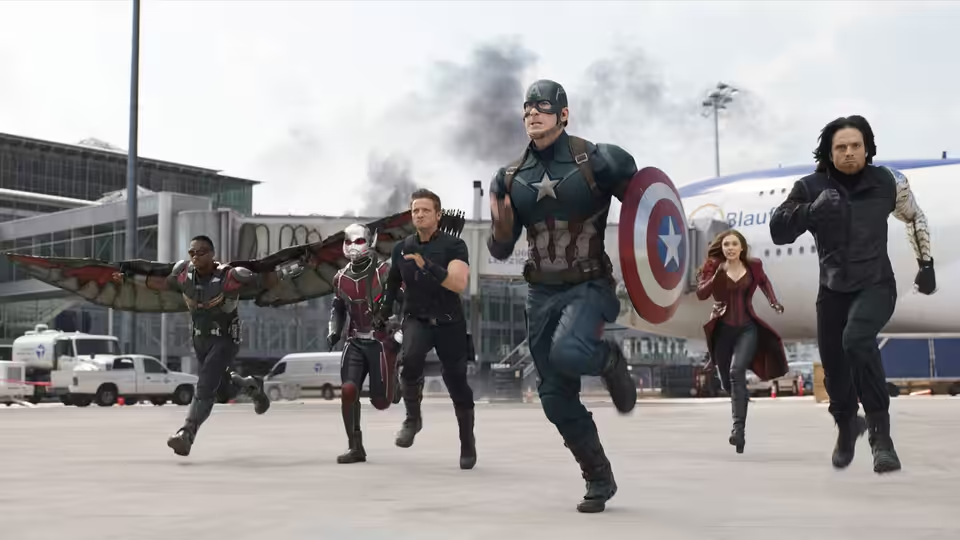
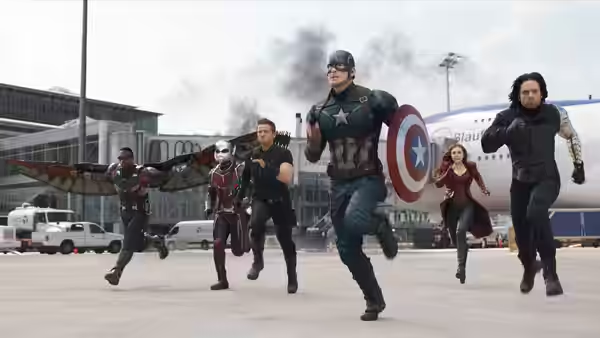
The airport is the sequence everyone will tell you about, and they are right. Twelve heroes, two sides, an empty terminal, and nobody actually wanting to kill anybody. Trent Opaloch pulls the camera back and lets us see the whole board, and Jeffrey Ford cuts it so that every pairing gets its beat: Paul Rudd’s Ant-Man riding an arrow, Don Cheadle and Anthony Mackie arguing while flying, Paul Bettany’s Vision drifting through walls looking faintly embarrassed, a chattering teenage Spider-Man who has plainly never been in a fight this size and is having the best day of his life. We grinned through the whole thing like children, because it is a workplace dispute conducted with repulsor blasts, and the jokes land in the same breath as the hits. It is the one time the film’s crowding is an asset rather than a queue.
The trouble is what happens on either side of it. The villain, who we will not name, is a quiet man with a plan that requires a great deal of luck and a great many people to behave exactly as he needs them to, and the film cannot find much for him to do but wait. The Accords, having caused all this, are not mentioned again with any conviction. By the end the fight is about a mother, not a mandate; a question about power has been swapped for a grudge, because grudges are easier to film. Henry Jackman’s score does its job with brass and low strings and leaves nothing behind you could hum. Opaloch’s handheld work in the Lagos opening is choppy enough that we lost track of who was hitting whom, and at 147 minutes there are two scenes of people explaining things in rooms for every one of people doing them.
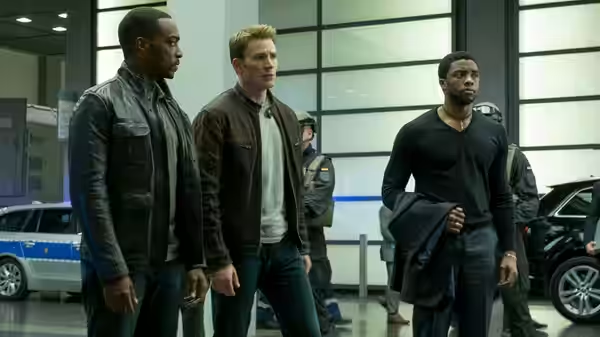
Chadwick Boseman is the best of the new arrivals. Judianna Makovsky gives T’Challa a black suit that reads as fabric rather than armour, and Boseman moves in it with a stillness the rest of the cast do not have; he waits, then goes, and the camera waits with him. He is also the only person in the film whose grievance stays the same size from first scene to last, which makes him the only one whose politics we could describe.
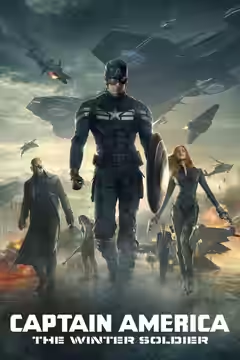
Anthony and Joe Russo made Captain America: The Winter Soldier two years before this, and that film had a shape: a man, a conspiracy, a city. This one has a roster. It is generous and well-drilled and it never quite decides whose story it is telling, and its best scene is the one in which that does not matter.
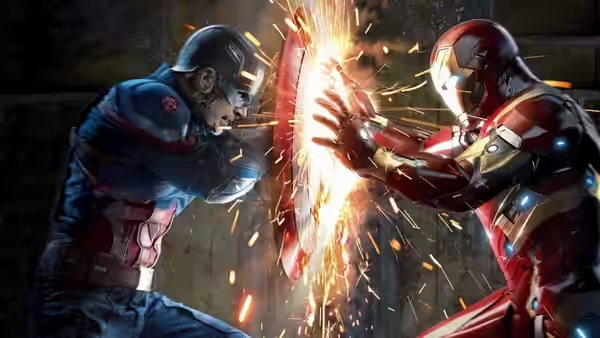
The fight it has been building towards we will not describe, except to say that when it comes the film finally hits as hard as it has been promising, and it hurt more than we expected. That is two sequences out of many. They are enough to fill an evening, provided the genre is already yours.