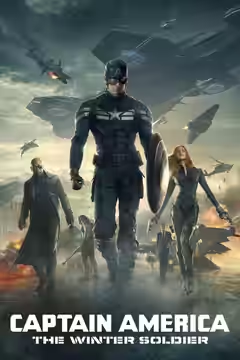
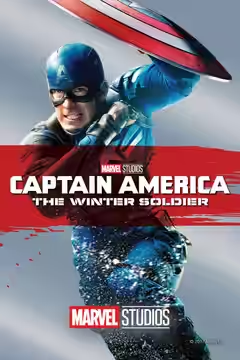
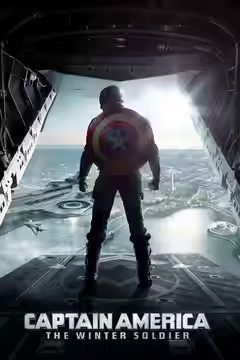
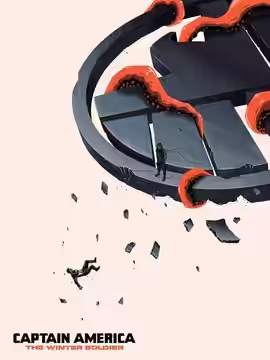
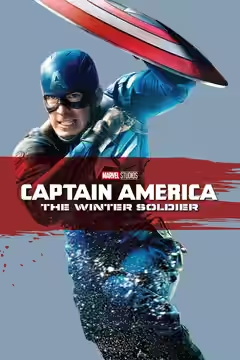
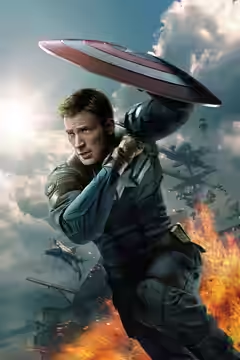
The Russo brothers turn a Marvel sequel into a Washington conspiracy thriller, and for ninety minutes it is the most disciplined film the series had produced. Then three flying aircraft carriers have to be stopped and it becomes an ordinary blockbuster again.
Steve Rogers has been awake for two years in a century he did not ask for, and Captain America: The Winter Soldier is about what he sees when he looks around. Anthony and Joe Russo have made the most disciplined film the series had produced. For ninety minutes it is a Washington conspiracy thriller with a shield in it. Then the flying aircraft carriers have to be stopped and it turns back into the kind of film it had been avoiding. That last half hour is the caveat; the rest is worth your evening.
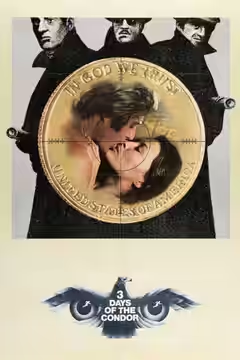
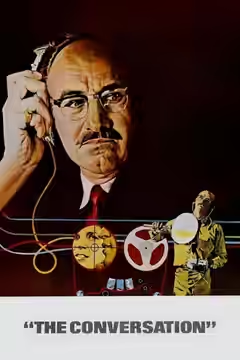
Christopher Markus and Stephen McFeely write the intelligence agency SHIELD as a place where the people at the top have stopped telling the people in the field what the job is. Nick Fury (Samuel L. Jackson) shows Rogers three gunships built to remove threats before they act, and Rogers says that this is not freedom but fear. Above Fury sits Alexander Pierce, and casting Robert Redford, the leading man of Three Days of the Condor (1975), as the calm official in the good suit is the film’s smartest decision. He plays Pierce as a reasonable man explaining a reasonable policy, and he never once raises his voice.
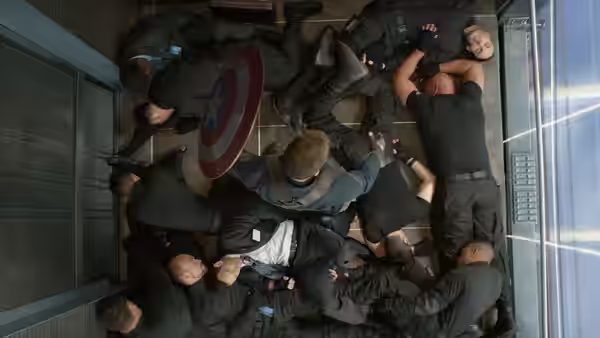
Trent Opaloch lights Washington in flat, hard daylight and keeps the camera low and close, so a punch has weight and a fall has distance. Matthew Schmidt and Jeffrey Ford cut so that we always know where the door is. The proof is a fight in a lift. Agents crowd in around Rogers one floor at a time, he notices the sweat on one man’s temple, and the scene turns on him asking, calmly, whether anyone wants to get out first. We sat up. It is one man against a dozen in a box, and every move is legible and every hit hurts.
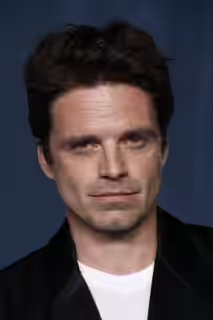
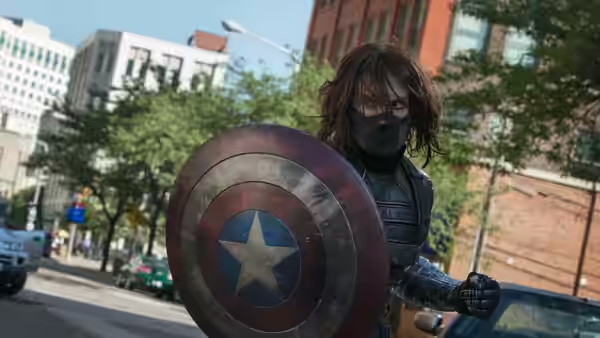
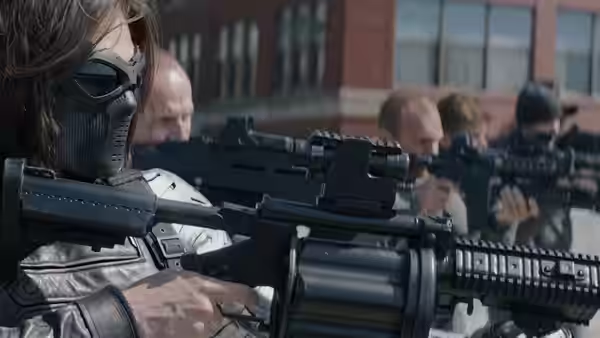
Earlier, Fury’s car is ambushed in a city street, police cruisers boxing him in and a battering ram coming through the door, and it is staged as a car chase. We were properly tense, which does not often happen to us in this series. Out of it steps the Winter Soldier (Sebastian Stan), a masked assassin with a metal arm who catches the shield one-handed and throws it back. Henry Jackman gives him a theme closer to a distorted electronic scream than to music, and it works every time he appears. The rest of the score is brass doing its duty.
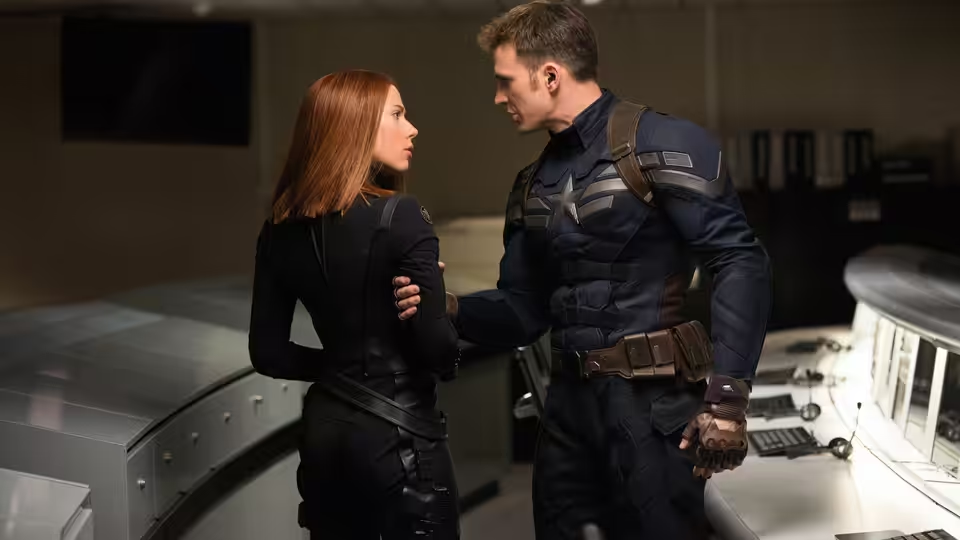
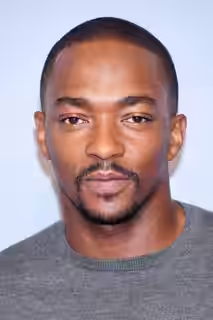
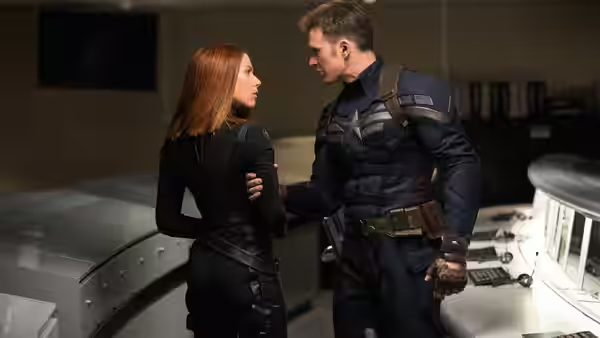
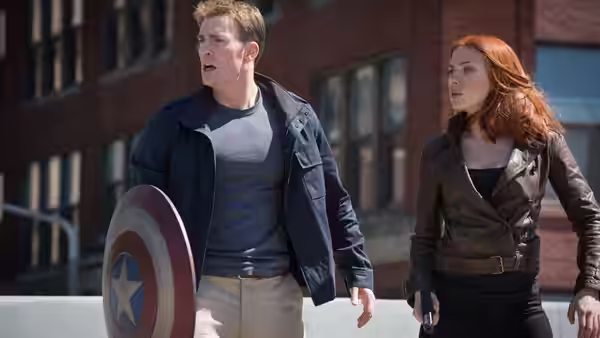
Chris Evans has grown into Rogers. He plays decency as a choice rather than a default, and he is funny in a dry, tolerant way the first film never found. Scarlett Johansson’s Natasha Romanoff gets the best lines, teasing him about his love life while copying files off a ship’s computer. Anthony Mackie’s Sam Wilson, a veteran who runs a support group, arrives and makes the film warmer at once. Hayley Atwell has one scene as an aged Peggy Carter, and it is the quietest and best thing here.
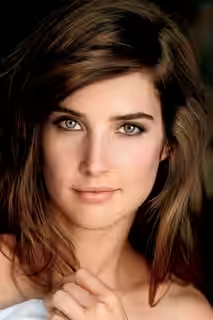
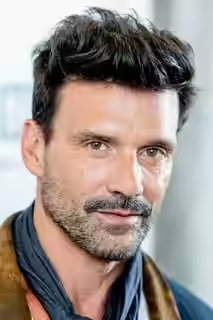
The Winter Soldier himself is a poster. He has perhaps a dozen lines, and there is a story about him the film cares about and does not have time to tell. Cobie Smulders, Frank Grillo, Emily VanCamp and Maximiliano Hernández come and go with a scene or two each. Then the last half hour throws the thriller away. Three gunships have to be stopped, three chips have to be swapped, and the film settles into the falling metal and punching that every entry in this series arrives at. We were held for ninety minutes and then we were watching the clock. The argument about surveillance is not settled by anything anyone says; it is settled by the gunships going down.
Against the studio’s own record this is a step up. Captain America: The First Avenger (2011) was a pleasant period piece; this one has something on its mind. Peter Wenham’s SHIELD headquarters is a glass tower on the river with a hole through its middle, and Judianna Makovsky puts Rogers in a dark blue suit with the stars taken off, which is right for a man no longer sure what the flag means.
It runs 136 minutes and carries a 12A, and the best of it is over before anything larger than a car leaves the ground. See it for Redford, for the lift, and for a Marvel film that trusts a conversation to hold a scene. When the sky starts falling, you have our permission to put the kettle on.