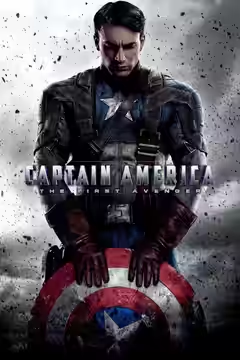
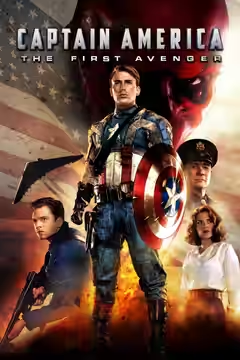
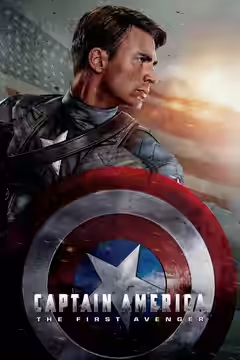
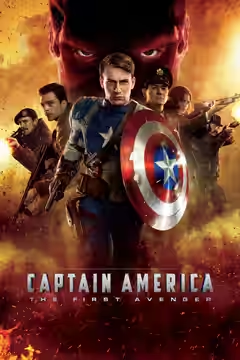
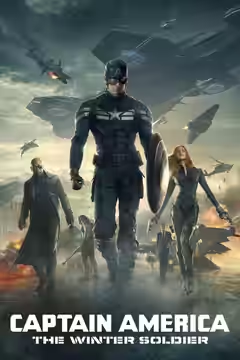
Joe Johnston’s wartime origin story is at its best before its hero has any muscles. The first hour, with Chris Evans as a small stubborn man and Stanley Tucci as the doctor who believes in him, is warm and careful; then the montages start.
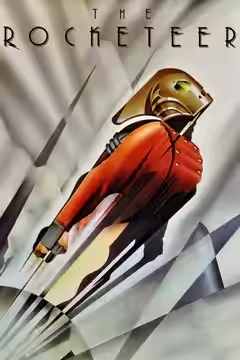
Joe Johnston has made a Second World War adventure in which the superhero is close to an afterthought, and for an hour that is the right idea. Captain America: The First Avenger is a 1940s pulp serial with a large budget: a Nazi science division gone freelance, a glowing cube looted from a church in Norway, a small Brooklyn man who wants to enlist and keeps being told no. Johnston made The Rocketeer in 1991 and this is the same instinct with more money. The first hour is the reason to stay.
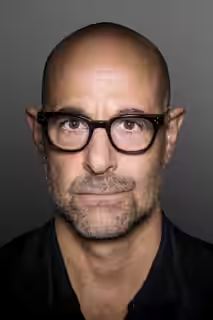
Chris Evans plays Steve Rogers first as a slight, hollow-chested man, his head placed by computer on a smaller body, and we stopped looking for the join within a scene. He plays Rogers as someone knocked down often enough to have stopped minding, who gives one reason for wanting to fight: he does not like bullies. Stanley Tucci’s Erskine, the German doctor who picks him from a recruitment queue, argues the film’s one idea over a bottle of schnapps, that a weak man knows what strength is worth. Tucci plays him tired and kind, and the idea holds.
The grenade scene is where the film got us. At training camp, Tommy Lee Jones’s Colonel Phillips tosses a dummy grenade into a squad of recruits; everyone runs, and Rogers throws himself on top of it and shouts at the others to get back. It lasts perhaps fifteen seconds and moved us more than a scene about a fake grenade has any business doing, because Evans plays it as reflex rather than decision. Jones watches with the face of a man who has just lost a bet and is not sorry. He gets the best lines and delivers each one as if it were costing him money.
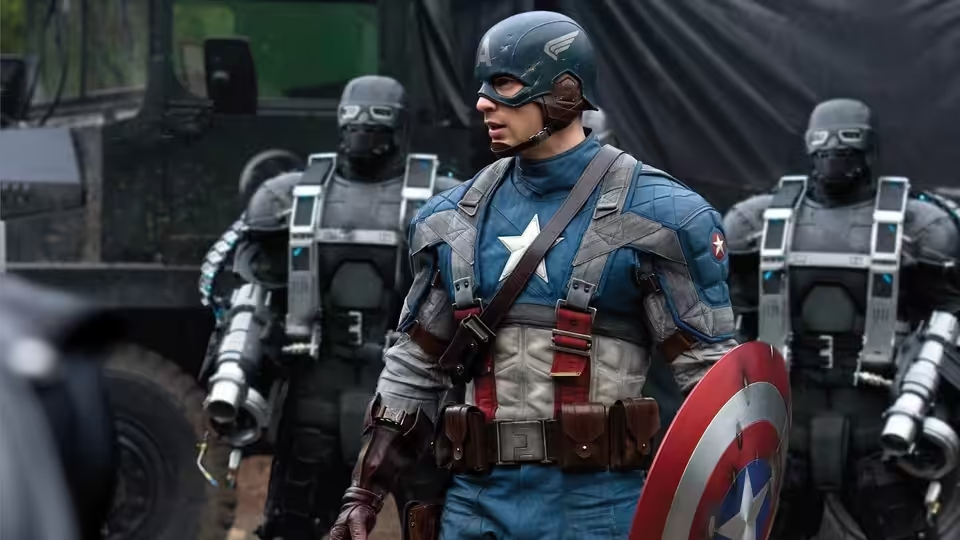
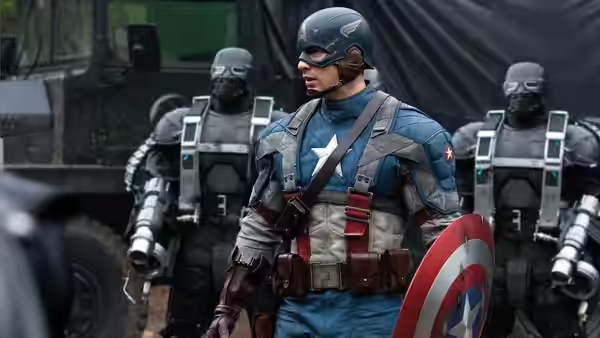
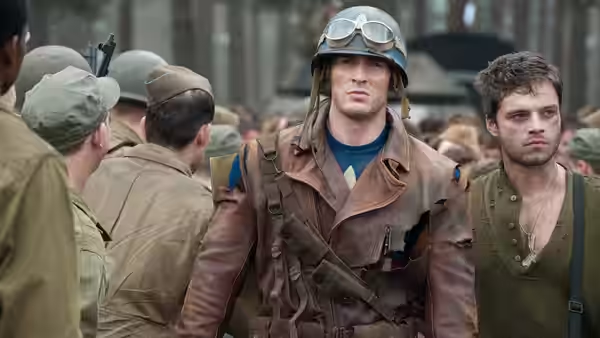
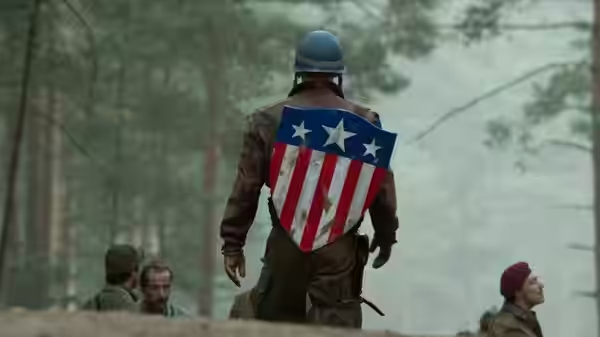
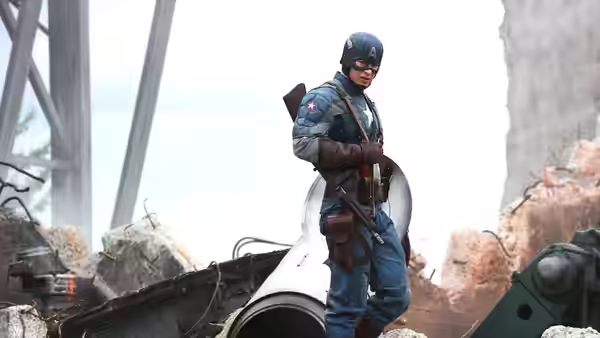
Rick Heinrichs builds a 1940s that has been reading its own science fiction magazines: the Expo’s flying car; Hydra’s factory of black steel and blue lightning. Shelly Johnson shoots Brooklyn in tobacco browns and the Hydra interiors in cold cobalt, so the two sides of the war are never lit the same way. Anna B. Sheppard’s first Captain America outfit is a stage costume, tights and a painted shield, worn by a man selling war bonds in front of a chorus line. Alan Silvestri supplies a brass march and sticks to it. The bond tour, with chorus girls and a Hitler impersonator punched nightly, is the one time the film is funny about its own flag.
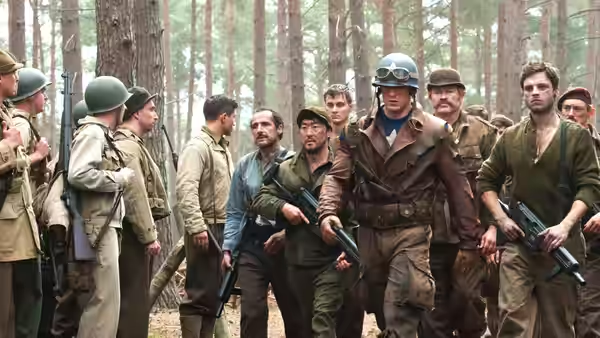
Then Rogers gets the real shield and the film gets impatient. Jeffrey Ford and Robert Dalva cut the war as montage: Rogers, Sebastian Stan’s Bucky, Neal McDonough in a bowler hat and Derek Luke blow up one Hydra base after another, and the film skips the story it spent an hour setting up. Hugo Weaving’s Johann Schmidt is a good idea, a Nazi too vain for the Nazis, and Weaving gives him a clipped amusement the script never feeds; he spends most of the film in a control room shouting at Toby Jones. The set pieces are competent and weightless: the shield comes back like a boomerang, the henchmen fall over, nobody bleeds. By the third base we had stopped counting and were checking how long was left. Hayley Atwell’s Peggy Carter fires a pistol at the shield to test it and is then given little else to do.
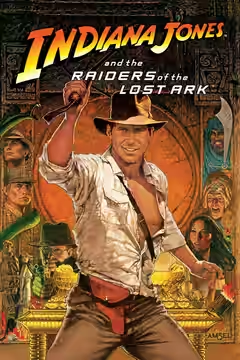
Raiders of the Lost Ark (1981) is the obvious model: Nazis, a glowing artefact, a hero who gets thrown through things. But Spielberg built his set pieces around one problem at a time, and Christopher Markus and Stephen McFeely build theirs around a timetable. The last stretch is busy arranging furniture for a film that has not started yet.
See it for the small man. Evans’s Rogers before the serum is as well drawn a hero as this cycle of films has managed, and Tucci and Jones are worth the evening on their own. Watch it at home, where the montages are easier to forgive, and do not be surprised if your attention leaves the room around the hour mark; the film’s does. It runs 124 minutes and carries a 12A.