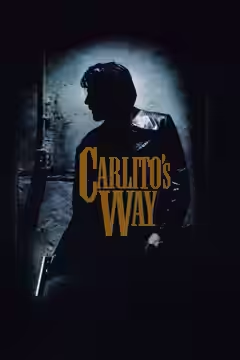
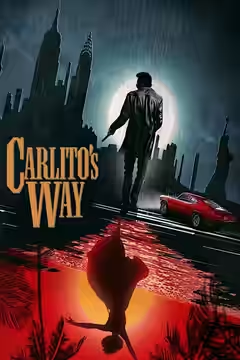
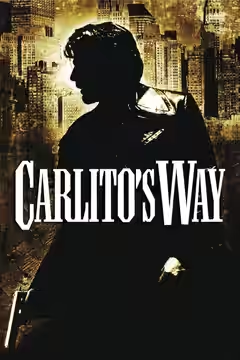
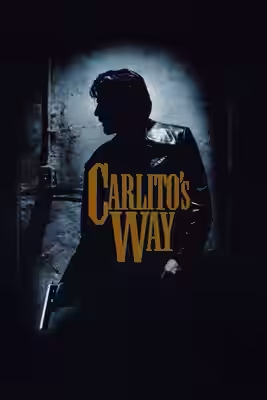
A man in a long coat holds a gun standing against a dark wall
Film review

Carlito's Way

1993 · Directed by Brian De Palma · 2h 24m

In a sentenceAl Pacino tries to go straight, which would be easier if he could start with a different lawyer

Al Pacino plays Carlito Brigante, a drug dealer leaving prison determined to go straight. Back in New York, he tries to keep his distance from the criminal life that once defined him, but old obligations complicate the attempt. His lawyer, David Kleinfeld (Sean Penn), is a particular source of trouble, making it harder for Carlito to put the past behind him. Penelope Ann Miller plays Gail in Brian De Palma’s crime drama, which follows Carlito’s efforts to change his life without abandoning the loyalties and personal code he brings out of prison.

Plays from YouTube when you press play; nothing loads from them until then.

Fi1m review

Brian De Palma makes a familiar gangster story tense and unexpectedly moving, with Al Pacino’s restraint giving us someone worth worrying about. The middle wanders, but the set pieces justify the patience.

Carlito’s Way is a fine crime film about a man who means to change and still expects his old loyalties to make sense. Brian De Palma takes the familiar business of a drug dealer leaving prison and gives it enough feeling to make the dangers matter. Al Pacino’s Carlito Brigante wants to go straight, but keeping faith with people from his criminal life makes that harder than it sounds. We believe in his wish to stop, even when his judgement gives us reason to doubt the plan.

Pacino’s restraint is crucial: he makes Carlito seem tired enough to want another life without draining him of the confidence that got him into trouble. There is still a star’s pleasure in being watched, and it is right for a man whose reputation will not leave him alone. Sean Penn, as his lawyer David Kleinfeld, supplies a less comfortable kind of company. Penn makes the corruption grubby and personal, and makes it easy to understand how an obligation to this man could become dangerous.

Stephen H. Burum’s fluid tracking shots let us study the spaces Carlito has to move through, and that attention pays off in the pool-hall sequence. We were tense through it, because De Palma gives us time to anticipate violence and still makes the shooting a shock. Editors Bill Pankow and Kristina Boden keep the action intelligible as the pace tightens. Their cutting allows us to follow Carlito across the pool hall, which makes each decision feel urgent.

Richard Sylbert’s production design makes the social clubs feel like places where Carlito knows how to behave. Their familiarity helps us understand the pull of his old life, even when we would prefer him to leave it. Patrick Doyle’s score is less discreet than Pacino, sometimes pressing a sadness the performance has already made clear. Its sweep suits De Palma’s willingness to take these people’s feelings seriously, though a little less encouragement would have served them.

Penelope Ann Miller’s scenes as Gail give the film room to be tender, and Pacino responds well to the change of pace. We were more moved by those quieter exchanges than we expected, because he lets the wish for a different life show through the weariness. David Koepp’s screenplay is less successful at keeping the middle taut: the obstacles accumulate, while Carlito’s basic predicament remains much the same. At 144 minutes, the film allows us too long to recognise a problem it has already established.

The story of a gangster trying to leave crime behind is hardly a discovery, and most critics are right to recognise the familiar plotting. We put more weight on how readily Pacino makes us believe Carlito might manage it, despite everything we know about this sort of film. De Palma gives that hope enough time to make the suspense hurt. Choose it for an evening when the people between the gunfights matter as much as the gunfights.

Critical consensus AI synthesised

76
Positive
7
Mixed
1
Negative
0

Most critics respond warmly to Carlito’s Way, with praise clustering around De Palma’s suspenseful direction and Pacino’s restrained performance as a criminal trying to go straight. The reviews repeatedly single out the set pieces, fluid camera movement and vivid New York settings as the chief pleasures, while Penn’s corrupt lawyer draws particular admiration. Several also find emotional weight in Carlito’s efforts to escape his past, giving the familiar gangster story more feeling than its outline suggests.

The main division concerns how much the storytelling offers beyond those performances and technical achievements. Reservations centre on length, predictability and thin characterisation, though most critics find enough elsewhere to recommend it. Slant Magazine stresses the film’s emotional depth, while the Los Angeles Times offers a cooler assessment, finding a shortage of energy and originality despite a well-paced final stretch; the disagreement is chiefly over whether the quieter passages sustain the set pieces’ force.

Empire
1 January 2000 · Kim Newman
85*

The critic finds it a compelling gangster epic with De Palma at his virtuoso best in suspenseful set pieces like the poolroom scene and Grand Central chase. Pacino and especially Penn deliver strong performances in a story of a reformed hood pulled back into crime.

Read the full review →
Radio Times
★★★★ · Adrian Turner
80

Pacino and De Palma reunite for another crime-doesn't-pay tale with Carlito aiming to go straight after jail but pulled back in by his lawyer. The critic praises the smart script, De Palma's visual flair in New York settings, and thrilling set pieces alongside Pacino's restrained performance.

Read the full review →
Slant Magazine
9 September 2006 · Zach Campbell
80*

The critic views the film as a tragic, fatalistic crime story that stands out from De Palma's other work through its stylized genre treatment and emotional depth. He singles out the fluid tracking shots and dynamic movement that counterbalance the inevitable tragic arc.

Read the full review →
The Independent
7 January 1994 · Kevin Jackson
70*

The critic highlights dazzling technical set pieces like the poolroom scene and Grand Central chase but finds the rest a fairly standard tale of a crook trying to go straight. Pacino is highly watchable and Penn's performance as the corrupt lawyer is a standout surprise.

Read the full review →
Time Out
3 May 2011 · TCh
70*

A straightforward 1930s-style gangster tragedy about a man doomed by society and his code, with Carlito trying to escape the rackets but unable to reconcile his past. The critic notes the film comes alive in its set-pieces, especially the Grand Central climax, and praises Pacino as a movie star while critiquing its length and showpiece nature.

Read the full review →
The Guardian
21 July 2008
65*

The film is an enjoyable if formulaic gangster movie. Pacino plays the drug dealer who struggles to go straight.

Read the full review →

Straight answers AI written, from our review

Is Carlito's Way worth watching?
Carlito's Way is worth watching for anyone who likes a gangster film where the people matter as much as the gunfights, and we scored it 86. Al Pacino's restraint makes Carlito someone worth worrying about, and the pool-hall sequence is properly tense. The middle wanders and 144 minutes is longer than the story needs.
How long is Carlito's Way, and what is it rated?
Carlito's Way runs 2h 24m. It is a crime and drama film.
Where can I watch Carlito's Way in Panama?
Carlito's Way is streaming on MUBI in Panama. Availability is checked daily; the links above go straight to each service.
How violent or frightening is Carlito's Way, and is it suitable for children?
Carlito's Way is an 18-certificate crime drama and is not suitable for children. It contains shootings staged so that we anticipate them and are still shocked, alongside drug dealing and a grubby, personal kind of corruption. Teenagers under eighteen are ruled out by the certificate, and the squeamish should know the violence is meant to hurt.
How does Carlito's Way compare to The Long Good Friday?
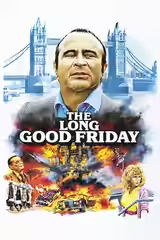
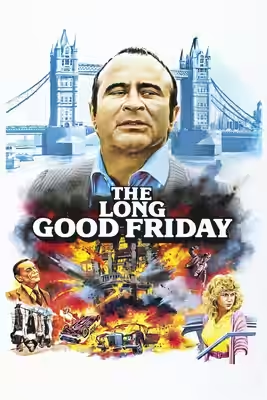
Carlito's Way is the more tender and more openly emotional of the two, while The Long Good Friday is the funnier and the more frightening. Both follow a criminal who plans a respectable future and finds the past unwilling to let go. Choose De Palma's film for Pacino's weariness and the set pieces; choose the London film for Bob Hoskins and a sharper eye on money and ambition.
Is Carlito's Way based on a true story or a book?
Carlito's Way is based on a novel by Edwin Torres, not on a true story. The film follows Carlito Brigante, a drug dealer leaving prison and trying to go straight while his loyalties and his lawyer pull him back. You do not need to have read the book; the film's pleasures are Pacino, Sean Penn and De Palma's staging, none of which depend on the source.
What should I watch after Carlito's Way?
After Carlito's Way, try Le Trou (1960, Fi1m 88): Prison escape stripped to patient observation, physical work and the problem of trust. Then The Long Good Friday (1980, Fi1m 88): Another criminal discovers that planning a respectable future does not make it likely.

Cast

If you liked this, try…

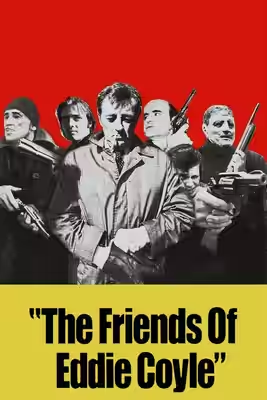
  1. The Friends of Eddie Coyle (1973) · not reviewed yetMore tired criminals, dangerous favours and performances that never ask for sympathy.

  2. Le Trou (1960, Fi1m 88)Prison escape stripped to patient observation, physical work and the problem of trust.

  3. The Long Good Friday (1980, Fi1m 88)Another criminal discovers that planning a respectable future does not make it likely.

  4. A Better Tomorrow (1986) · not reviewed yetAnother attempt to go straight complicated by loyalty to the wrong people.

  5. Sonatine (1993) · not reviewed yetFor quieter gangsters, sudden violence and a retreat that offers little reassurance.

Free account

Know what to watch tonight

Two lists that know where things are streaming, collections you can share, your own score beside ours, and Discover that remembers what you have seen.

  • Want to see, sorted by what is streaming now
  • Seen, with your score out of ten
  • No adverts, ever