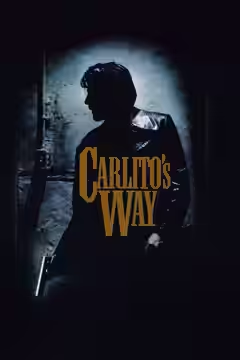
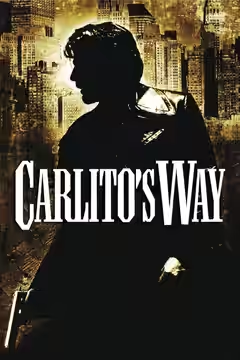
Brian De Palma makes a familiar gangster story tense and unexpectedly moving, with Al Pacino’s restraint giving us someone worth worrying about. The middle wanders, but the set pieces justify the patience.
Carlito’s Way is a fine crime film about a man who means to change and still expects his old loyalties to make sense. Brian De Palma takes the familiar business of a drug dealer leaving prison and gives it enough feeling to make the dangers matter. Al Pacino’s Carlito Brigante wants to go straight, but keeping faith with people from his criminal life makes that harder than it sounds. We believe in his wish to stop, even when his judgement gives us reason to doubt the plan.
Pacino’s restraint is crucial: he makes Carlito seem tired enough to want another life without draining him of the confidence that got him into trouble. There is still a star’s pleasure in being watched, and it is right for a man whose reputation will not leave him alone. Sean Penn, as his lawyer David Kleinfeld, supplies a less comfortable kind of company. Penn makes the corruption grubby and personal, and makes it easy to understand how an obligation to this man could become dangerous.
Stephen H. Burum’s fluid tracking shots let us study the spaces Carlito has to move through, and that attention pays off in the pool-hall sequence. We were tense through it, because De Palma gives us time to anticipate violence and still makes the shooting a shock. Editors Bill Pankow and Kristina Boden keep the action intelligible as the pace tightens. Their cutting allows us to follow Carlito across the pool hall, which makes each decision feel urgent.
Richard Sylbert’s production design makes the social clubs feel like places where Carlito knows how to behave. Their familiarity helps us understand the pull of his old life, even when we would prefer him to leave it. Patrick Doyle’s score is less discreet than Pacino, sometimes pressing a sadness the performance has already made clear. Its sweep suits De Palma’s willingness to take these people’s feelings seriously, though a little less encouragement would have served them.
Penelope Ann Miller’s scenes as Gail give the film room to be tender, and Pacino responds well to the change of pace. We were more moved by those quieter exchanges than we expected, because he lets the wish for a different life show through the weariness. David Koepp’s screenplay is less successful at keeping the middle taut: the obstacles accumulate, while Carlito’s basic predicament remains much the same. At 144 minutes, the film allows us too long to recognise a problem it has already established.
The story of a gangster trying to leave crime behind is hardly a discovery, and most critics are right to recognise the familiar plotting. We put more weight on how readily Pacino makes us believe Carlito might manage it, despite everything we know about this sort of film. De Palma gives that hope enough time to make the suspense hurt. Choose it for an evening when the people between the gunfights matter as much as the gunfights.