Brian Fee’s sequel returns the series to racing after the spy caper of Cars 2, and it is kind, handsome and dull in about equal parts. Cristela Alonzo’s Cruz Ramirez is the reason to stay; the training montages are the reason you may drift off.
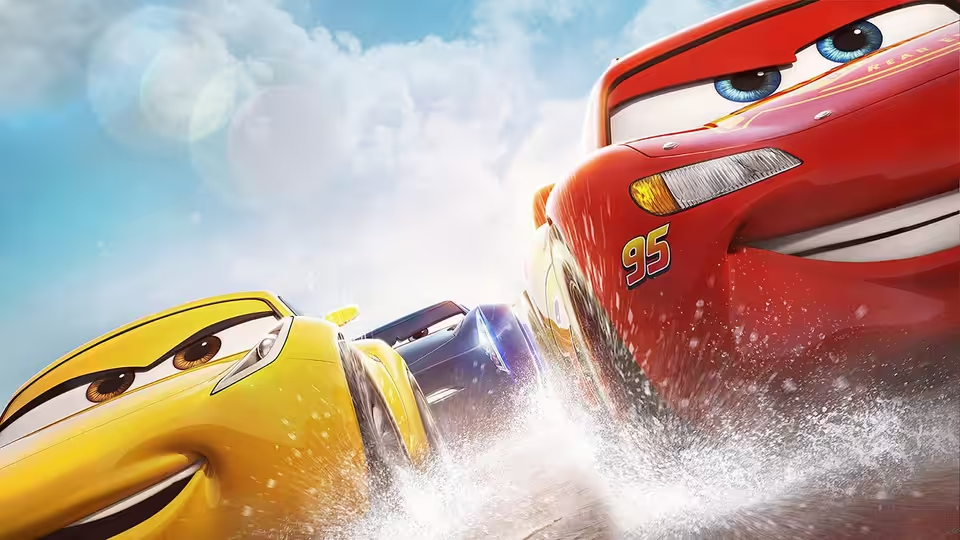
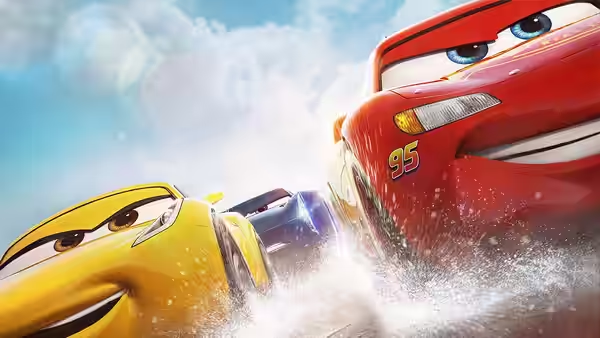
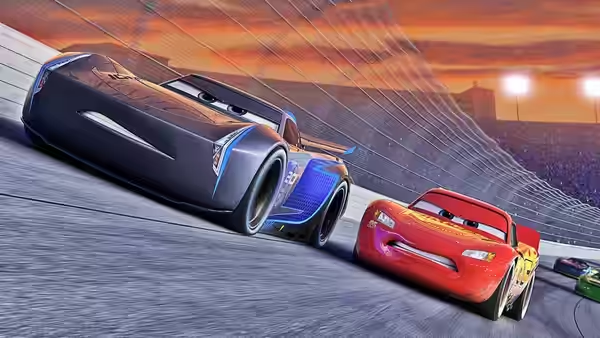
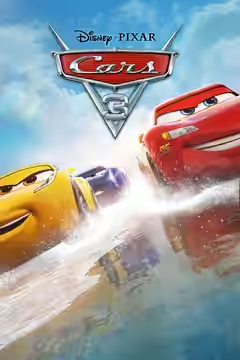
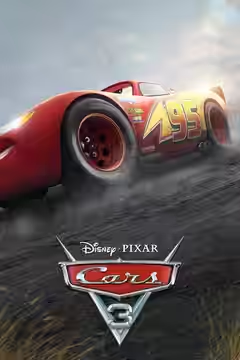
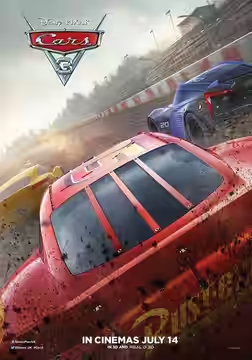
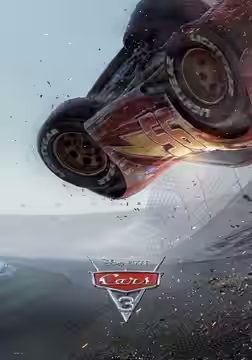
Brian Fee’s Cars 3 returns the series to motor racing after the spy caper of Cars 2. Lightning McQueen (Owen Wilson) is old. A younger, faster car called Jackson Storm (Armie Hammer) has arrived, the veterans are being shown the door, and after a crash Lightning has to decide whether he wants one more season or a graceful exit. The script by Bob Peterson, Kiel Murray and Mike Rich takes that unusual idea seriously. The result is kind, handsome and dull, and it comes to life only when a new character is on screen.
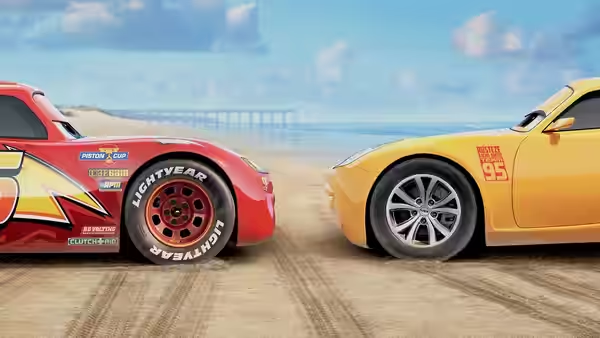
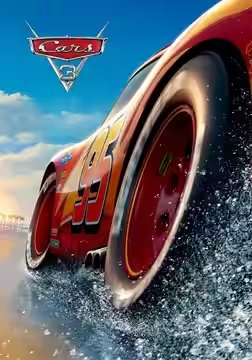
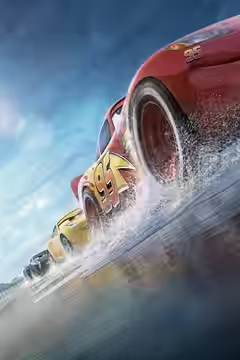
Kim White, Michael Sparber and Jeremy Lasky shoot the races as if from a camera car: the tarmac shivers with heat, tyre smoke hangs in the floodlights, and the paintwork picks up the crowd’s reflections so cleanly that we briefly forgot the cars had eyes. A training sequence on a beach, sand kicking up gold behind the wheels, is lovely to look at. Jay Shuster and William Cone design Storm as a black wedge with cold blue lights and give the new Rust-eze centre the glass, white walls and humming simulators of an expensive gym, so that Radiator Springs, all neon and rust, looks like the past when we cut back to it.
Cristela Alonzo’s Cruz Ramirez is the reason to stay. She is a trainer who talks in motivational slogans, calls Lightning her senior project and treats him like a man being eased towards a bungalow, and Alonzo plays the brightness as armour rather than as a joke. When the film finally lets her say what she wants, the scene is the best-written in it. Armie Hammer’s Storm is a voice and a paint job, given the same taunt in three phrasings. Nathan Fillion’s Sterling, the new owner with a merchandise plan for Lightning’s retirement, is the one place the film smiles at its own business model, briefly.
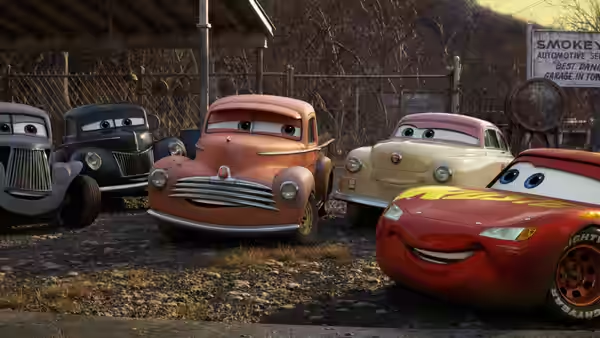
Then there is Doc Hudson. Paul Newman voiced Doc in Cars (2006), and the film brings the character back in memory using recordings of Newman that went unused the first time. The idea sounds ghoulish on paper, and we went in braced. It is not. Hearing that gravel, that dry patience, over footage of an old racer coaching a young one, got at us more than we expected, and Chris Cooper’s Smokey, a mechanic who knew Doc, takes over the coaching with the right lack of fuss. It is the one stretch of the film with weight, and it is over in a few minutes.
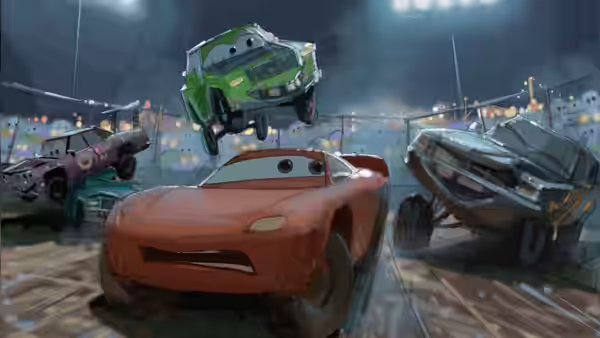
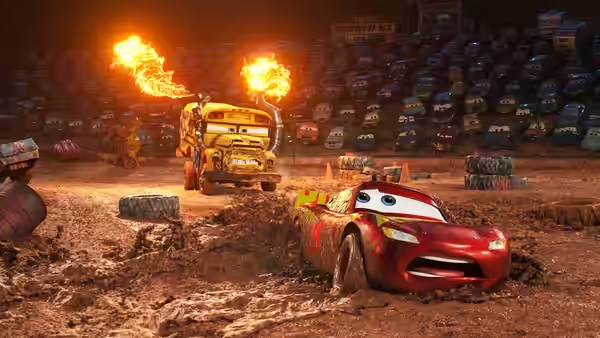
The middle is where the trouble is. Jason Hudak’s cut moves from training montage to training montage, simulator to beach to dirt, each one apparently teaching Lightning something the last did not. We were bored, plainly, for about twenty minutes, and then irritated that a studio this good at pacing had not noticed. A demolition derby at a mud track, presided over by Lea DeLaria’s school bus Miss Fritter, wakes the film up for exactly as long as it lasts. Kerry Washington’s Natalie Certain, a statistician in the commentary box beside Bob Costas’s Bob Cutlass, is a good idea used only to recite percentages.
Randy Newman’s score is guitar and strings, warm and unhurried, with one mournful cue after the crash that does more than the dialogue around it; the rest is pleasant and gone by the time you reach the car park. The jokes do not land. A film with a U certificate need not be funny for adults, but the first Cars was, and this one has a habit of setting up a gag and then explaining it.
By the studio’s standards this sits where the series has always sat, near the bottom: a clear step up from Cars 2 and a step down from the first film. The last act has one idea we will not describe. It is the best idea in the film, it arrives with twenty minutes to go, and the film rushes it.
It runs 102 minutes, it will not frighten anyone, and the children will be fine. It is a film about knowing when to stop, from a series that has yet to work out how.