Film review

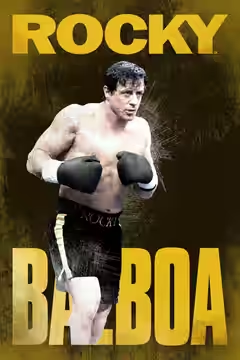
Rocky Balboa

2006 · Directed by Sylvester Stallone · 1h 42m · MPA PG

In a sentenceStallone spends an hour mourning beautifully and then, out of habit, takes his shirt off

DramaAction

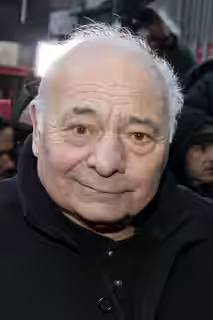
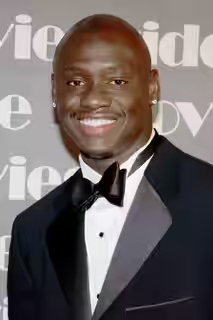
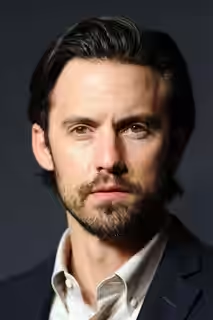
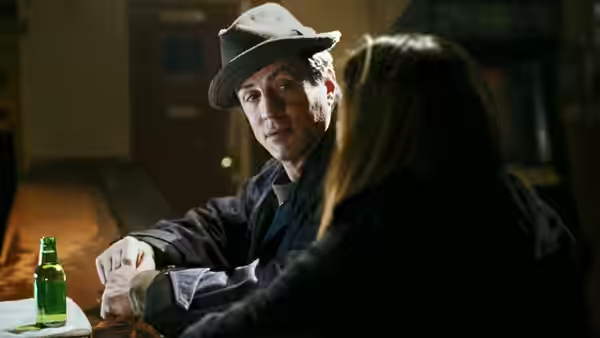
Philadelphia, some years after Adrian’s death. Rocky Balboa (Sylvester Stallone) runs a small Italian restaurant named after her, telling the same fight stories to diners every night, and marks each anniversary by touring the old neighbourhood with his brother-in-law Paulie (Burt Young). His son Robert (Milo Ventimiglia) works in an office and would rather not be Rocky’s son in public. In a bar Rocky recognises Marie (Geraldine Hughes), the girl he once walked home, now a barmaid with a teenage son, Steps (James Francis Kelly III). Meanwhile Mason ‘The Line’ Dixon (Antonio Tarver), the undefeated heavyweight champion, is booed for beating nobody worth beating, and a computer simulation decides a prime Rocky would have knocked him out. Dixon’s promoters see an exhibition. Rocky sees something else.

Fi1m review

Stallone’s sixth outing as Rocky is smaller, sadder and better than anyone had a right to expect. The first hour, a widower telling old stories in a half-empty restaurant, is the best in the series since 1976. The fight is the part we could have done without.

Sixteen years after Rocky V (1990), Sylvester Stallone writes, directs and stars in a sixth film about the Philadelphia fighter, and the surprise is how little of it is about fighting. For most of its 102 minutes Rocky Balboa is a film about a widower who has run out of people to tell his stories to. It is small, slow and sad, and it is better than it has any right to be. The boxing arrives late, as if out of obligation, and it is the weakest thing in the film.

The opening is a man taking a folding chair out of a tree. Rocky keeps it there so he can sit by Adrian’s grave, and on the anniversary of her death he drags Paulie (Burt Young) round the old neighbourhood: the pet shop where she worked, the rink where he took her skating, now a fenced lot. Clark Mathis shoots the city in winter greys and streetlamp orange, mostly handheld, and Franco-Giacomo Carbone hangs Rocky’s restaurant with framed fight photographs so the past is on every wall while he talks to diners about it. Spider Rico (Pedro Lovell), who fought him in the first film, eats there for nothing. We did not expect to be moved by any of this, and we were, chiefly because Stallone plays Rocky as a man who knows the stories bore people and tells them anyway.

Young’s Paulie is the best he has been in the series, sour, ashamed and grieving in a way he will not name, and the film lets him be unkind about Adrian and then sorry. Geraldine Hughes plays Marie, the girl Rocky walked home in the first film, without a scrap of romance, which is the right call. Milo Ventimiglia, as the son who would rather not be Rocky’s son at the office, gets the speech the film is built around, about how life hits harder than any opponent and the trick is to keep moving. We knew Stallone had written it for himself, we could hear the seams, and it got us anyway. We were slightly embarrassed about that on the way home.

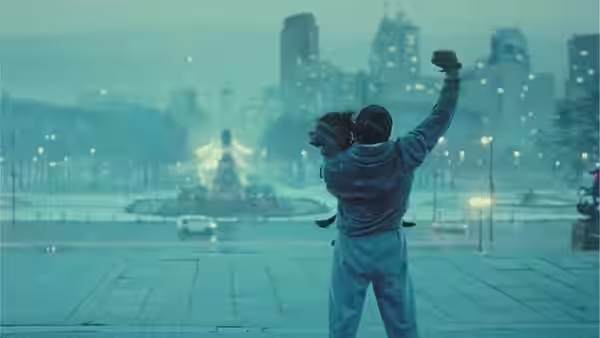
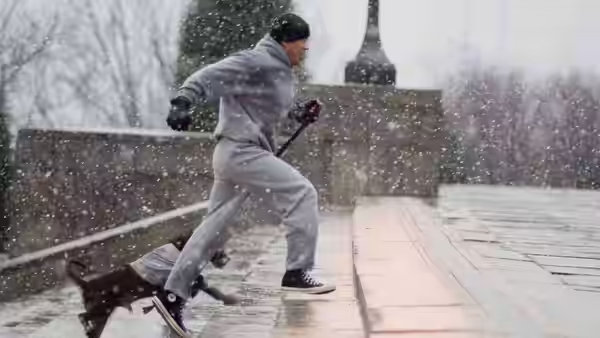
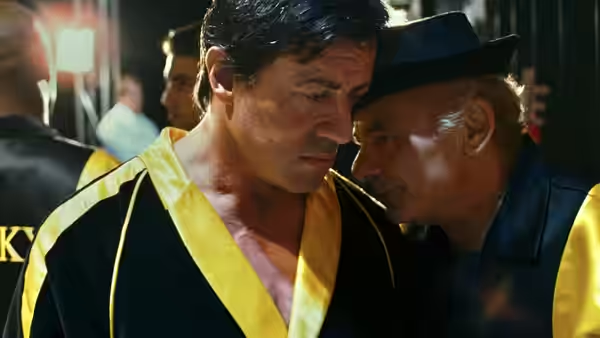
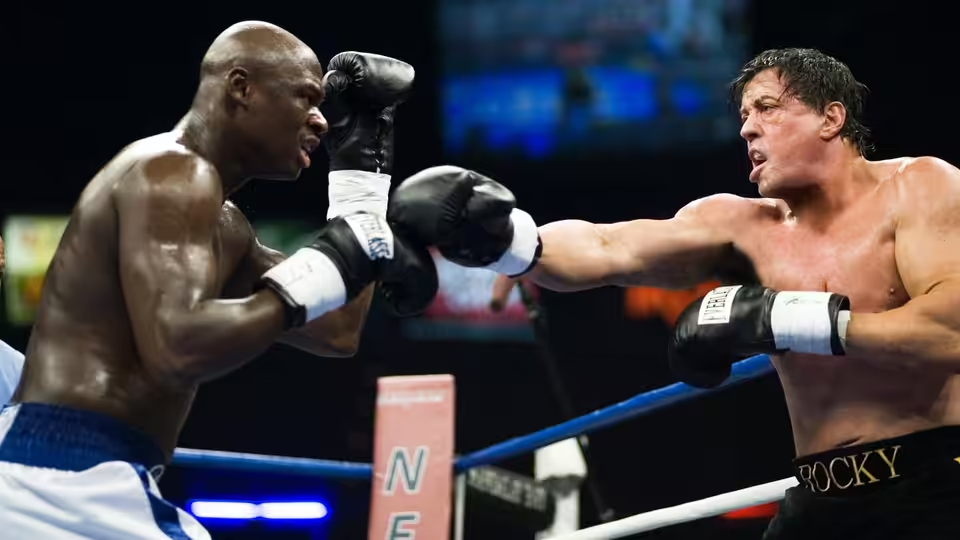
Then the plot has to happen. Mason ‘The Line’ Dixon (Antonio Tarver) is an undefeated champion nobody likes, a computer simulation says a young Rocky would have beaten him, and his promoter, Lou DiBella playing himself, smells an exhibition. Tarver is a real boxer rather than an actor, and the film gives him a trainer (Henry G. Sanders), one scene about not being loved and not much else; he is a target, not a character. Rocky asks the state commission for a licence, is refused, and delivers a speech about the right to some pain that is overwritten and that Stallone plays with such conviction we let it go. The training montage follows, with the steps and the sides of beef, and Bill Conti brings back the fanfare he has been sitting on for an hour. It did what it has always done to us.

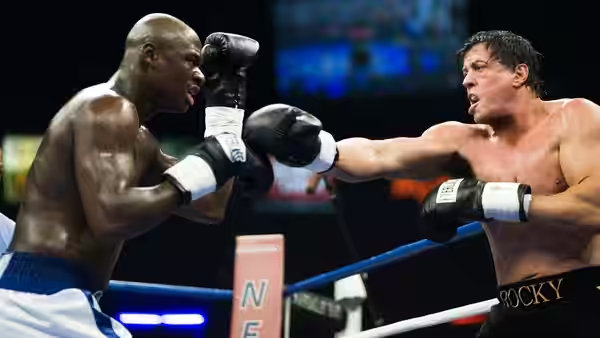
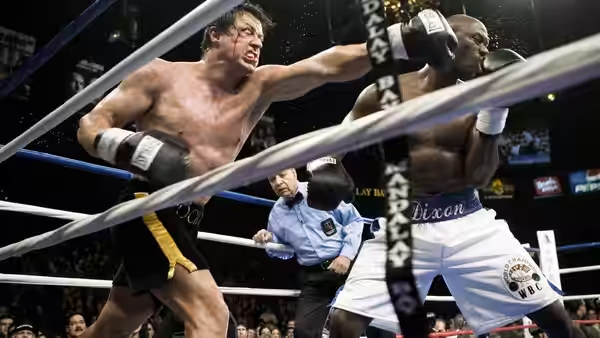
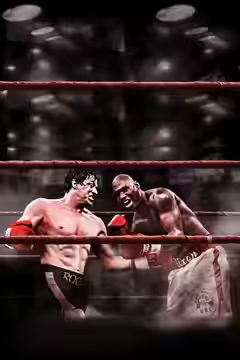
The fight is shot to look like televised boxing, with the video sheen, the ringside commentators and the on-screen graphics. It is a bold idea and it does not work. Sean Albertson cuts the first hour with real patience, letting scenes sit until they are uncomfortable, and then cuts the fight into commentary-box angles so quickly we lose the shape of the ring. The first film’s fight was ugly and you always knew where both men were. Here we mostly know who has just been hit. Mike Tyson turns up at ringside as himself, which reminds us what a working heavyweight looks like and does the film no favours.

Against the series this sits second, and a long way behind first. The 1976 film was a small picture about a lonely man given one chance, and every sequel after it swapped the loneliness for a rival and a montage. Stallone has gone back to the loneliness and found he still knows how to write it. What he cannot do is stop: every character gets a speech about the past, the simulation is a silly hinge for a whole third act, and the film explains its feelings after the faces have already done it.

See it for the folding chair, for Young, and for a restaurant where the owner tells the same story every night and means it. It runs 102 minutes and carries a 12A. The best of it is over before anyone puts on gloves.
Critical consensus AI synthesised

61
Positive
8
Mixed
2
Negative
4

Most critics come away warmer than they expected. Eight of the fourteen reviews are positive, and the praise clusters in two places: Stallone’s performance, which several call his best work in years, and the decision to strip the series back to the small-scale, grimier feel of the original. The widowed, ageing Rocky, the conversations about the past and the melancholy tone are what win the film its goodwill, with the training montage and the final fight judged to deliver what the series promises.

The reservations are about the premise and the pace. Several critics find a near-sixty-year-old returning to the ring hard to swallow, and the first half is called slow and sentimental, with some overwritten speeches. The spread is wide. The Guardian mocks the film’s bid for dignity, the Los Angeles Times calls it a recycling of greatest hits, and Slant finds the solemnity turgid where it wants extravagance. Time Out settles for glorified TV special. The later retrospective pieces are gentler, crediting the years between entries with adding weight.

Empire
2 January 2007 · Ian Freer
80*

The film is both terrible and brilliant, remaining simple, sentimental and cocksure while recapturing the original's gritty feel and emotional moments through Stallone's affection for the character. It excels in nostalgia, training montages and the final fight's hyper-real pugilism despite some overwritten speeches and fuzzy motivation.

Read the full review →
Screen Daily
17 December 2006
80*

The critic praises it as a stirring, grounded character drama and the most emotionally resonant in the series since the original, highlighting Stallone's best performance in years. They single out the relatable tale of aging and family relationships.

Read the full review →
The AV Club
17 December 2015 · Jesse Hassenger
75*

Rocky Balboa is part of the grittier, more melancholy phase of the series, picking up with a nearly 60-year-old Balboa who has lost his wife and gets an unexpected new shot at proving himself. It does this stuff better than Rocky V, gaining emotional heft from the years accumulated between entries.

Read the full review →
Variety
15 December 2006
75*

The review finds that time away has done the franchise good, leading to a surprisingly satisfying third-act bout after a slow start. The critic singles out the return to the grimier, small-scale sensibility of the original and the effective build toward the final fight for praise.

Read the full review →
The Hollywood Reporter
15 December 2006 · The Associated Press
70*

The low-key, stripped-down production defies expectations by capturing the heart and soul of the original Rocky. Stallone's grass-roots approach and use of real locations reconnects with the character's endearing qualities, though the film hits some rocky patches in the ring scenes.

Read the full review →
The New York Times
20 December 2006 · Stephen Holden
70*

The critic finds the film surprisingly not an embarrassment and notes that it goes the distance in spite of itself as a raw-boned fable with all heart. The critic singles out the enduring appeal of the character and his philosophy of the ring as what gives the story its modest credibility.

Read the full review →

Cast

If you liked this, try…

Fat City poster

Fat City

1972 · John Huston’s washed-up boxers in Stockton; the sadness Rocky only borrows, played straight.

The Wrestler poster85

The Wrestler

2008 · Mickey Rourke as a broken showman still climbing into the ring; the honest version.

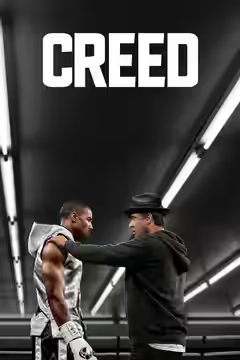
Creed poster85

Creed

2015 · Stallone hands the gloves to Michael B. Jordan and gives his best late performance.

Requiem for a Heavyweight poster

Requiem for a Heavyweight

1962 · Anthony Quinn as a fighter told to stop; the film Rocky’s restaurant scenes remember.

The Boxer poster

The Boxer

1997 · Daniel Day-Lewis comes home to Belfast and a gym; boxing as the quiet part.