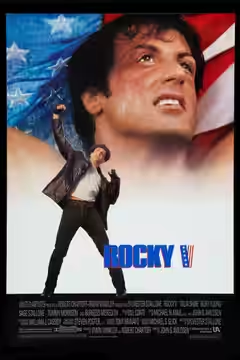
Sylvester Stallone and John G. Avildsen, who directed the first film, send Rocky home to South Philadelphia, broke and hurt, and for half an hour the series remembers what it was for. Then a protégé with a mullet arrives, and the film turns into a cartoon.
Fourteen years after Rocky, John G. Avildsen, who directed that first film, is back, and Sylvester Stallone’s script sends the champion home. Rocky returns from Moscow with tremors in his hands; a doctor tells him he cannot fight again; Paulie has signed the money over to an accountant who has lost it. The house and the cars go, and the Balboas move back to Paulie’s old house in South Philadelphia. After two sequels of stadiums and montages, the idea is to make the series small again. For about half an hour it works. The rest of Rocky V is a different, sillier film.
The opening is the best thing here. Rocky sits in a Moscow changing room and cannot make his hands stop, and Stallone plays it without a word of self-pity, a big man puzzled by his own body. Back home he is the shambling, mumbling Rocky of 1976 again. Talia Shire gets more to do, and an argument between husband and wife in an alley is the one scene where the film sounds like people talking rather than a script being read. Burt Young turns Paulie’s guilt into comedy first and then into something sadder.
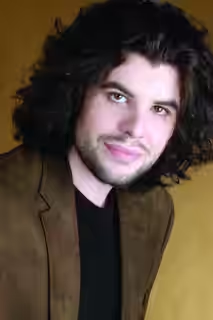
Sage Stallone plays their son Robert as a boy dropped into a school where nobody cares who his father is and everybody wants his jacket. He is not a polished actor and it does not matter. The scenes of him waiting outside the gym while his father coaches somebody else’s son are plainly written and plainly played. We were moved more than we expected by a child standing on a step while his father walks past him talking to another man, and the film, for once, lets the moment sit.
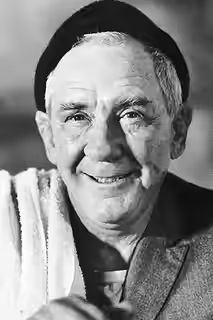
Steven Poster shoots the neighbourhood in flat winter light, brown brick under a grey sky, and he shoots the mansion bright and empty so that we feel the drop. William J. Cassidy’s rebuilt gym has Mickey’s name still on the glass, and Burgess Meredith turns up in a memory to bark at Rocky, the one piece of nostalgia the film earns without asking. Bill Conti’s fanfare comes back whenever the film wants us to think of 1976, and it works every time; the film leans on it. Four editors are credited, Avildsen among them, and it shows in the training montages, which are cut to period songs and look like adverts for trainers.
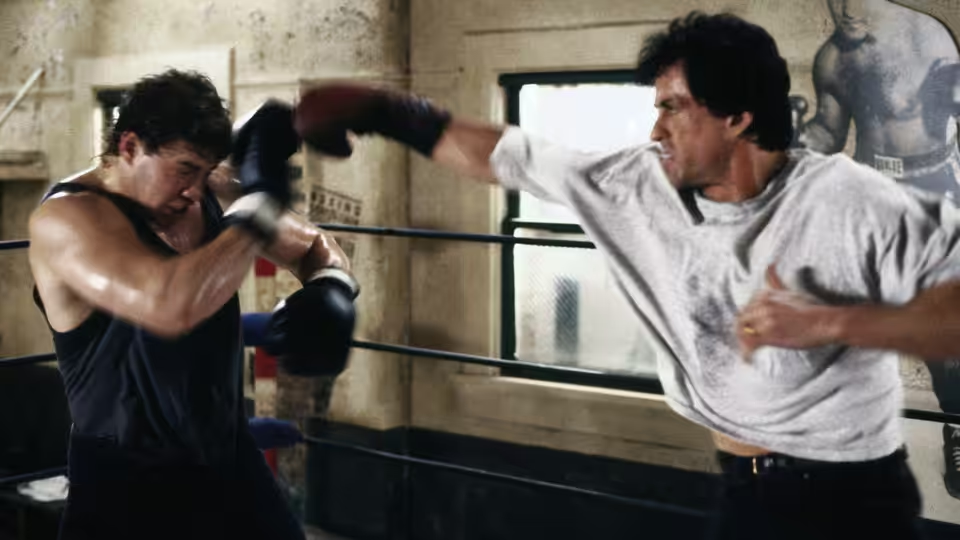
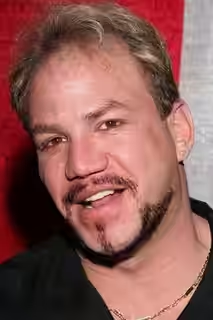
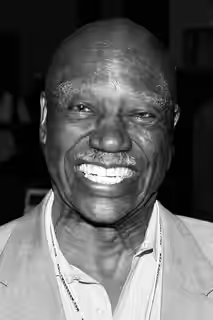
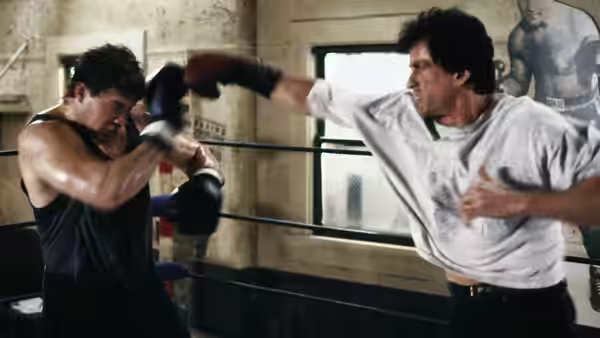
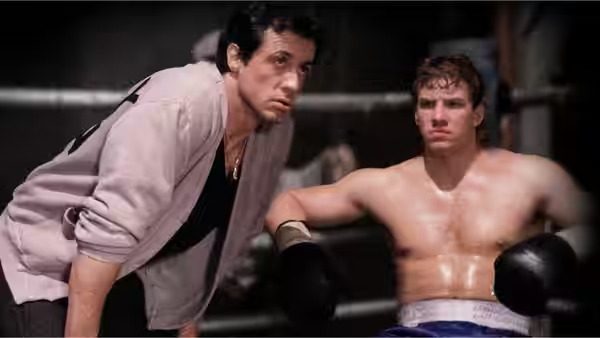
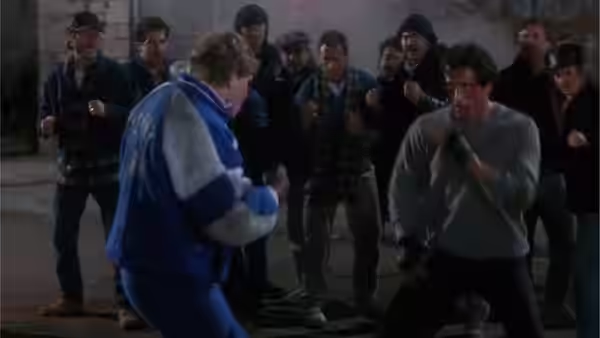
The trouble is Tommy Gunn. Tommy Morrison was a real heavyweight and he hits like one; he delivers dialogue like a man who has been handed it in the car park. The film wants us to see Rocky’s younger self in him and gives us a mullet and a scowl. Richard Gant plays the promoter George Washington Duke in loud suits, and Gant is enjoyable, but the script treats him as the villain of a children’s serial. Michael Williams’s Union Cane, the new champion, gets perhaps three lines. The mentor plot is the first film turned round, the old fighter now the trainer, and Stallone cannot find anything in it that he and Meredith did not do better the first time.
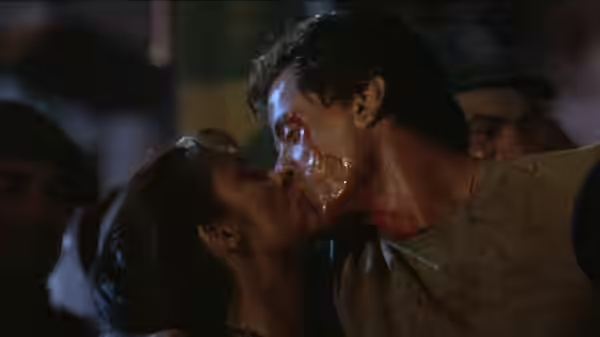
The last reel takes a turn we will not describe. What we can say is that the film stages it as a triumph, with Conti at full volume, and that it belongs in a louder, dumber film than the one we had been watching. We groaned, out loud. A story that began with a man told his brain could not take another punch ought to have had something to say about that, and it does not.
Rocky was about a man who wanted to go the distance. The sequels were about winning. This one is about a man with nothing left to want, which is the most interesting place the character has ever been, and the film flinches from it after half an hour. It is more honest than Rocky IV and less fun. Stallone has said since that he wishes he had not made it. We would keep the first half hour and the scenes with the boy, and let him have the rest. It runs 104 minutes and carries a PG.