Sylvester Stallone takes over as director and runs the first film again, with more money and less patience. The middle hour drags and the sentiment is thick, but the fight at the end is worth waiting for.
Three years after Rocky, Sylvester Stallone has taken the director’s chair from John G. Avildsen and made the same film again. That is not entirely a complaint. The first picture ended with a loser who had gone the distance, and the honest sequel is the one that asks what such a man does next: he spends the money, loses it, and finds there is nothing else he is good at. Rocky II knows this and says so, and for half an hour it is a decent film about a man who has been briefly famous. Then it has to get him back into the ring, and the getting takes a long time.
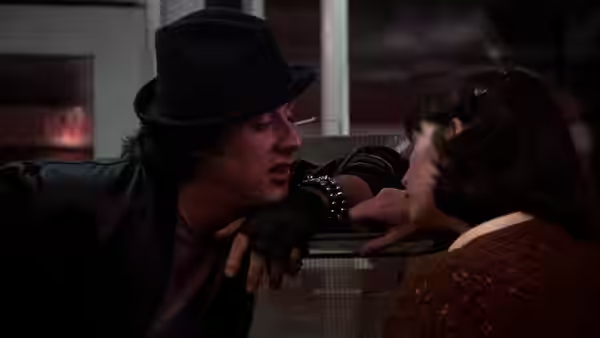
The early scenes are the best writing Stallone does here. Rocky proposes to Adrian at the zoo, with the tigers behind the glass, and Talia Shire lets a long silence pass across her face before she answers. He buys a house he cannot afford and a black car he cannot drive, and Tom Bronson and Sandy Berke Jordan put him in a leather jacket with a tiger on the back, so that his new money is visible from across the street. It is gone within a couple of reels. The commercial shoot, where he stands in a stiff suit and cannot read the cue cards, is the one scene that is properly cruel; we felt for him, and were slightly annoyed with the film for making so sure that we did. Burt Young’s Paulie is still a small man made smaller by his brother-in-law’s luck.
Bill Butler shoots the city brighter and cleaner than it looked in 1976, and the difference is not in the film’s favour. The Philadelphia of Rocky was grey and wet and lit like a place nobody had chosen to film. Here the sun is out and the new house is full of light, and only the meat plant where Rocky briefly swings a carcass keeps the old grime. Frank McRae’s foreman, laying him off in one unhurried scene, is one of the few faces that seems to have a life outside the story.
Carl Weathers has the better arc and knows it. Apollo has won and it has done him no good: the letters say the fight was fixed, and Weathers plays a champion who cannot bear being doubted, snapping at Duke (Tony Burton) and at his wife Mary Anne (Sylvia Meals), and taunting Rocky through the newspapers because he cannot reach him any other way. It is a real performance of wounded pride, and the film keeps cutting away from it to watch Rocky mope. Burgess Meredith’s Mickey is back, with the rasp and the spit of the first film, but the script gives him a great deal of shouting and only two or three things to say.
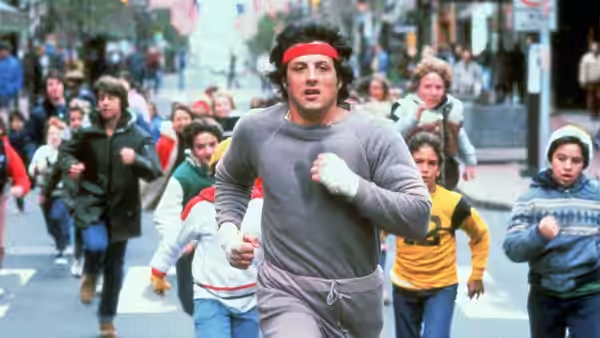
The second half takes a turn we will not describe. Stallone directs it with the lights low and the music up, and Bill Conti’s score does the work the pictures will not, swelling under every doorway. The sentiment is thick enough to see from the back row. And yet the training run that follows, with Rocky collecting children on every corner until hundreds of them are chasing him up the museum steps, got us anyway. We were embarrassed by it and moved by it in the same breath, and if you can hold both feelings at once you are the audience this film wants.
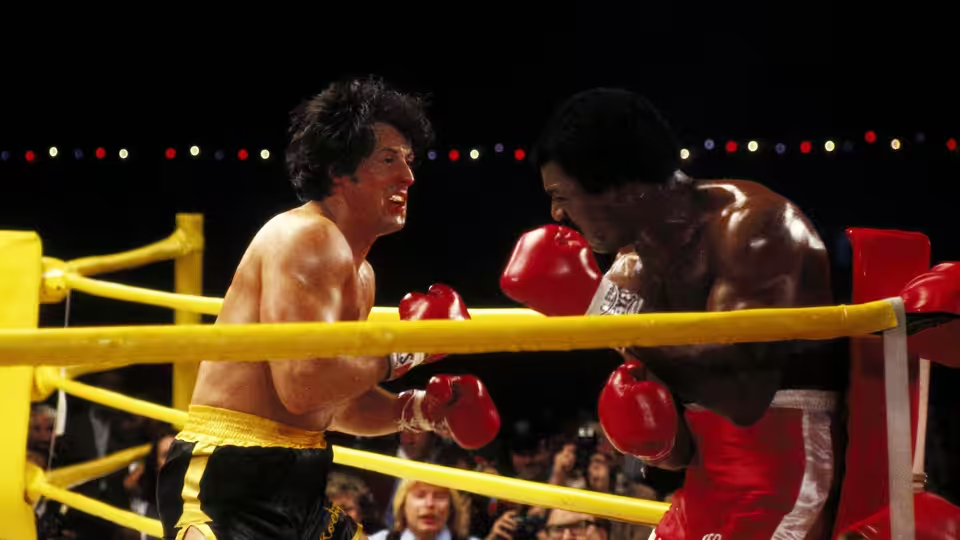
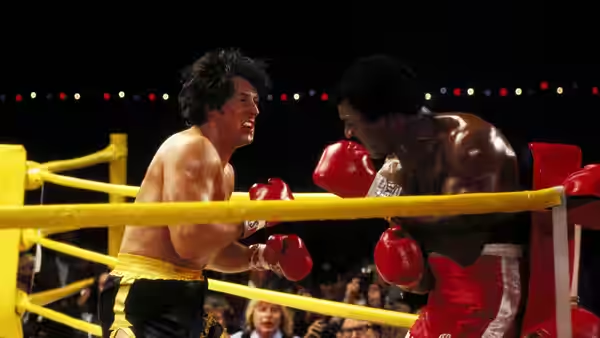
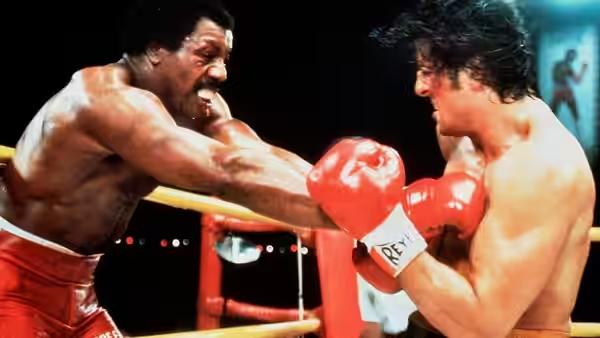
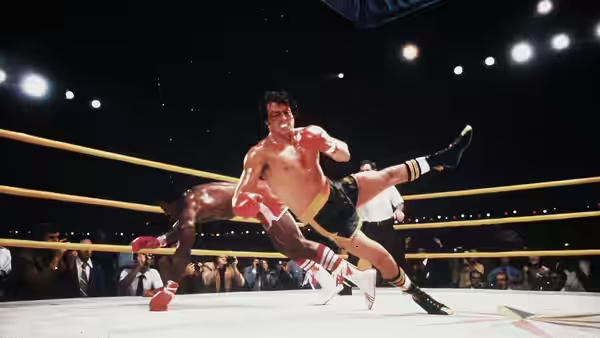
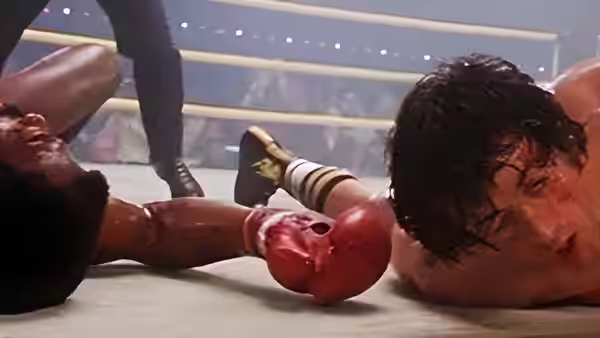
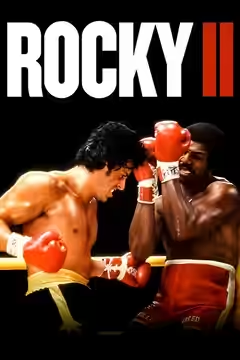
Then the fight, and the fight is superb. Janice Hampton and Stanford C. Allen cut it round by round, faster and tighter than anything in the first film, so that we always know where each man is and what the last punch cost him. Butler puts the camera low and close, between the ropes, and the gloves land with a heavy, wet sound. Weathers moves like a champion and Stallone like a man who has to be hit before he can start, and the last thirty seconds are edited with real nerve. We were on the edge of the sofa, which is what the previous ninety minutes had been promising and had not quite paid.
Against the first film this is plainly the smaller picture: louder in its music, cruder in its cuts, less sure of when to leave a room. Stallone gives his own character three speeches too many and Adrian too few. But the people are the same people, and the ending is earned in the ring rather than in the dialogue. It runs 119 minutes and carries a PG. Watch the first one again beforehand; this makes more sense, and matters more, if you do.