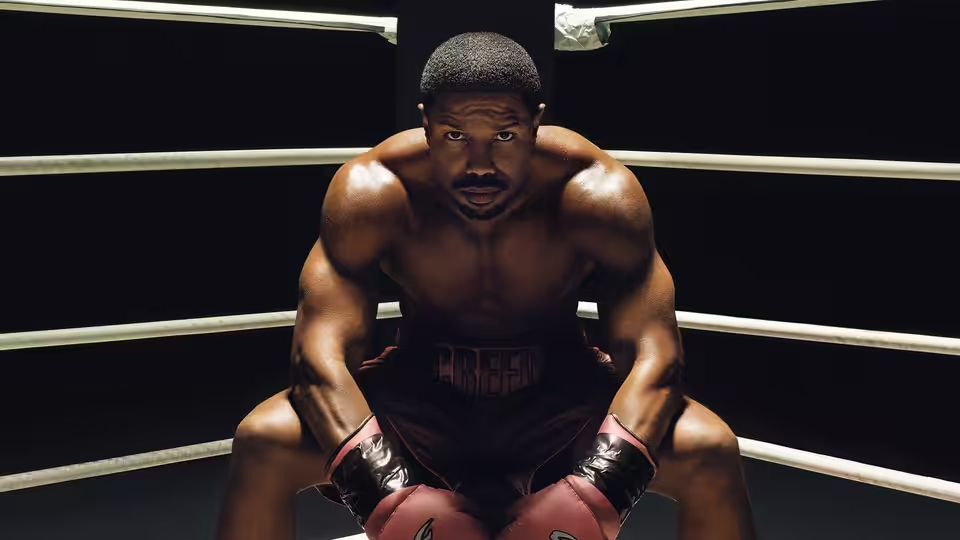
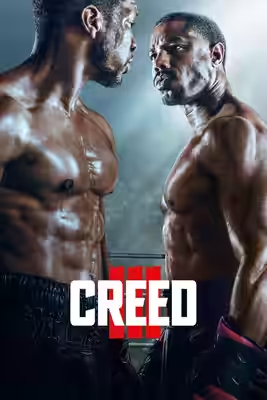
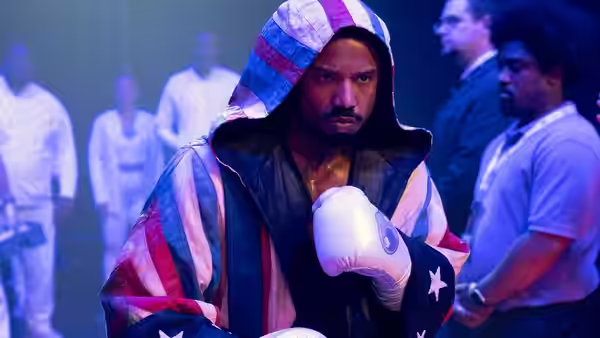
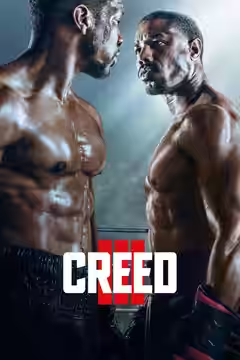
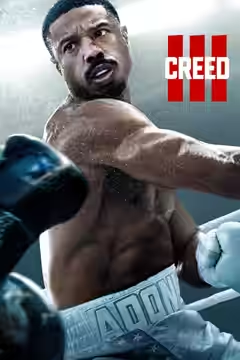
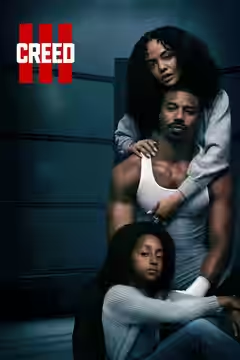
Michael B. Jordan directs himself with confidence and without Stallone, and Jonathan Majors gives the film a wounded, watchful antagonist it barely knows what to do with. The fights are inventive; the story around them is the old one, told faster than it can bear.
The first Creed film, in 2015, was about a young man with a famous surname and nothing else. Eight years on, Adonis Creed has everything: a retirement taken at the top, a gym with his own name over the door, a fighter under contract. Creed III is the first film in the series without Sylvester Stallone, and the first that Michael B. Jordan has directed. It is a confident piece of work, and its best idea is also its problem. The hero no longer wants anything, so the film has to bring wanting in from outside.
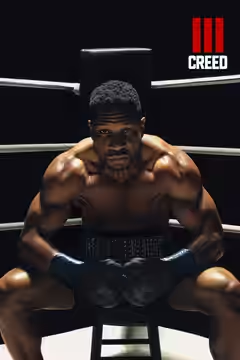
It arrives in the shape of Jonathan Majors. Damian Anderson was the better boxer when the two of them were boys, and he has spent eighteen years in prison while Adonis became Adonis. Majors plays him with his shoulders slightly forward and his eyes doing all the work, a man who says “yes, sir” a beat too long and means several things by it. There is a scene in a diner where he eats as if someone might take the plate away, and Adonis cannot quite meet his eye. That was the moment the film got hold of us. No punch has been thrown, and we already knew which of these men we would think about on the way home.
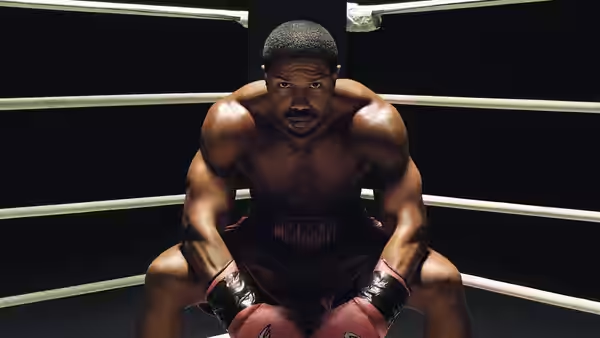
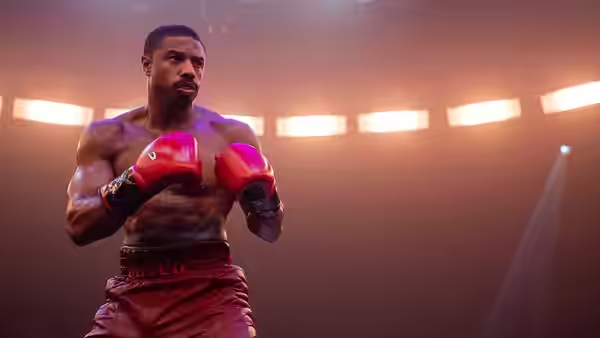
Jordan the director is the good news. Kramer Morgenthau shoots the Creed house in cool greys and long clean lines and the gym in warmer, closer light, so that Adonis relaxes when he walks into one and stiffens in the other. The fights are staged from inside the ring rather than from the seats, the camera at hip height and moving with the men, and the sound of a glove landing is mixed to be felt as much as heard. The final bout does something we will only half describe: the arena stops being an arena for a stretch, and the film shows us what the two men are actually hitting. The influence is animation, and it works.
Tyler Nelson cuts the fights clean and the drama quick, sometimes too quick, so that a scene which needs a silence gets a fade instead. Joseph Shirley’s score is brass and low drums under the boxing and goes almost quiet in the family scenes. Jahmin Assa’s design makes the point about money without a line of dialogue, and Lizz Wolf and Greg Hopwood keep Damian in the same worn jacket for long enough that when he finally changes his clothes it registers as a threat.
The trouble is pace, and it is in the writing. Zach Baylin and Keenan Coogler’s screenplay has to move a man from parole to a world title shot, and it does it in the time most films take to get a character across town. The friendship, the guilt, the years of letters: all of it is real and none of it is given room. Tessa Thompson’s Bianca has a career of her own and a marriage starting to show cracks, and the film remembers this in roughly every third scene. Then comes a training montage, the one from 1976 with the furniture moved, and we sat through it impatient, aware that the interesting film was in the other room having a conversation we were not being shown.
We felt it most in the last act. The fight is thrilling and we were leaning forward, and at the same time we could feel how much had been skipped to get there. The film knows Damian is the more compelling man and keeps cutting to him. But it is called Creed, so it has to keep reminding us that a retired champion with a gym is the underdog, and it never quite manages the trick.
Against the series’ own standards this sits below the first film and above the second. Jordan has made a good boxing picture with a great performance in it that belongs to somebody else, and he has the sense to let it breathe whenever the plot permits. It runs 116 minutes and carries a 12A. See it for Majors, and for a director who plainly has a second film in him.