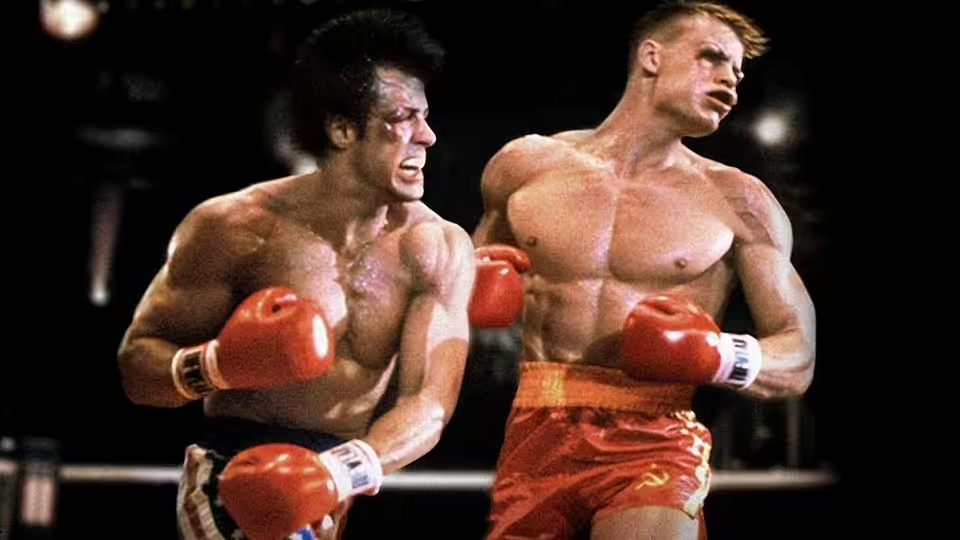
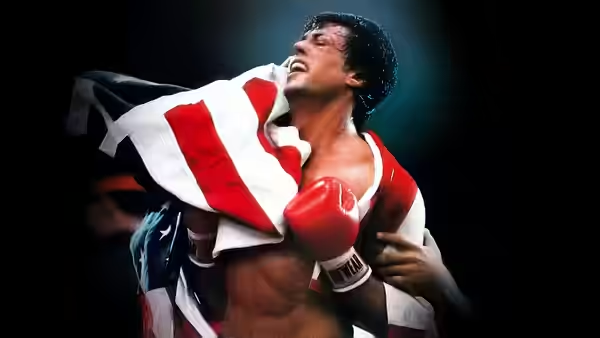
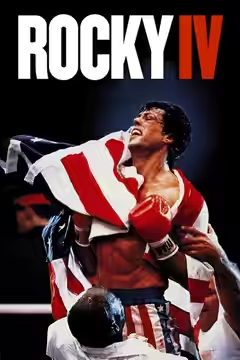
Stallone strips the Rocky story to a poster and a soundtrack: one Soviet giant, one American in the snow, and Vince DiCola’s synthesiser doing the talking. The training footage still gets the pulse up; everything around it has been cut away.
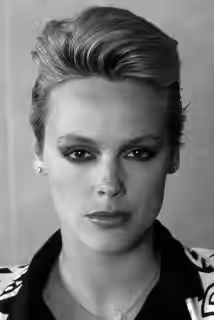
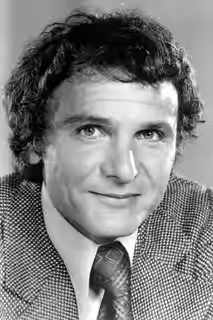
Sylvester Stallone writes, directs and stars in the fourth Rocky film, which runs 91 minutes and opens with the last few minutes of the third. Rocky Balboa is champion, comfortable and a little lost, and the film has no interest in any of that. It wants a villain, and it gets one: Ivan Drago (Dolph Lundgren), a Soviet amateur who arrives in America with his wife Ludmilla (Brigitte Nielsen) and a handler, Nicoli Koloff (Michael Pataki), and is presented at a press conference as something built in a laboratory. Apollo Creed (Carl Weathers) takes it personally and arranges an exhibition in Las Vegas. What happens in that ring we will not describe; the rest of the film is Rocky’s answer to it.
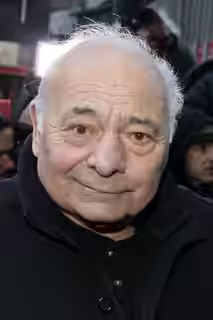
The plot is an outline and Stallone knows it. His script has perhaps four scenes in which two people sit and talk, and in each of them one person says what they feel while the other nods. Talia Shire’s Adrian gets one real objection and then a change of heart. Burt Young’s Paulie is given a talking robot for his birthday, and the film treats this as normal. Weathers is the one actor allowed some life: his Apollo is a man who cannot bear to have stopped, and the scenes in which he talks Rocky into letting him fight are the only ones with two ideas in them.
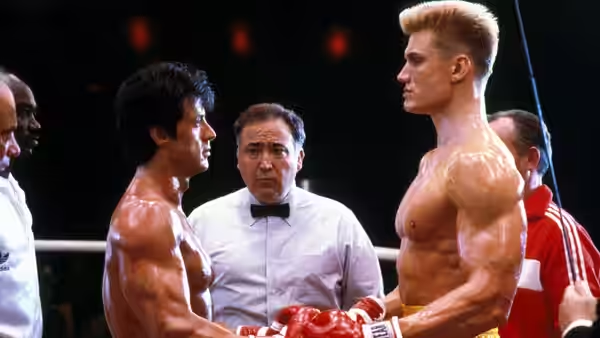
Lundgren is used as a wall. He is enormous and blond, shot from below by Bill Butler so that he fills the frame and the ceiling lights sit behind his head like a halo, and he is given almost nothing to say. He says it slowly. Nielsen does the talking for him, and she is cold and amused and better than her lines. Bill Kenney’s production design gives the Soviets a training hall of steel, monitors and men in white coats, with Drago wired up like a car on a test bench, and Tom Bronson dresses them in grey and red so that nobody could mistake them for the home side.
Then the montages, which are what people remember and what the film really is. John W. Wheeler and Don Zimmerman cut Rocky in the snow against Drago in the machine: a log across a shoulder, a bar on a rack; a sledge dragged uphill, a treadmill; a beard coming in, a needle going in. Vince DiCola scores it with a synthesiser that is one part march and one part heartbeat, and the cuts land on the downbeat every time. We felt our pulse go up, and we were slightly embarrassed about it, because we knew exactly what was being done to us and it made no difference. The editors earn that. The writing does not, since the montage is doing the work of the second act and there is no second act underneath it.
There is also, at about the hour mark, a montage of the film so far, with Rocky driving at night and remembering scenes we watched forty minutes earlier. In a film this short that is a confession. We were bored by it, then irritated, because the picture had run out of things to show and had decided to show them again.
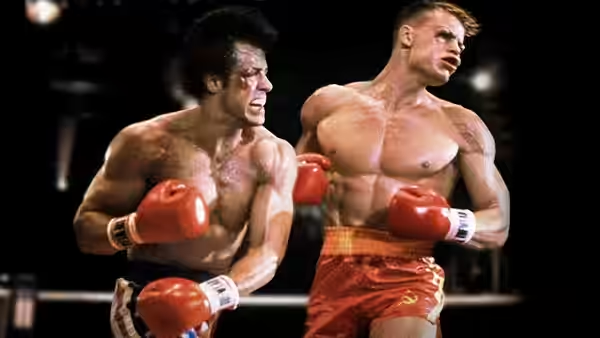
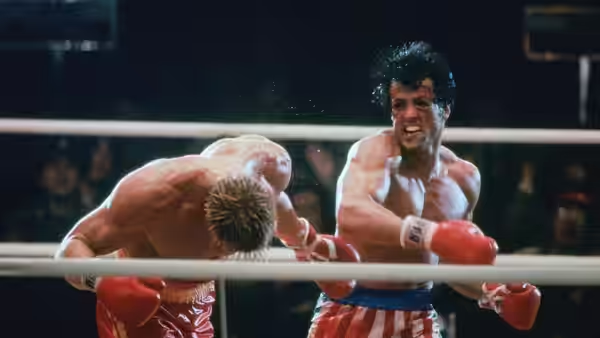
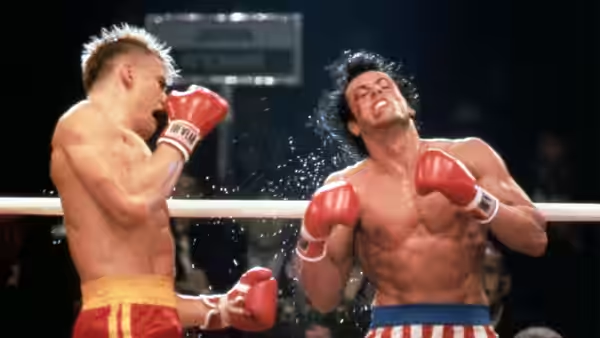
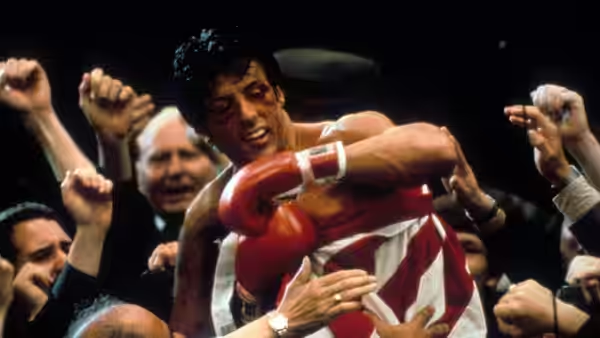
The fight is staged as Stallone stages all of them: close, sweating, in slow motion, with a great deal of fluid leaving faces. Butler lights the arena hard and white over a grey crowd, and Stu Nahan’s commentary explains everything we can already see. We will not say how it goes, though the tagline has a fair idea. The politics come down to a speech and a crowd, and the crowd is not believable for a second.
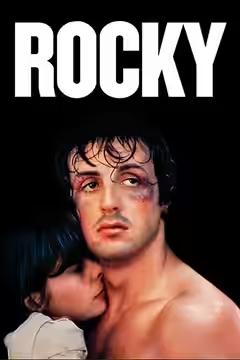
Against the series’ own standards this is the thinnest of the four. The first Rocky, in 1976, was a small film about a man who wanted to last fifteen rounds. This one is about a country, and a country turns out to be a duller character than a man. What the film says, when it says anything, is that a good heart beats a good laboratory.
See it with a room full of people who know the songs and it will be a decent hour and a half. On a sofa with one other person it is 91 minutes of a man being shouted at by a synthesiser, plus a robot.