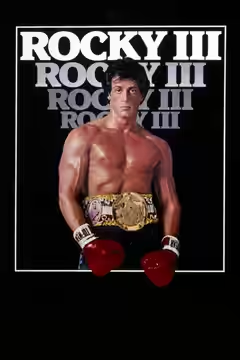
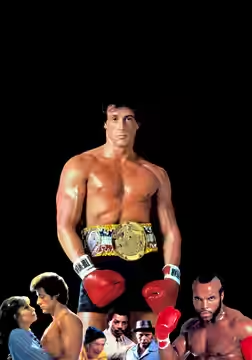
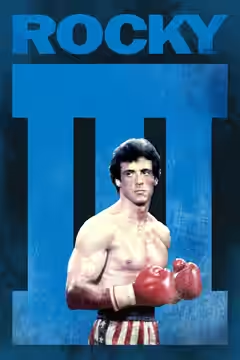
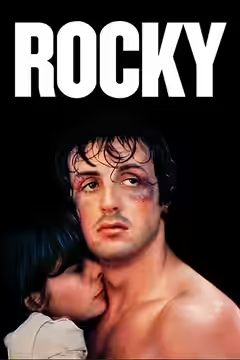
Stallone’s third round trades the grit of the first film for gloss and speed, and mostly gets away with it. Mr. T is a proper threat and the fights hurt; the drama between them is thinner than the film admits.
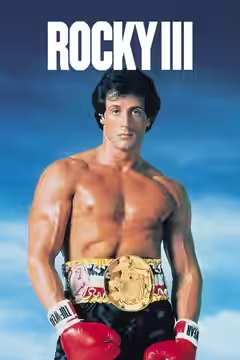
Sylvester Stallone writes, directs and stars for the second time running, and the question he sets himself is a good one: what happens to a fighter after he wins. Rocky III opens with Rocky Balboa as heavyweight champion of the world, rich, famous, on chat shows and in adverts, and asks whether all that has made him soft. The answer is yes, and the film’s job is to get him hard again. It does the job at speed and with a great deal of noise. It is brash, it is enjoyable and it is thin.
The opening minutes tell you what kind of film this is. Mark Warner and Don Zimmerman cut ten title defences into a montage of knockouts, magazine covers and cheques, with Bill Conti’s fanfare pushed to the front, and Rocky has gone from a Philadelphia flat to a mansion before the credits are done. William J. Cassidy fills the house with white carpet and gilt, and Tom Bronson dresses Rocky in pale silk suits and cardigans that a man from his old street would never have worn. A bronze statue of him is unveiled on the museum steps. It is a little vulgar, and the vulgarity is deliberate: Stallone wants us to see how far his man has drifted before anyone tells him.
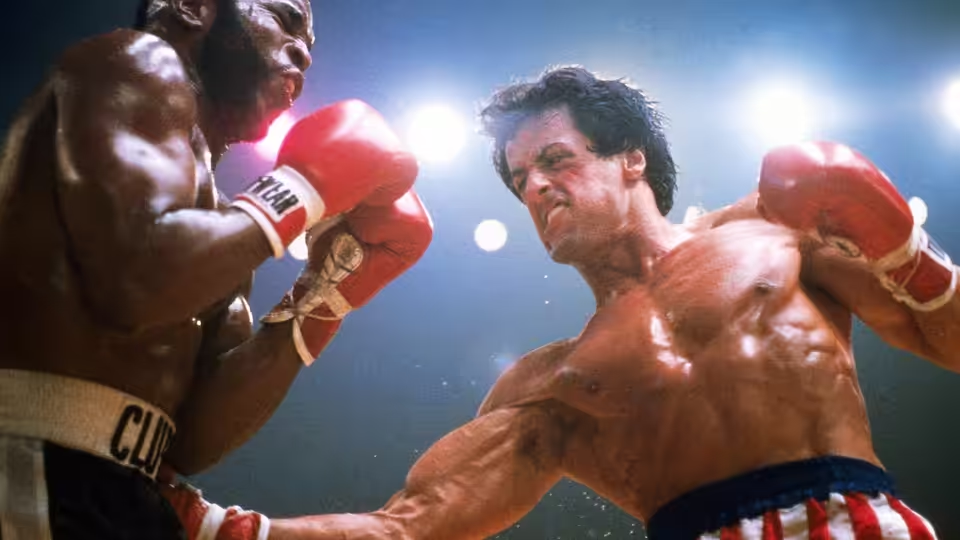
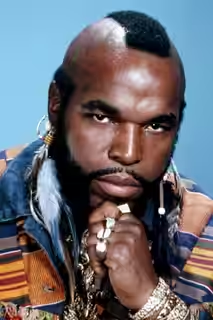
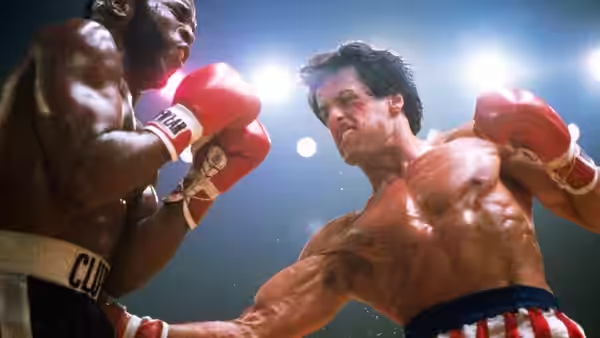
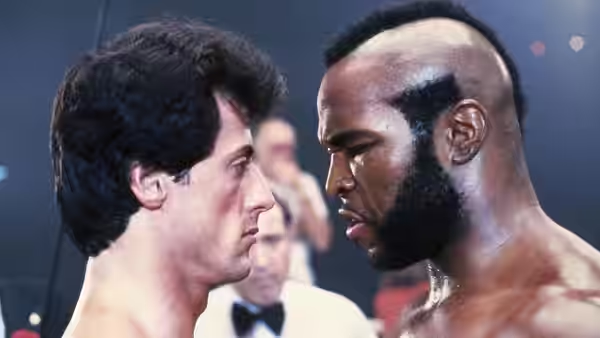
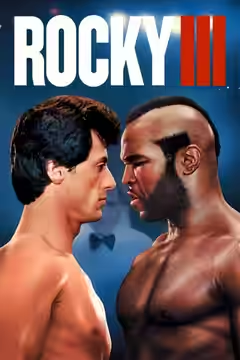
Someone does tell him, from the crowd at the unveiling. Mr. T plays Clubber Lang, the number-one contender, and he is the best thing in the film. He does not act so much as glower, and it works because Stallone the director leaves him alone: Bill Butler lights him from above in a bare basement gym so that the eyes vanish and only the jaw stays lit. When he demands a fight at the ceremony, with Wally Taylor as his manager at his shoulder, Rocky’s family look frightened, and so were we. Their first meeting in the ring, which closes the first act and which we will not describe, is shot tight and harsh under white arena light, and the punches sound like furniture falling over. It hit harder than a PG had any right to, and we sat forward.
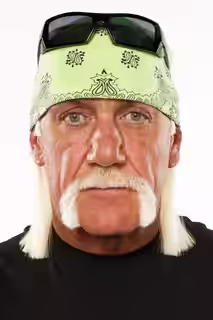
Before that comes the charity bout, a wrestling exhibition against Thunderlips, played by Hulk Hogan as a mountain in yellow trunks who throws Rocky out of the ring and into the front row. We laughed, then wondered why it was there. It is meant to show Rocky treating a fight as a show, but it runs long and plays as a sketch, and the scenes after it have to work to shake the tone off.
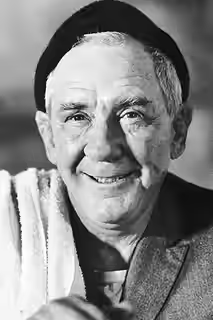
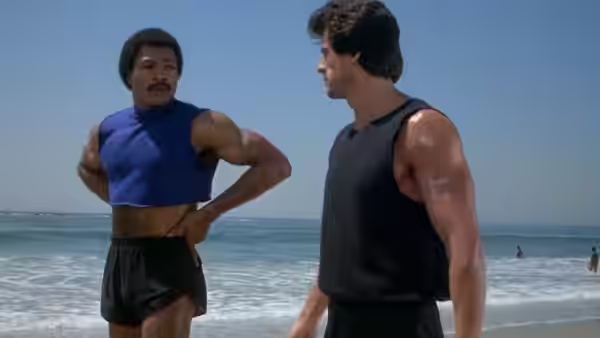
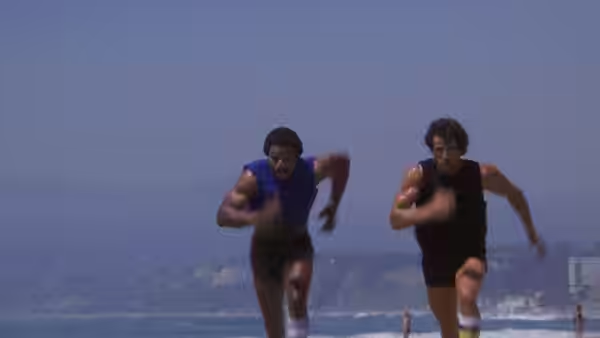
The film’s best scene is its quietest. Burgess Meredith, as the trainer Mickey Goldmill, hoarse and old and afraid for his fighter, has to admit in a gym what he has been doing for three years, and he plays it without a trace of self-pity. It moved us more than anything in the ring did, because for once Stallone the writer lets a character hold something back. Burt Young’s Paulie gets a good early scene too, drunk in an arcade, putting a bottle through a pinball machine because his brother-in-law has a statue and he has a bar tab. Talia Shire’s Adrian has less to do than before and does it steadily. Carl Weathers returns as Apollo Creed, retired and watchful, with a proposal whose terms we will leave to the film.
The trouble, as with much of Stallone’s writing, is that nobody else is allowed to hold anything back. Fear, pride, money, hunger: each is named, then named again, usually to the camera rather than to another actor. Conti’s score swells on cue every time a man laces a glove, and Survivor’s “Eye of the Tiger”, the song that has followed the film around ever since, turns up more than once and we noticed each time. The film runs 100 minutes and does not waste one, which is a kind of achievement, but it also means no scene is given room to breathe.
Rocky (1976) was grey and slow and belonged to its streets, and Rocky II (1979) kept most of that. This one belongs to a hotel ballroom, chandeliers over the heavy bag and paying spectators on folding chairs, and Stallone knows it, because that ballroom is where he puts the champion’s first training scenes. Whether the film finds its way back to the streets we will leave to it. It is worth an evening if boxing films are yours, and best watched with somebody who will shout when the bell goes; it is that kind of film, and it does not pretend otherwise.