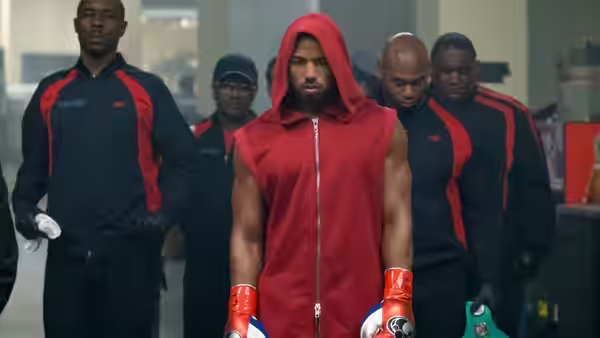
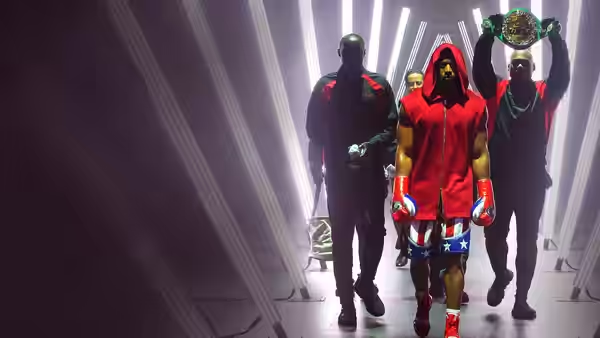
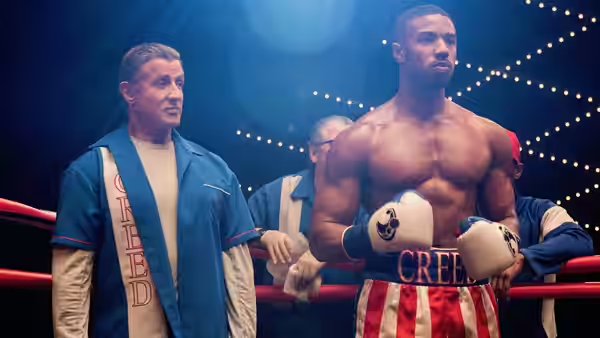
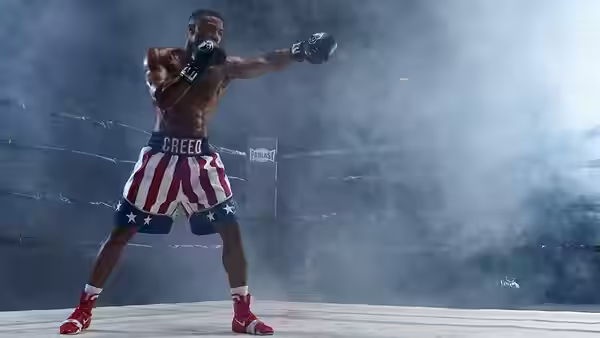
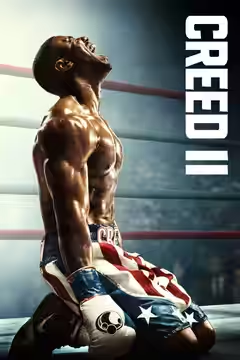
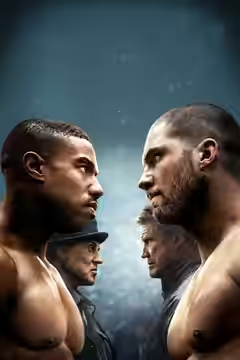
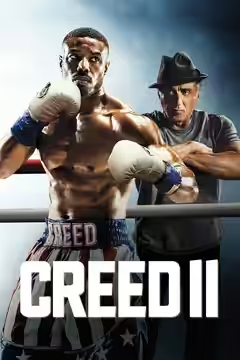
Steven Caple Jr.’s sequel is well acted, cleanly shot in the ring and entirely without surprise. Michael B. Jordan and Sylvester Stallone carry it; Dolph Lundgren, saying almost nothing, walks off with it. Worth an evening if you know what you are buying.
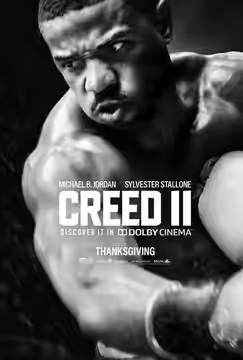
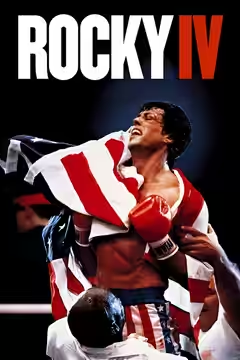
Steven Caple Jr. takes over from Ryan Coogler, who directed Creed (2015), and inherits a champion, a mentor and a franchise that has always known exactly what it is. His job here is to run Rocky IV (1985) again a generation down: the son of the man who killed Apollo Creed in the ring comes for Apollo’s son. Creed II does that job. It is decent, it is honest about its formula, and for 130 minutes it never once does a thing we did not see coming from the poster.
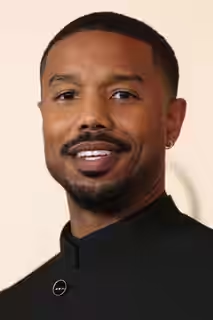
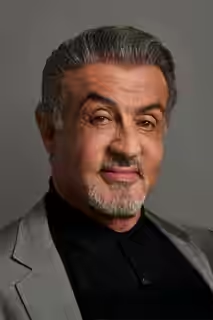
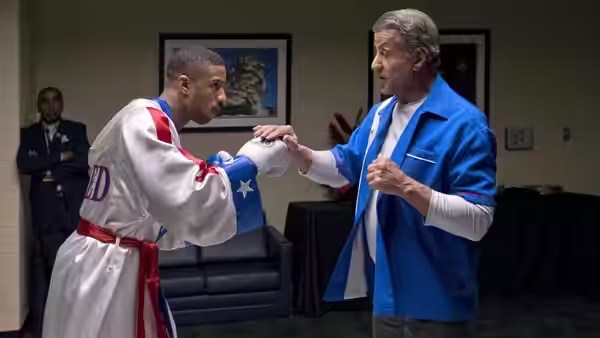
The actors are the reason to stay. Jordan plays Adonis as a man whose temper arrives a half-second before his thinking, and the best scenes are the ones where somebody, usually Rocky or Bianca, waits for the thinking to catch up. Tessa Thompson gives Bianca a career and a body of her own rather than a chair at ringside, and her scenes with Jordan in a Los Angeles kitchen are the warmest writing in the film. Stallone, who shares the screenplay credit with Juel Taylor, plays Rocky slower and quieter than before, a man who has buried enough people to know how it goes. He is affecting without asking to be.
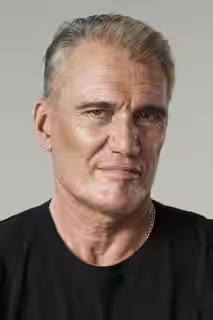
Then there are the Dragos. Lundgren’s Ivan has perhaps forty lines and needs none of them; the film shows him in a cold flat and an emptier gym, pushing his son through the streets and the weights and the memory of one lost night in 1985. Florian Munteanu plays Viktor as a boy who has never been asked what he wants, only what he can lift. We found we felt more for these two than for the Creeds, and we are not certain the film means us to. When Brigitte Nielsen turns up as Ludmilla for a single dinner, the meal turns cold on the table, and it is the one moment we sat forward.
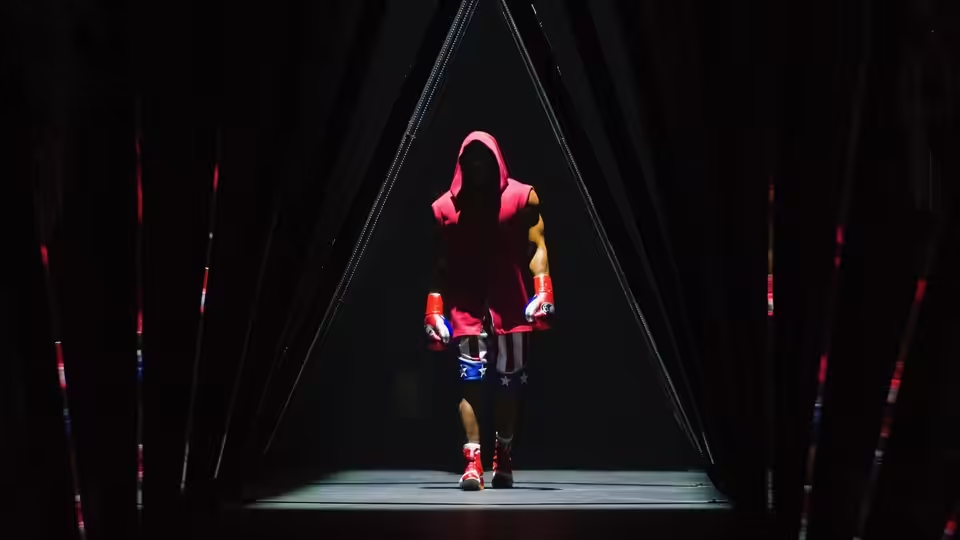
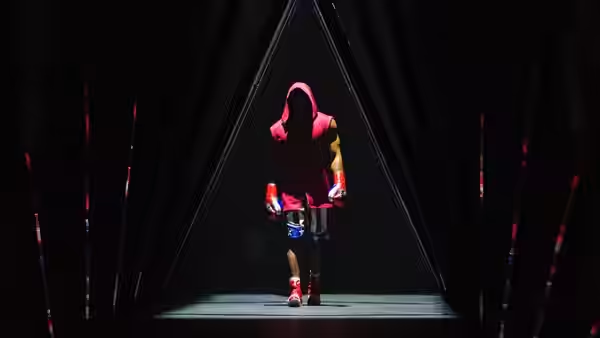
In the ring, Caple and his cinematographer Kramer Morgenthau are on firm ground. The camera stands where a cornerman would, then goes inside the gloves for a punch or two, so a hook arrives at the lens and the sound cuts out with it. The bouts are legible, which is rarer than it sounds; you can always tell who is winning and why. Ludwig Göransson brings back the trumpets you expect and adds a low electronic pulse under the Drago scenes, so the two camps sound like different films. The three editors, Dana E. Glauberman, Paul Harb and Saira Haider, cut the desert training montage so briskly that it is the best two minutes here.
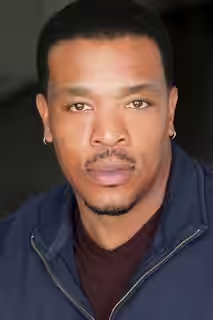
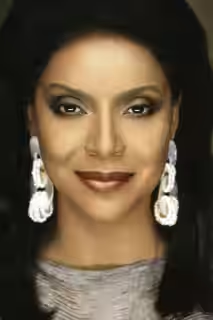
Between the fights, the script has nothing to do but wait for the next one. Sascha Penn and Cheo Hodari Coker’s story sends Adonis back to the exact question he settled in the first film, whether he fights for himself or for a father he never met, and he spends an hour answering it again. Russell Hornsby’s promoter sneers on cue. Wood Harris’s Little Duke has one speech and delivers it well. Phylicia Rashad gets a single good scene of maternal fury and is then sent to sit by the phone. Somewhere past the hour we realised we were watching a list being ticked off, and we were bored, and then annoyed at being bored by people this good.
Franco-Giacomo Carbone’s production design draws the line clearly: warm brick and worn leather for Philadelphia, glass and white walls for Los Angeles, concrete and steel for the Dragos’ side of the world. Lizz Wolf dresses Adonis in champion’s clothes that never sit right on him, which is a neater comment on his state of mind than most of the dialogue.
Against the first Creed, this is the plainer film. Coogler’s fights moved with the fighters and his Philadelphia felt like a character; Caple keeps things steady and tidy and rarely curious. Against Rocky IV, it is the cartoon taken seriously, and taken seriously it turns out to have one real idea, that the losers had children too, and the film gives it to the supporting cast.
See it for Jordan, for Stallone’s quiet, and for the Dragos, who deserve a film of their own. It carries a 12A and runs 130 minutes, about twenty of which are new.