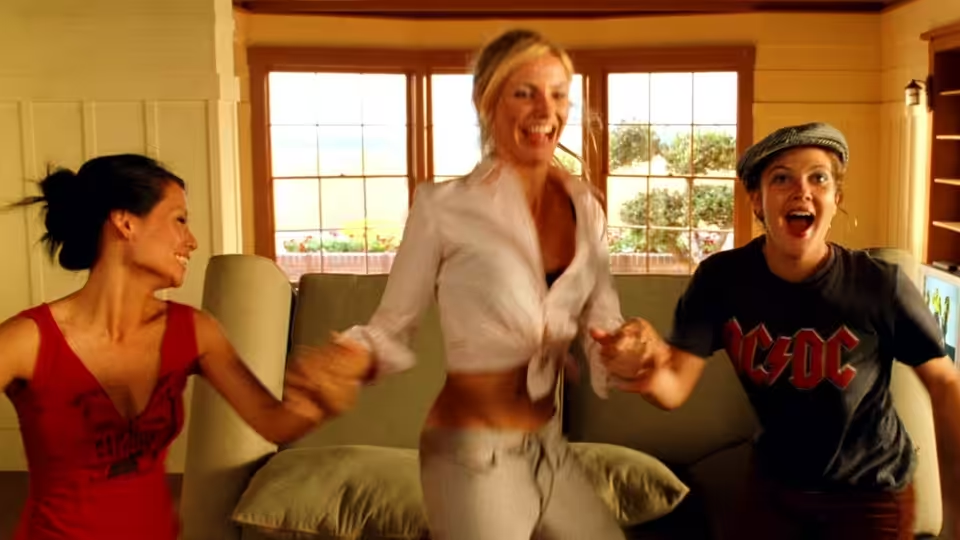
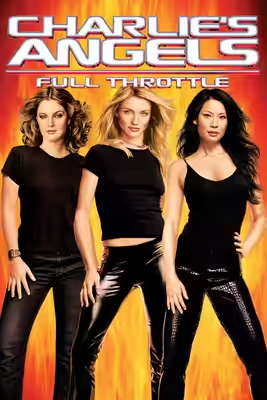
Cameron Diaz, Drew Barrymore and Lucy Liu make agreeable company, but McG keeps hurrying past their appeal. Frantic cutting and weak comic detours wear down a promisingly playful cast.
Charlie’s Angels: Full Throttle has three leads who look as though they enjoy one another’s company, and that gets it a fair way. McG directs as though their good humour needs constant assistance, preferably something moving fast across the screen. We find the result intermittently enjoyable and eventually tiring, with too few good jokes to justify all the commotion. An action comedy can be cheerfully silly without asking much of a story, but it still needs to let a moment play.
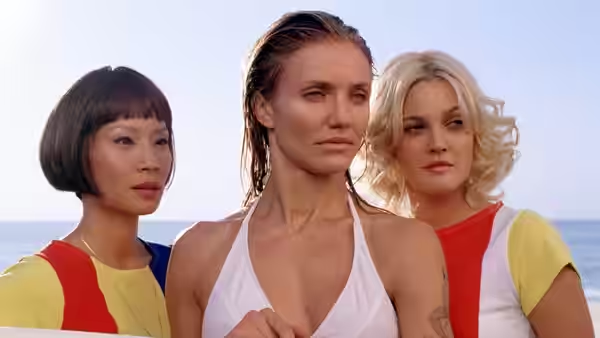
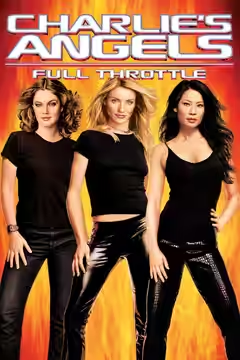
Cameron Diaz, Drew Barrymore and Lucy Liu give the film its most dependable pleasure. Their shared ease makes the prospect of this trio spending time together appealing, even when the material gives us little reason to care about what they are doing. There is a generosity in the performances that keeps the silliness from feeling entirely calculated. We do not need them to be solemn or psychologically complicated. We need the film to stay with them long enough for their comic timing to count.
Russell Carpenter’s glossy cinematography suits the exuberance, and some of the stunt work has enough energy to carry us along. The difficulty is seeing an action passage through without feeling hurried past its pleasures. Editors Tritia Espinoza and Wayne Wahrman keep pushing the pace when a clearer view of the movement would be more rewarding. McG rarely allows us the useful pause in which to register where people are and what they have just done.
The same impatience reduces what the other crafts can contribute. J. Michael Riva’s production design gives the eye plenty to occupy it, but the settings struggle to register amid the restless presentation. Edward Shearmur’s music supplies further momentum where the film could use less insistence. None of this feels short of effort, and the pop-video gloss is often agreeable. Keeping everything competing for attention wears us down.
The screenplay by Marianne Wibberley, Cormac Wibberley and John August is weakest when the action stops for comic business. We were bored by the sequence of bottom jokes; repeating the same schoolboy idea does nothing to make it funnier. The performers are left having to supply a sense of fun that the writing has not earned. The tonal lurches also make it harder to accept the friendship as anything beyond an agreeable way of linking the set pieces.
Crispin Glover is a useful interruption as the Thin Man: the performance has an oddness that the noisier material could use. There is room in an action comedy for something peculiar without every moment having to announce itself. Yet at 106 minutes this one often feels as though it has exhausted its jokes and is keeping busy to avoid admitting it. The goodwill generated by the central trio can only cover so much repetition.
We can forgive implausibility readily enough in this sort of film; physical credibility is hardly the main attraction. A joke that lands and an action scene we can follow would be reasonable things to ask for. The cast supplies enough warmth to prevent a thoroughly miserable evening, but we cannot recommend the film on that basis. Try it only if seeing these three performers together outweighs a low tolerance for frantic cutting.