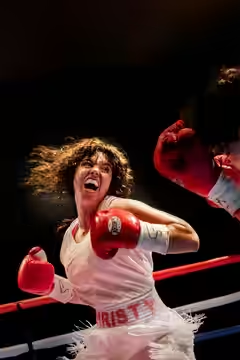
Sydney Sweeney throws herself at Christy Martin’s story and Ben Foster makes a small, quiet monster of the man in her corner. Around them David Michôd has built a biopic that hits its marks in order and rarely surprises; for the interested, with reservations.
David Michôd’s Christy is a 134-minute account of the boxer Christy Martin, from a Toughwoman contest in West Virginia to the top of a sport that barely existed for women when she started. Mirrah Foulkes and Michôd’s script, from a story by Katherine Fugate, is really two films. One is a rise, with the montages, the belts and the press conferences that implies. The other is a marriage, with closed doors and long silences. The second is the one Michôd cares about, and it works. The first is there because the genre expects it.
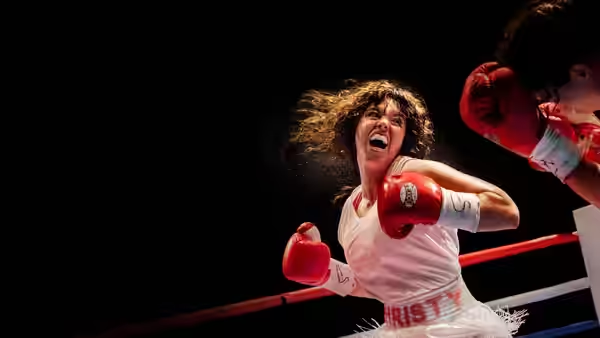
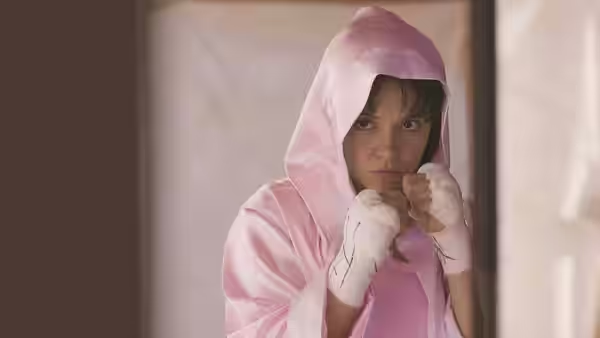
Sweeney has put on weight and muscle and the film wants you to notice. More usefully, she has found a way of carrying her body that changes across the years: loose and grinning in the early bouts, bunched and watchful at home, a woman who has learned to make herself small in a kitchen. She is not subtle and the part does not ask her to be; Christy talks big, wears pink and takes a punch to land two. When the script leaves her alone, in hotel rooms and at a family table where nobody will meet her eye, she is better than the writing around her. Whether she has found the whole woman is another question, and we are not sure the film gave her the chance.
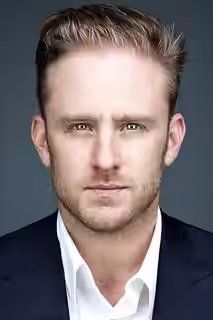
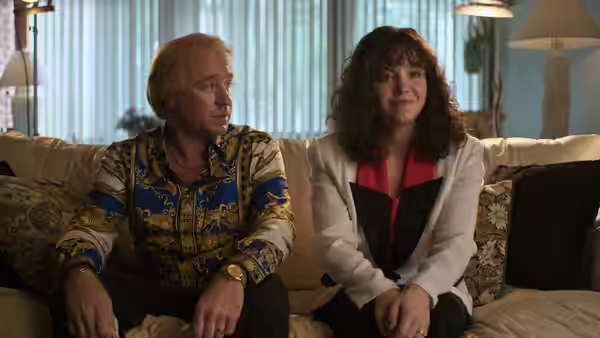
Ben Foster is the reason to see it. His Jim Martin is a soft-spoken, slack-shouldered man who defers to his wife in public and keeps a ledger in his head. Foster never shouts. He asks questions: where were you, who was that, why was the phone off. We were frightened of him within twenty minutes, and the reason is that Michôd stages the marriage from Christy’s side, so that we learn, as she has, to read his mood from how he puts down a glass. It is the best work in the film, and it does something the boxing never manages, which is to make us unsure what happens next.
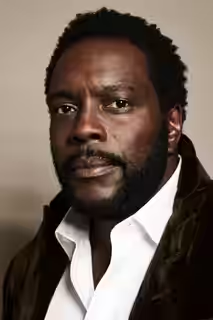
Merritt Wever, as Christy’s mother Joyce, plays a woman who can forgive her daughter a husband like Jim far more easily than a girlfriend, and she does it without a raised eyebrow. Two of her scenes at a kitchen table are colder than anything in the ring. Katy O’Brian, as the fighter Lisa Holewyne, arrives late and is given far less than she can carry, which is a waste the film cannot afford. Chad Coleman’s Don King gets the hair and the patter and a handful of scenes.
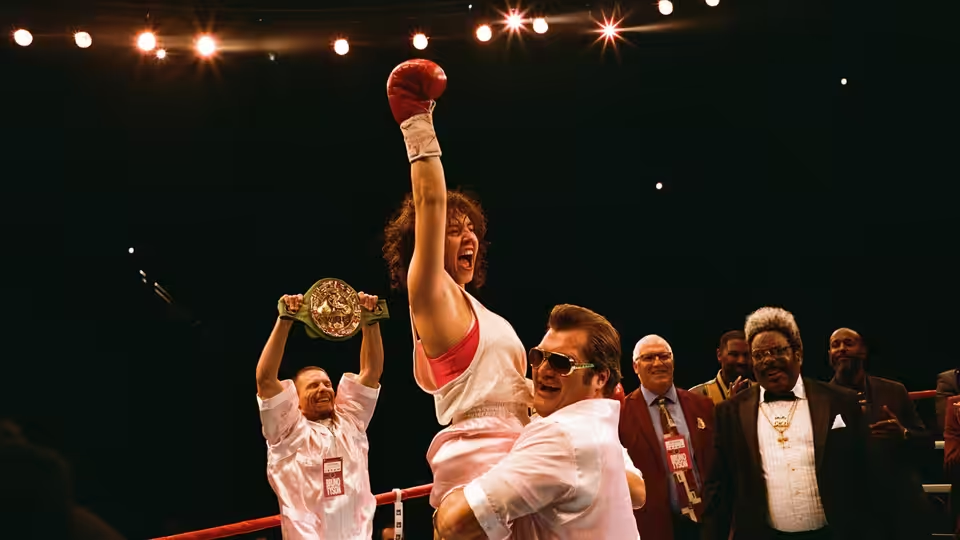
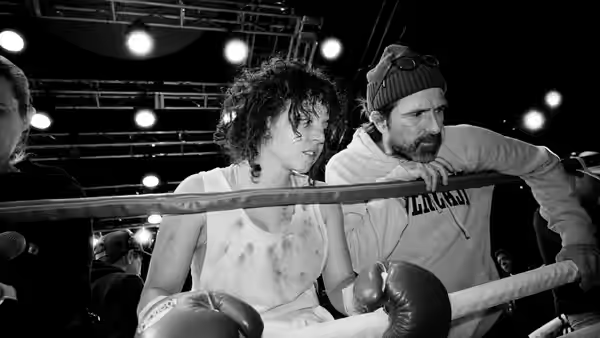
The fights are where the film is most ordinary. Germain McMicking shoots them from a broadcast distance, bright and even under the arena lights, and Matt Villa cuts them to the familiar grammar: a flurry, a corner, a stumble, a bell. There is little sense of a crowd, or of the fear a boxer must feel walking out. The middle hour is built almost entirely from montage, a run of dates and cities that tells us Christy became famous without letting us feel one fight from inside it. We were bored somewhere around the fourth montage, and then we were irritated, because the kitchen scenes had already shown us the film could do better. Antony Partos’s score stays quiet at home and leans harder for the ring, which is the right instinct and does not rescue the cutting.
Chad Keith’s production design is careful about the era, the wood panelling, the motel bedspreads, the houses that get bigger as the marriage gets smaller, and the film is most alive when it simply sits in those rooms and lets Foster and Sweeney be quiet in them. Those stretches are where the 15 certificate earns its keep.
Michôd’s Animal Kingdom, from 2010, was about a family that ate its own and never announced it. That patience is here, but only in the marriage. Everywhere else the film reaches for the weigh-in, the press conference and the crowd on its feet, and none of it fits a story whose real fight was never in public.
The reviews so far split almost exactly down the middle, and we can see both halves. Go for Foster and Sweeney and for the marriage, which is a serious piece of work about how a woman is taught not to leave. Do not go for a boxing film; the boxing is the part everyone involved seemed least interested in, and at 134 minutes it is a long wait between the scenes that matter. The last stretch is hard to watch, for reasons we will leave the film to explain.