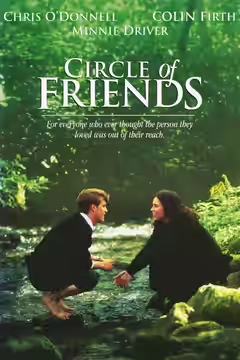
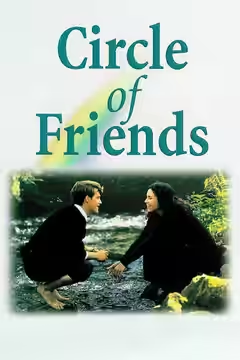
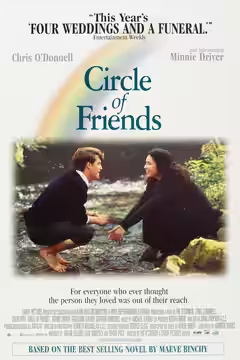
Pat O’Connor’s adaptation of Maeve Binchy’s novel is warm, tidy and a little too sweet, and Chris O’Donnell is the wrong man in the middle of it. Minnie Driver makes it worth the evening anyway.
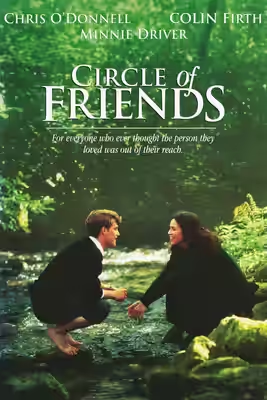
Pat O’Connor’s Circle of Friends, adapted by Andrew Davies from Maeve Binchy’s novel, is a small romance about a girl who has been told all her life that she is plain, and who half believes it. It is set in Ireland in the late 1950s, between a country town and the university, and it is pleasant, well made and soft in the middle. We liked the people and the town; we did not believe how easily their troubles were settled. The reason to see it is Minnie Driver, and she is a good enough reason.
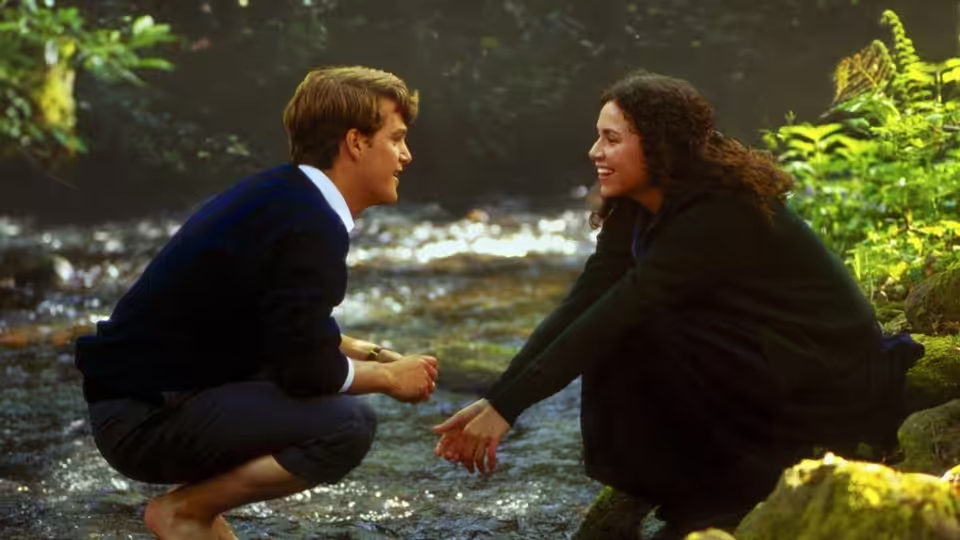
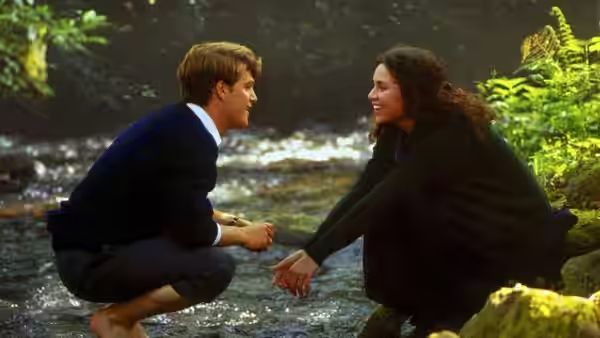
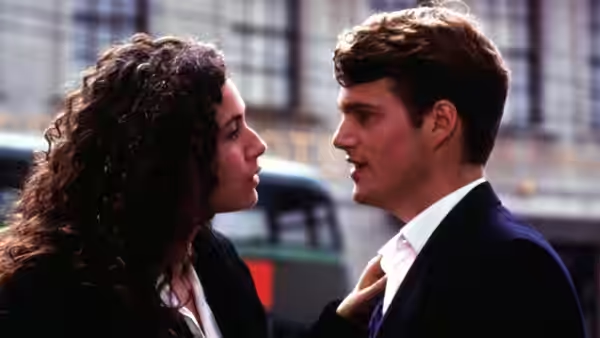
Driver plays Benny Hogan as a big, clever, awkward girl who has learned to get her joke in before anyone else can. She walks into lecture halls as if expecting to be asked to leave. She talks too much when she is nervous and then watches her own words land. When Jack Foley finally looks at her properly, Driver does something we have not forgotten: she checks over her shoulder to see who he means. It is a performance built from small physical choices, and the film is steady whenever she is on screen and wobbly whenever she is not.
O’Connor and his cinematographer Kenneth MacMillan give the period a worn, brown, lamplit look rather than a scrubbed one. The town is wet streets, a single pub and the Hogan shop with its drawers of collars and socks; the city is grey stone, bicycles and a dance hall with a mirror ball turning over the heads of boys who cannot dance. Jim Clay dresses the Hogan house so that every room has a crucifix and a cold fireplace. Anushia Nieradzik puts Benny in heavy tweed and knitted things chosen by her mother, and Nan Mahon in red lipstick and suits with waists, so that you understand the two girls’ prospects before either has said a word. Michael Kamen’s score leans on strings and a whistle and swells at the scenery a few times too often. John Jympson cuts the college term briskly, so that a first year passes in what feels like a long weekend.
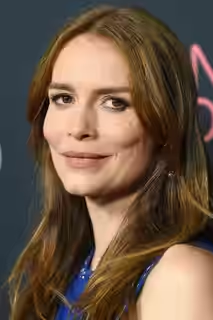
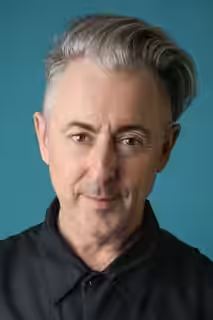
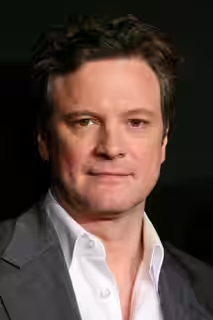
The supporting cast is the film’s quiet pleasure. Alan Cumming plays Sean Walsh with oiled hair and a smile that arrives a second late, a man who thinks patience is the same as courtship; every scene he shares with Driver has a small chill in it. Colin Firth is Simon Westward, and plays him as charming and already bored. Saffron Burrows makes Nan harder and sadder than the script requires. Ciarán Hinds gets a single lecture as Professor Flynn and makes it funny. Mick Lally and Britta Smith, as Benny’s parents, are kind and frightened in equal parts, and the film is honest about how much damage kind, frightened people can do.
The trouble is Jack. Chris O’Donnell is handsome, pleasant and the wrong actor for the part. His accent comes and goes, and when it goes he sounds like a visitor. Jack is meant to be the golden boy of the college, the one everyone wants, and O’Donnell plays him as a nice lad from somewhere else who has wandered into the wrong film. The romance only works because Driver does the wanting for both of them.
Davies’s script is also tidier than Binchy. The Church is everywhere in this story, in the confessional and in the shame that attaches to every body in the scene, and the film shows all of it and then softens its blows. People make terrible decisions and the consequences arrive and are dealt with inside a scene. The second half takes turns we will not describe, and each one is resolved a little too neatly for comfort. We were moved more than we expected to be by Benny’s first dance, standing at the edge of the floor in a dress that fits badly, and then slightly cross with the film for how quickly it wiped her tears for her.
As a coming-of-age romance it stands up well against the genre’s usual standard, which is low, and falls short of the best of its kind, which does not flinch. It runs 103 minutes and never drags. Watch it at home on a wet evening, with someone who was once sure the person they wanted was out of reach, and see whether Driver’s face does to them what it did to us.