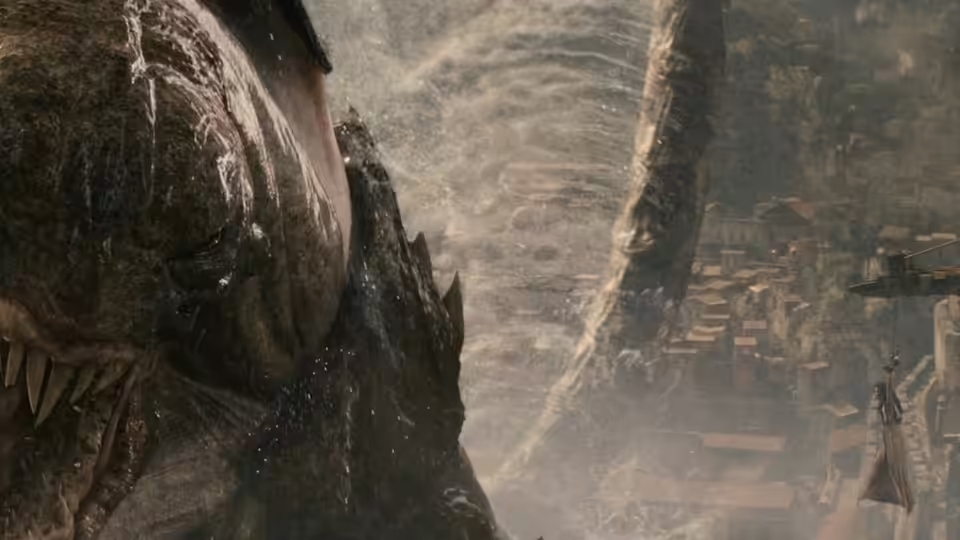
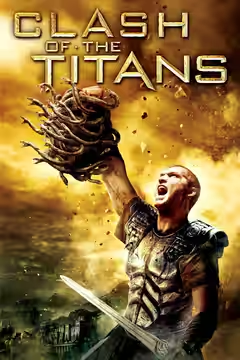
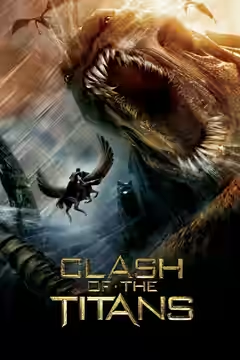
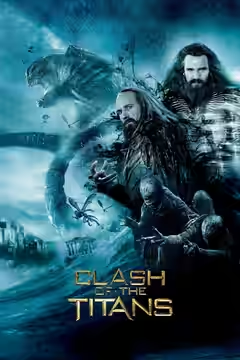
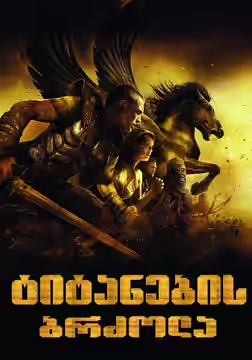
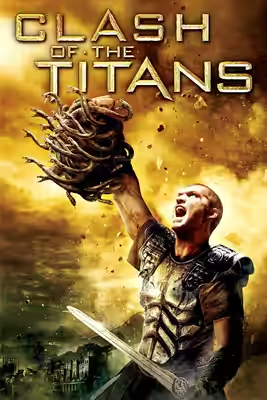
Louis Leterrier’s remake has a Kraken, a Medusa and a hall full of glowing gods, and a hero who would plainly rather be fishing. The scorpions earn their keep; little else does, and the murk of the 3D conversion does the rest.
Louis Leterrier’s remake of Clash of the Titans runs 106 minutes, which is a mercy, and is about a fisherman’s son who learns he is the son of Zeus and would rather not be. That is the one idea Phil Hay, Travis Beacham and Matt Manfredi’s script has, and it is a serviceable one for a film of this kind: a hero who keeps refusing the gifts of the gods and keeps having to use them anyway. The trouble is that Perseus states his refusal in nearly every scene, and nothing on screen makes it cost him anything.
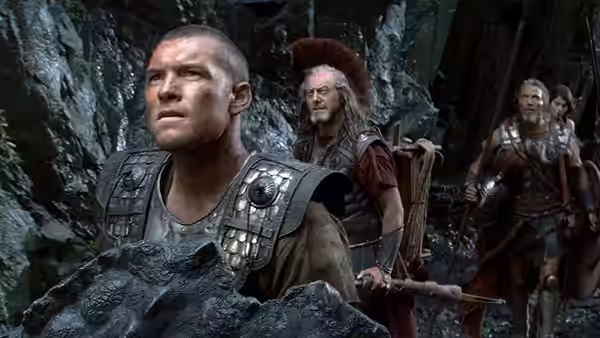
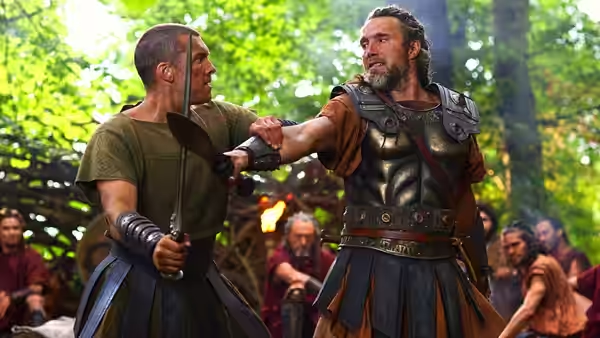
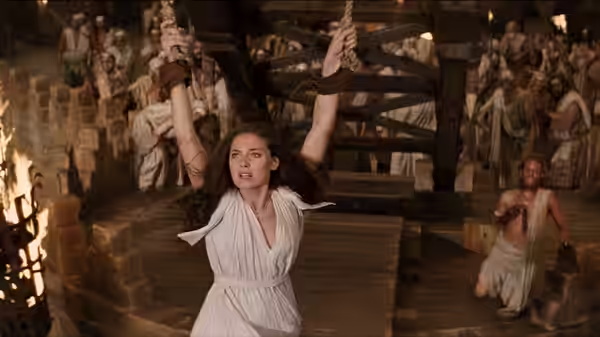
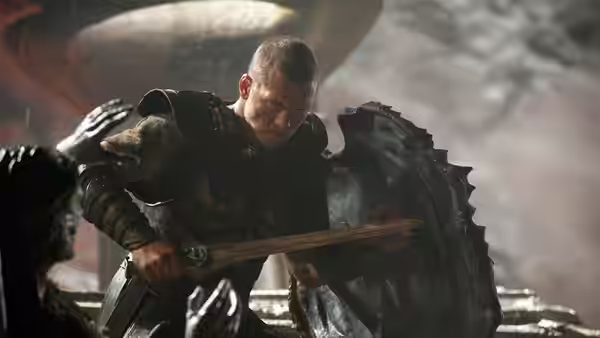
Sam Worthington plays Perseus with a crew cut and a single expression of mild grievance. He is blank. He hits his marks and swings his sword, and we never once wondered what he was thinking, because the script had already told us. Gemma Arterton has the thankless job of following him about as Io and explaining the plot, and she does it with more grace than the lines deserve. Alexa Davalos’s Andromeda is given a balcony and a cause and little else.
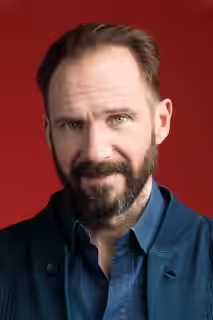
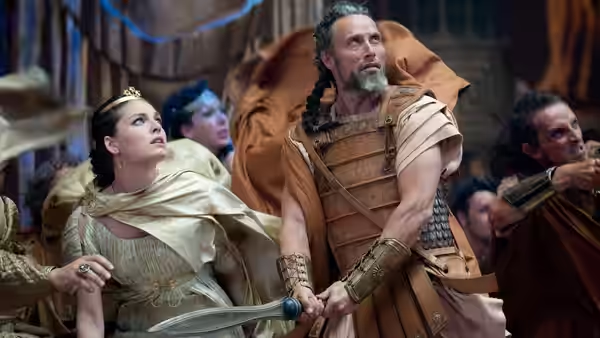
The gods are where the film is most alive and most silly, often at the same moment. Liam Neeson’s Zeus wears a suit of armour that glows like a fridge with the door left open; Lindy Hemming has dressed the whole of Olympus in polished silver, and Martin Laing has put them in a floodlit white hall to stand about and look down on the mortals. Ralph Fiennes plays Hades as a hunched, whispering wreck who arrives in a cloud of black smoke and leaves the same way. We laughed, and not where the film wanted us to; the wheeze is a choice, and it is the wrong one. Neeson seems to understand that the only way to play this is at full volume, and he is one of two people who look as if they are having a decent afternoon.
Mads Mikkelsen is the other. His Draco, the captain who leads Perseus’s escort out of Argos, is tired, dry and unimpressed by demigods, and every scene he is in is better for it. He gives Worthington something to push against, which nobody else does. Pete Postlethwaite, as the fisherman who raises the boy, has one good speech about men and gods and is gone before the first act is out. Nicholas Hoult and Ashraf Barhom fill out the ranks and are there mainly to be counted off.
Then there are the monsters, which is what we came for. The giant scorpions that come up out of the sand are the film’s best fight: Leterrier stages it in daylight, Peter Menzies keeps the camera far enough back that we can tell which man is where, and the creatures have weight when they land. We sat up, and we stayed up for the whole of it. The Medusa sequence, in a ruined temple of pillars and smoke, is nearly as good and is undercut by the cutting; three editors are credited, Vincent Tabaillon, David Freeman and Martin Walsh, and the fight looks like three editors’ work, all of it hurried. Ramin Djawadi scores everything in brass and choir at a pitch that never drops, so by the time anything large arrives the music has nothing left to give it.
The look is the lasting problem. Menzies shoots Argos and the desert in grey, brown and dust, and the film was converted to 3D after it was shot, which takes a third of the light out of a picture that did not have much. In a cinema the dim scenes were a strain to read. At home, flat and bright, it is a plainer and better film, which is not something a 3D spectacle should be able to say for itself.
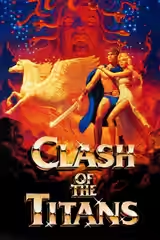
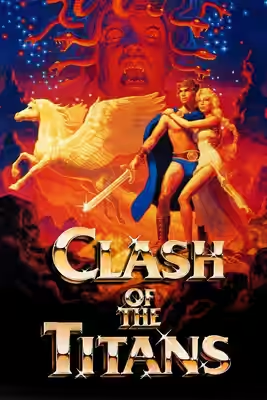
The 1981 original, with Ray Harryhausen’s stop-motion Medusa and Kraken, was slow and cheap and had more charm in a single twitching snake than this one finds in all its pixels. Leterrier’s film even stops to joke about the old mechanical owl, and the joke lands as a confession. We can see exactly who this was for: a twelve-year-old who has not seen the 1981 version and wants a Kraken. That child deserved a hero with a pulse and a fight they could follow, and got one of each.