Paul Newman and George Kennedy make this prison drama funny, painful and worth its leisurely pace. Stuart Rosenberg sometimes presses the religious symbolism too hard, but the performances give us ample reason to stay.
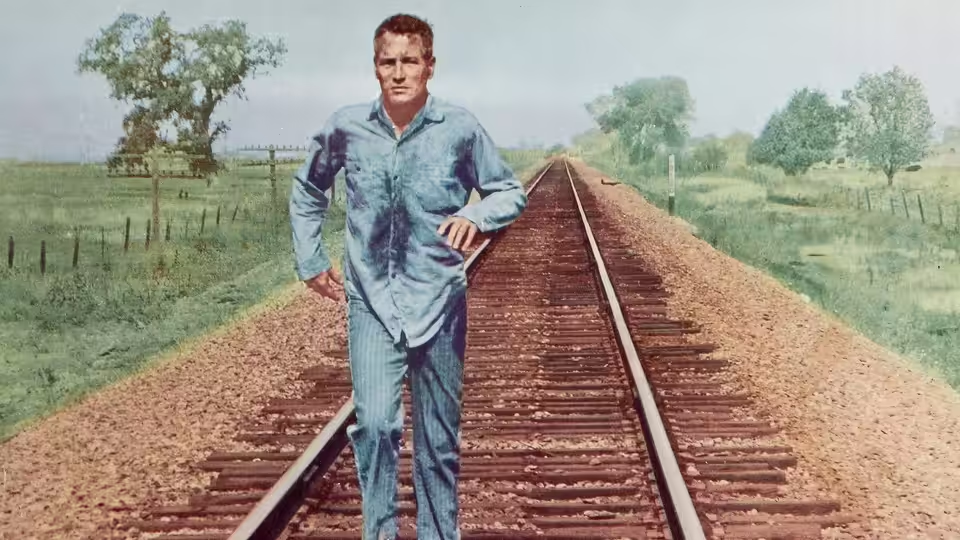
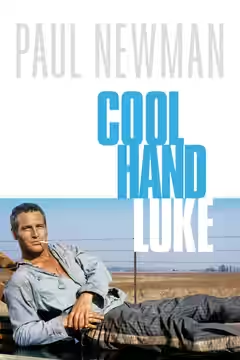
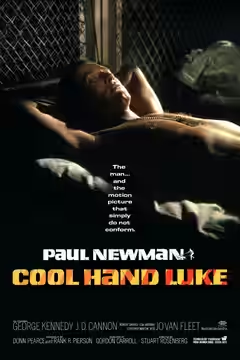
Cool Hand Luke is a prison drama worth seeing for Paul Newman, and for the way Stuart Rosenberg lets other men respond to him. Luke Jackson’s refusal to submit has a comic stubbornness that prevents the film from becoming a lecture about freedom. We recommend it warmly, despite religious symbolism that makes a point the acting has already made. Luke is more interesting when he is allowed to be difficult without being treated as holy.
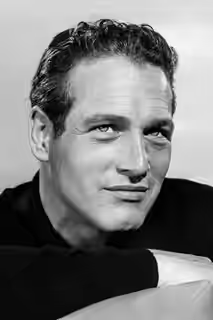
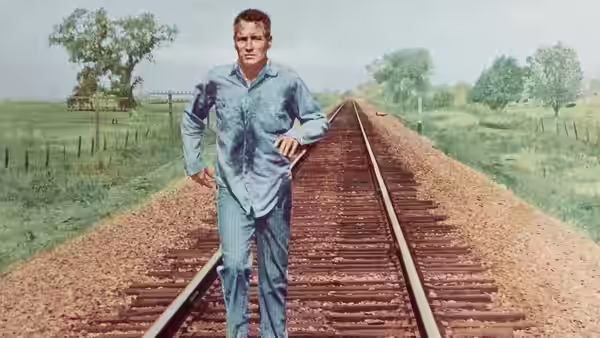
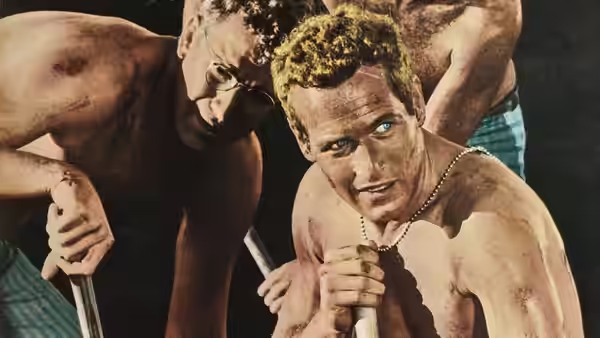
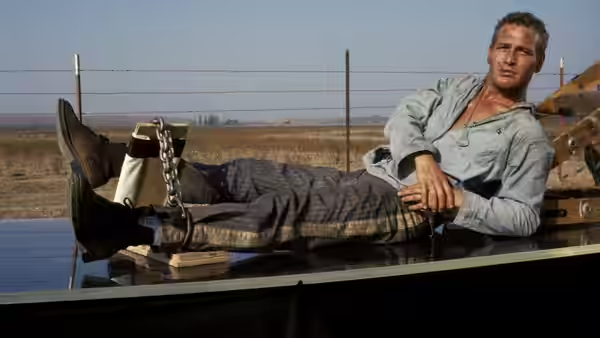
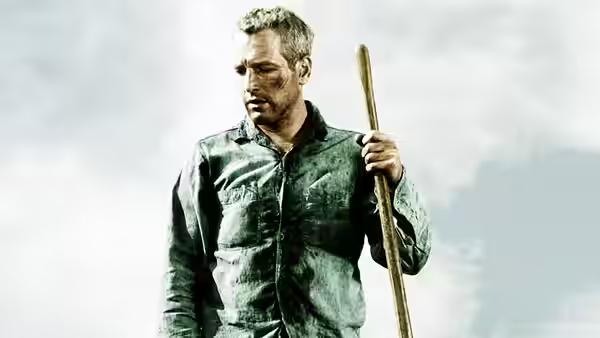
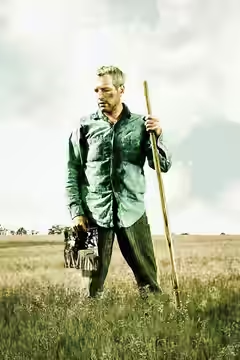
Paul Newman plays Luke Jackson as someone who will not give authority the satisfaction of an earnest argument. The dry humour is appealing, but it also makes him hard to reach; we cannot always tell how much of his defiance he understands himself. That uncertainty is useful. A prison film can make its rebel so admirable that we never question his behaviour, and Paul Newman keeps enough awkwardness in the performance to avoid that trap.
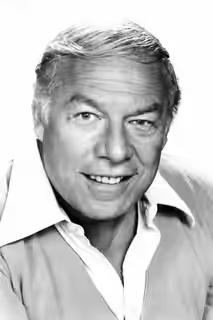
George Kennedy gives Dragline enough force to prevent the film becoming a long appreciation of its leading man. He makes another prisoner’s attention matter, so that Luke’s behaviour feels watched and judged within the film, not merely offered for our approval. Stuart Rosenberg is good at letting the supporting cast complicate our liking for Luke. The men have personalities beyond their opinions of him, even when the writing starts to use him as an example.
Conrad Hall’s cinematography gives these men a convincing physical presence; we are allowed to notice weariness as well as bravado. The images make confinement feel exhausting, and they do not make Paul Newman look exempt from it. Lalo Schifrin’s music suits the changes of mood, accommodating the humour without making captivity seem cosy. Those contributions help Stuart Rosenberg keep the film watchable when the writing grows insistent about what Luke represents.
Sam O’Steen’s editing is most persuasive when the film takes its time over an apparently foolish pursuit, such as the egg-eating scene. Staying with the business gives a ridiculous act enough weight to become a test of character, without making the comedy disappear. Elsewhere, patience turns into slackness: the exposition wanders, and we occasionally wait for scenes to justify their place. At 127 minutes, the film has room for its ensemble, though we would not defend every pause.
Jo Van Fleet, playing Arletta, briefly changes the balance. We were moved by her scene with Paul Newman: her weary delivery makes his usual defiance seem suddenly beside the point. Neither performer needs to make the encounter grand for it to hurt. It also exposes the weakness of the heavier Christ imagery: Stuart Rosenberg has actors capable of suggesting suffering without underlining its importance, and the insistence on a religious parallel makes Luke a simpler man than the performances suggest.
Come for the performances, and allow the film to settle among its prisoners. It takes its time, sometimes more than it needs. Paul Newman and George Kennedy are worth giving up an evening for.