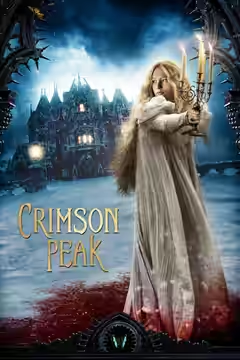
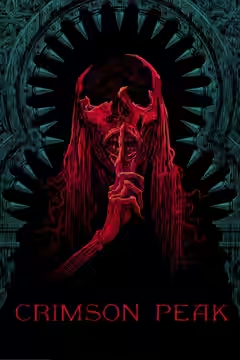
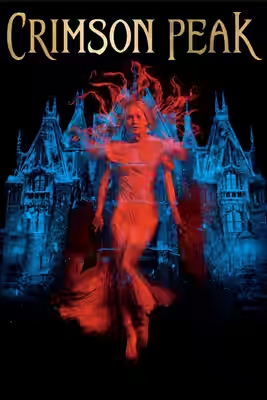
Guillermo del Toro’s Gothic romance is worth seeing for its ruined mansion and forceful performances. The predictable plotting and overexposed ghosts limit the fear, but there is enough feeling beneath the decoration to make it matter.
Crimson Peak is worth an evening for its Gothic excess, provided surprise is not the main attraction. Guillermo del Toro takes the romance seriously, allowing longing and dread into the same scene without winking at either. That sincerity matters: the elaborate clothes and haunted mansion could easily become an excuse for theatrical fuss. Here they belong to people whose feelings are allowed to be awkward and excessive. The story follows a more familiar course than we might wish.
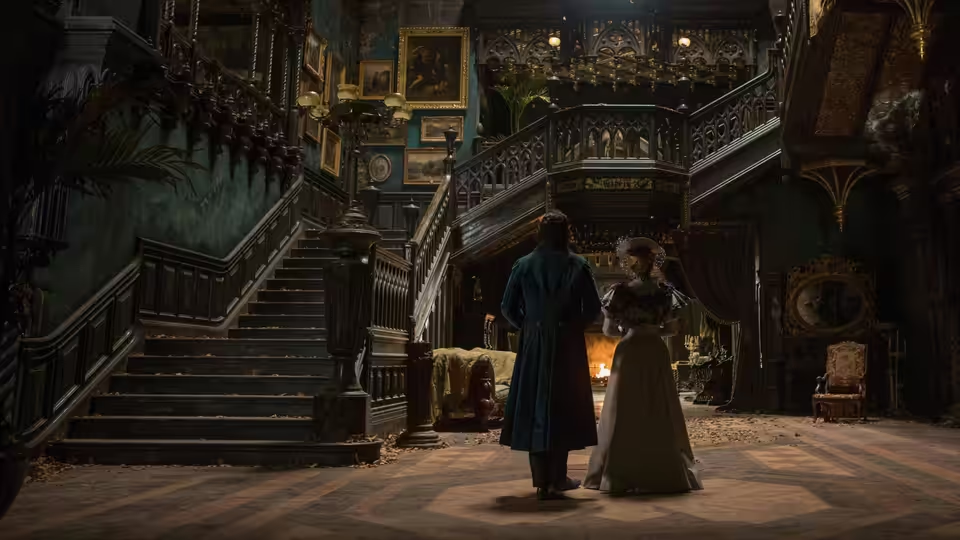
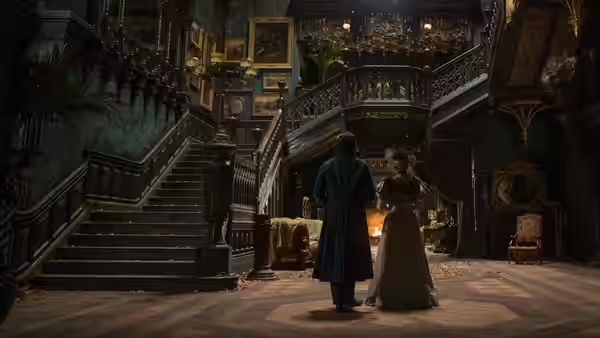
Thomas E. Sanders supplies a ruined mansion that remains absorbing even when the plot becomes easy to anticipate. The crowded decoration and decay make it oppressive without depending on a supernatural interruption. Dan Laustsen’s cinematography keeps that deterioration visible; we can examine the ornament rather than merely register a large dark space. The house sometimes monopolises our attention, but there is plenty worth looking at. Its condition gives the romance an atmosphere of neglect that the dialogue alone could not establish.
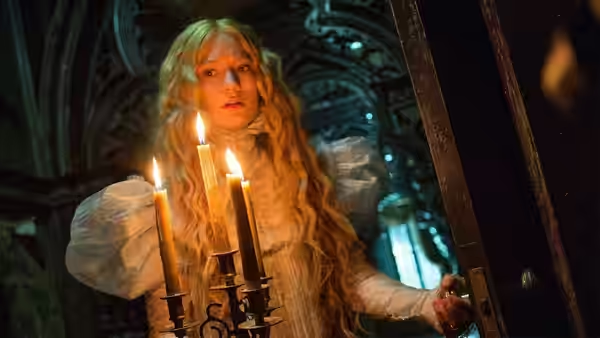
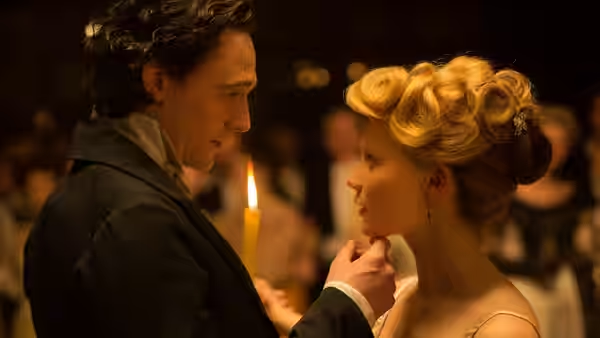
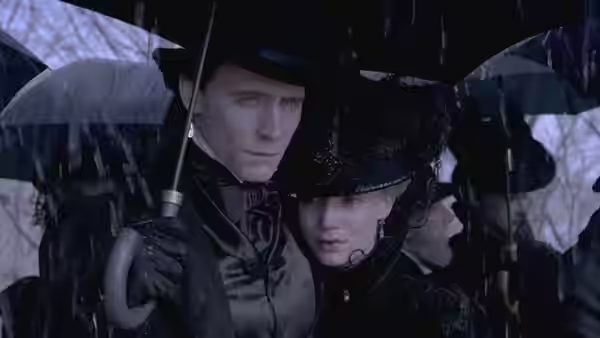
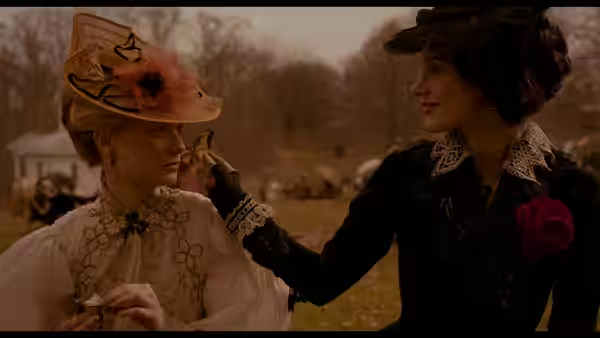
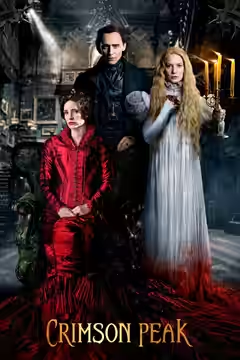
Jessica Chastain, as Lady Lucille Sharpe, understands how much force this sort of melodrama can bear. Her severity gives scenes an edge that the dialogue does not consistently supply, and her performance is large enough to hold its own against the house. Tom Hiddleston makes Sir Thomas Sharpe’s romantic appeal credible, even when the writing gives him familiar material. Mia Wasikowska’s Edith Cushing offers a quieter presence. She helps keep the central romance from becoming an exchange of grand poses.
The screenplay by Guillermo del Toro and Matthew Robbins is the chief limitation. Too much of the plotting can be anticipated, and some dialogue puts feelings into words that the actors have already made clear. Bernat Vilaplana’s editing allows the atmosphere to accumulate, which suits the romance, but cannot supply uncertainty where the script has supplied too little. The pauses leave us time to study the mansion, but also to get ahead of the story.
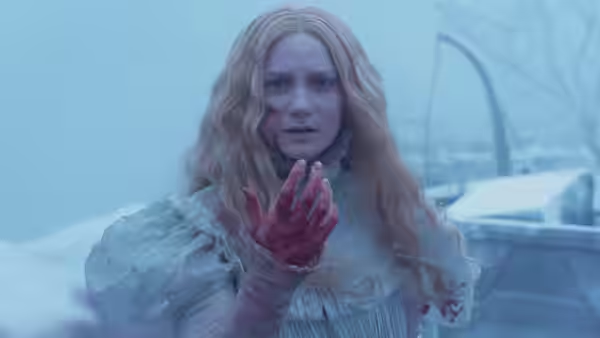
We were disappointed when the ghosts came into clear view. Their glossy, artificial appearance made us inspect the effects instead of feeling the fear that the ruined rooms had begun to build. The designs have imagination, and there is pleasure in their luridness, but seeing so much of them reduces their threat. The violence has more impact. Its bluntness can feel jarring beside the elaborate decoration, though the film benefits from something capable of making us uncomfortable.
Kate Hawley’s costumes help the actors remain distinct within all this visual detail, rather than allowing the mansion to swallow everyone. Their elaborateness suits a film in which appearances carry so much weight. Fernando Velázquez’s music gives the romance welcome seriousness, although its insistence can make an already emphatic scene feel overworked. We would have welcomed more quiet. Still, neither contribution treats the Gothic trappings as something to apologise for, and that confidence sustains the film.
There is room in horror for a film this willing to risk being excessive, particularly when its romance is played without embarrassment. Familiar plotting remains a limitation, but familiarity need not ruin this kind of evening. We would choose Crimson Peak for company inclined to discuss the people as much as the ghosts. Anyone chiefly hoping to lose sleep should choose something else.