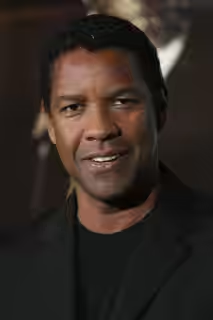
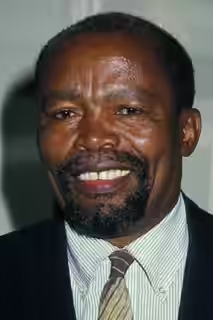
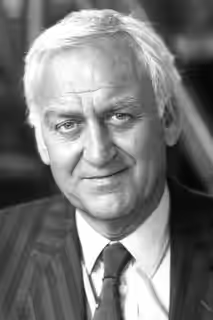
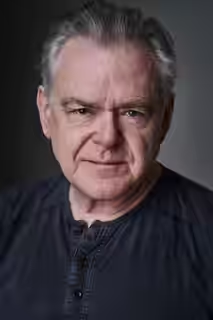
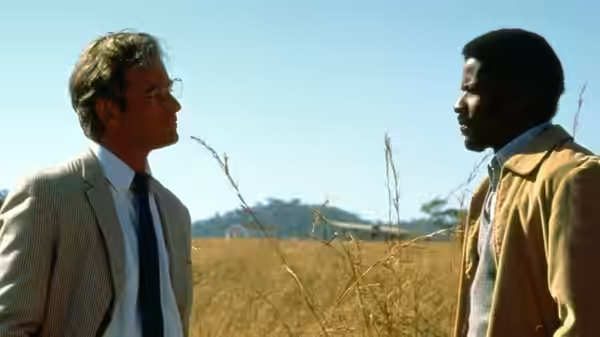
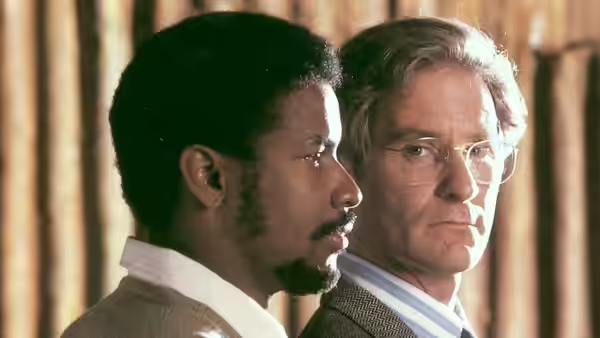
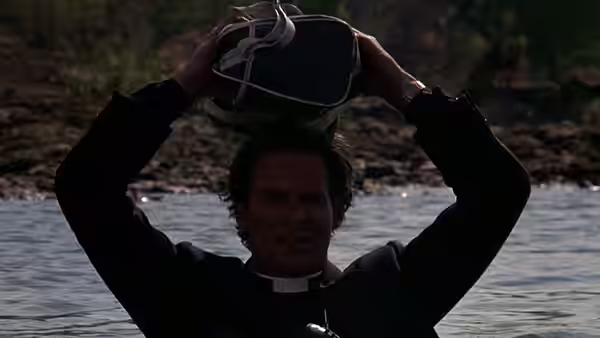
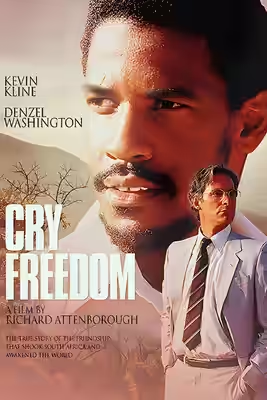
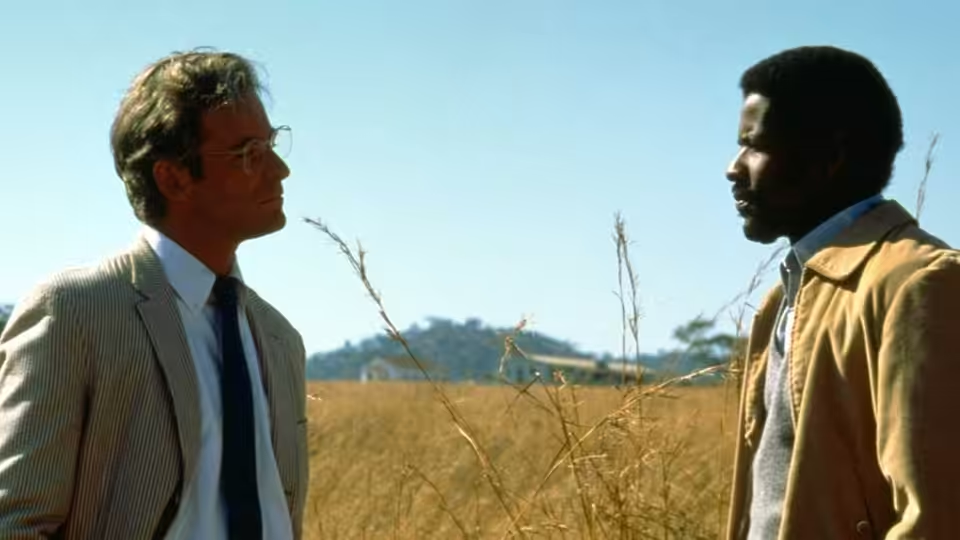
Donald Woods (Kevin Kline) and Steve Biko (Denzel Washington) talk in a dry field
Film review

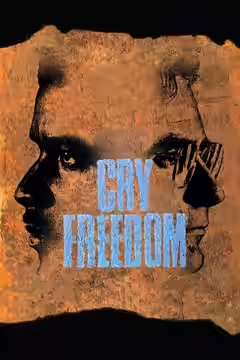
Cry Freedom

1987 · Directed by Richard Attenborough · 2h 37m

In a sentenceDenzel Washington makes talking politics more gripping than the film’s strenuous efforts to keep us in suspense

In South Africa under apartheid, Donald Woods (Kevin Kline) gets to know Steve Biko (Denzel Washington). Their friendship brings the country’s racial divisions into conversations that challenge Woods’s understanding of the society around him. Even the question of why white people call themselves white becomes a point of dispute. Woods wants to support his friend, but the consequences reach beyond the two men to Wendy Woods (Penelope Wilton) and the Woods family. Standing beside Biko means deciding how far that support can go in a country organised around racial separation.

Fi1m review

Richard Attenborough’s Cry Freedom is a forceful political drama weakened by its growing preoccupation with the Woods family. Denzel Washington gives it the conviction to survive that imbalance, though the later passages need a firmer edit.

Richard Attenborough wants Cry Freedom to make the injustice of apartheid comprehensible through a friendship. It is a sound dramatic starting point, and the film is good whenever it lets Steve Biko and Donald Woods occupy our attention together. The difficulty is that John Briley’s screenplay gradually gives the Woods family’s predicament more space than it can usefully fill. We recommend it for the performances and the force of its early encounters, with a warning that the later stretch is considerably less searching.

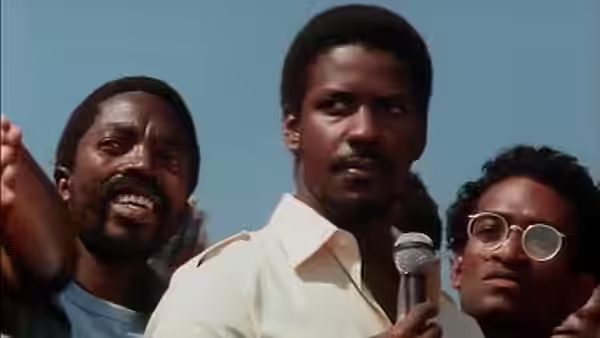
Denzel Washington gives Steve Biko an assurance that does not need constant emphasis. He makes political ideas sound thought through, with the expectation that someone else might give them proper consideration. We were gripped by the discussion of why white people call themselves white: the question interrupts an assumption so ordinary that it might otherwise pass unnoticed. The performance gives us time to consider the challenge without insisting that we applaud the person issuing it.

Kevin Kline has the harder task of making Donald Woods’s changing understanding interesting beside such certainty. He is persuasive when he has someone to listen to; the attention he gives Denzel Washington helps us believe these men might become friends. Penelope Wilton gives Wendy Woods sufficient weight that the family’s concerns cannot simply be dismissed as a distraction. The trouble comes from how much of the film those concerns eventually occupy, not from the actors taking them seriously.

Ronnie Taylor’s photography is most effective when faces hold our attention, allowing the actors to carry the difficult exchanges. Stuart Craig’s production design helps make this South Africa feel inhabited, even when the film’s wish to educate us becomes conspicuous. The setting has a persuasive solidity, and the people belong within it. Both contributions work well, although the handsome presentation can make the material feel more comfortably contained than it should.

George Fenton and Jonas Gwangwa’s music supplies warmth and urgency, though the emotional prompting can become insistent. The subject already has ample weight, and an extra push from the score is not always helpful. Lesley Walker’s editing gives the conversations room, which suits the actors, but the same generosity becomes a liability as the family material accumulates. At 157 minutes, Cry Freedom allows repetition to blunt concerns it has already made clear.

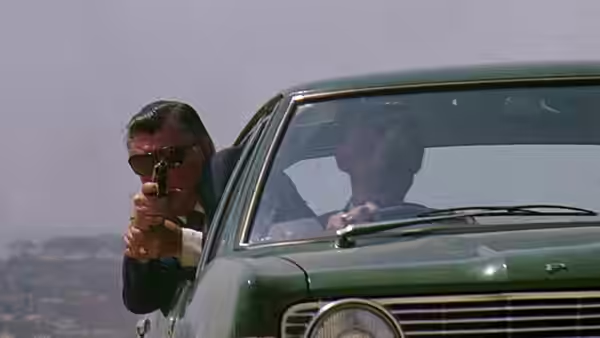
The structural objection matters because this is a political drama, and its choice of whom to follow affects what we come away understanding. John Briley increasingly asks us to worry about the Woods family when the exchanges involving Biko have raised questions about racial power that deserve further attention. The family’s worries are credible within the drama, and Richard Attenborough handles the pressure with considerable skill. Even so, suspense becomes the easier option, and the film spends too long taking it.

The familiar political-drama habit of giving an audience someone to learn alongside can be useful, and Kevin Kline makes a credible companion. Here it also limits how much attention Biko receives on his own terms. That is a substantial reservation, especially when Denzel Washington makes us eager to hear more from him. Choose it for the acting and the political encounters, and allow some patience for the extended attention to the Woods household.

Critical consensus AI synthesised

71
Positive
2
Mixed
2
Negative
0
Empire
1 January 2000 · Robyn Karney
80*

Karney finds the film gripping and emotionally powerful, despite a sentimental, overextended final section. She singles out the performances and the film’s vivid evocation of apartheid-era South Africa for praise.

Read the full review →
Variety
31 December 1986 · Variety Staff
75*

The review finds the film impactful, driven by the moral force of its subject and protagonists. It praises the wrenching immediacy and performances, while faulting the final hour’s overemphasis on the Woods family’s escape.

Read the full review →
Film Comment
· Armond White
64*

The page identifies an Armond White piece on the film, but its review text is inaccessible. The available page provides no verdict or specific praise or complaint.

Read the full review →
Time Out
· MS
64*

The page identifies this as a review, but its verdict is unavailable. The available metadata gives the film’s premise without revealing what the critic praises or criticizes.

Read the full review →

Straight answers AI written, from our review

Is Cry Freedom worth watching?
Cry Freedom is worth watching for Denzel Washington’s performance and its searching political conversations; we score it 72 out of 100. We recommend it to viewers drawn to political drama, with the caveat that its 157 minutes grow less rewarding as the Woods family’s predicament takes attention away from Steve Biko.
How long is Cry Freedom, and what is it rated?
Cry Freedom runs 2h 37m. It is a drama film.
Where can I watch Cry Freedom in Argentina?
Cry Freedom is not on any streaming or rental service in Argentina at the moment. It is available in 21 other countries; change your country at the top of the page to see where. Availability is checked daily.
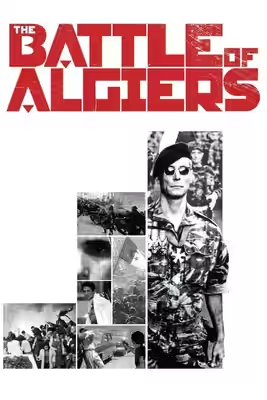
How does Cry Freedom compare to The Battle of Algiers?
Cry Freedom approaches political conflict through friendship and family, while The Battle of Algiers examines streets, crowds and the machinery of repression. We favour The Battle of Algiers for its lucid account of political struggle, though its documentary-style violence is hard to bear; Cry Freedom suits viewers who prefer sustained conversations and closer attention to individual performances.
Is Cry Freedom based on a true story or a book?
Cry Freedom is adapted from a book by Donald Woods and centres on his friendship with Steve Biko under apartheid. No prior reading is needed to follow Woods’s changing understanding of the society around him, though we find the film’s growing attention to his family leaves too little space for Biko.
What should I watch after Cry Freedom?
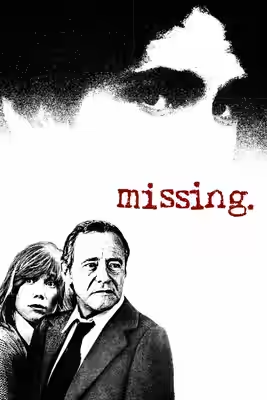
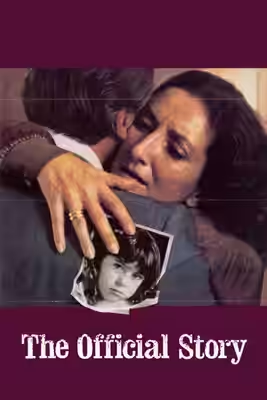
After Cry Freedom, try The Battle of Algiers (1966, Fi1m 93): For political conflict examined through streets, crowds and the machinery of repression. Then Missing (1982, Fi1m 80): A family search makes state violence immediate, with little room for reassurance; and The Official Story (1985, Fi1m 81): Political denial enters a family home, where looking away becomes increasingly difficult.

Cast

Awards

Academy Awards, 1988

Nominated
Best Original Score
Nominated
Best Supporting Actor

If you liked this, try…

  1. A Dry White Season (1989) · not reviewed yetAnother confrontation with apartheid, equally concerned with the limits of white awakening.

  2. The Battle of Algiers (1966, Fi1m 93)For political conflict examined through streets, crowds and the machinery of repression.

  3. Missing (1982, Fi1m 80)A family search makes state violence immediate, with little room for reassurance.

  4. The Official Story (1985, Fi1m 81)Political denial enters a family home, where looking away becomes increasingly difficult.

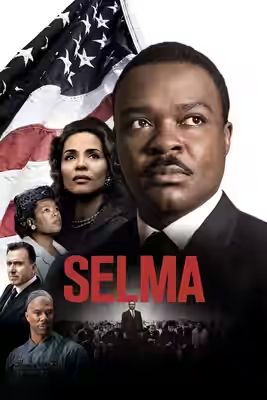
  5. Selma (2014, Fi1m 84)Keeps Black leadership and the practical difficulties of political organising firmly central.

Free account

Know what to watch tonight

Two lists that know where things are streaming, collections you can share, your own score beside ours, and Discover that remembers what you have seen.

  • Want to see, sorted by what is streaming now
  • Seen, with your score out of ten
  • No adverts, ever