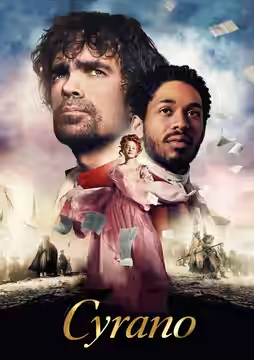
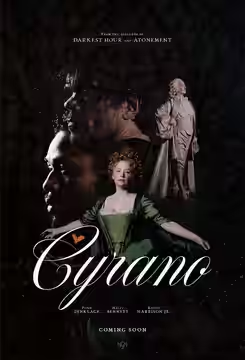
Peter Dinklage makes Joe Wright’s musical romance worth the occasional wait. The songs are uneven and the decoration sometimes distracting, but the pain of listening to someone you love talk about somebody else comes through.
Joe Wright’s Cyrano is an uneven musical romance with a performance worth making time for. Peter Dinklage gives the familiar misery of loving someone who wants somebody else enough particular hurt to make the story matter again. The songs are less reliable, and the film sometimes pauses to admire its finery when it ought to be getting on. Still, we would recommend it to anyone with patience for an earnest romantic musical.
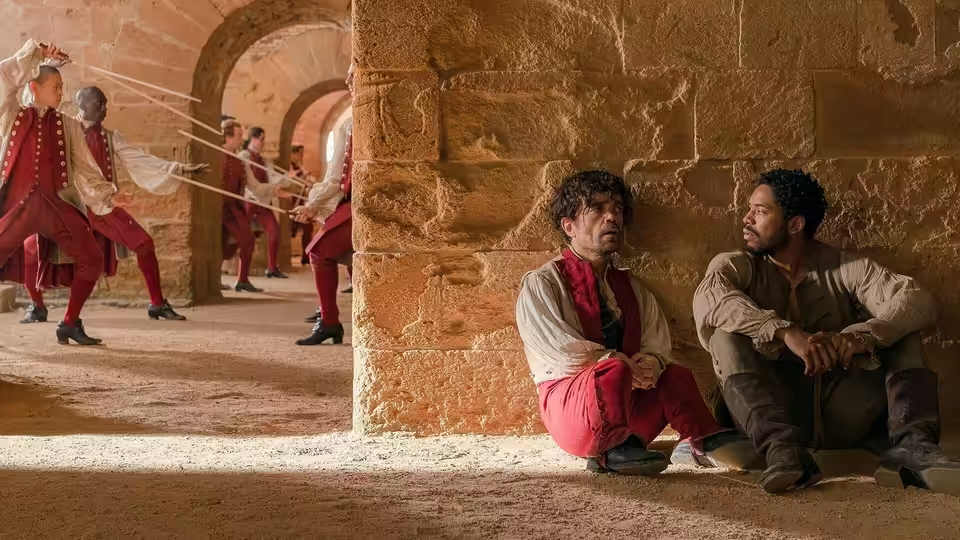
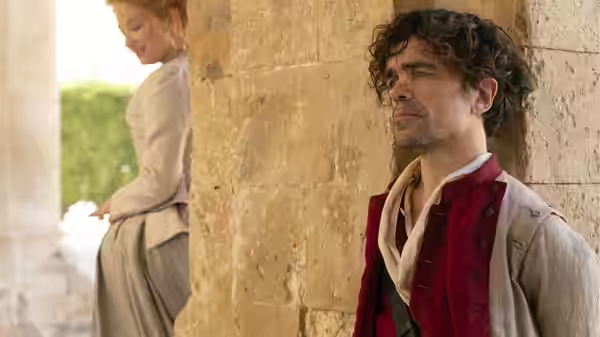
The clearest reason comes when Roxanne tells Cyrano that she loves Christian. Peter Dinklage lets hope give way to the effort of listening without giving himself away, and we felt painfully sorry for him. Haley Bennett keeps the confession alive while the person hearing it quietly suffers, her excitement making his disappointment harder to watch. He can neither stop listening nor ask for comfort. It is a small exchange, and the film is at its most persuasive when it gives that sort of discomfort time.
Turning love letters into songs is a sensible idea: words intended for one person can be heard by everyone. Aaron Dessner and Bryce Dessner supply music that understands the longing, but too many of the numbers settle into it without finding a tune that stays with us. Peter Dinklage’s limited singing is less of a problem than the material around it; the strain suits a man struggling to make himself understood. Haley Bennett is the more assured singer, though assurance alone cannot give the weaker songs a purpose.
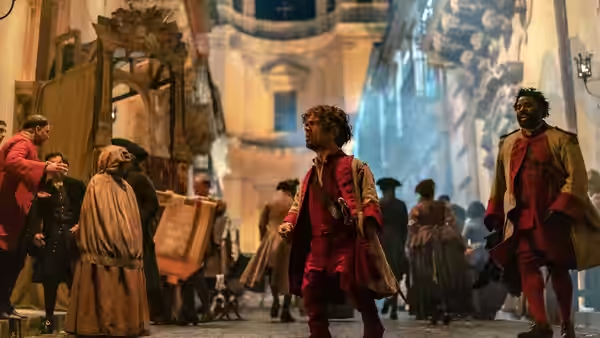
Seamus McGarvey’s pastel photography and Sarah Greenwood’s ornate production design make the dance numbers easy to enjoy. The pale colours suit the romance, and Joe Wright gives movement enough attention that people dancing can briefly restore the energy lost in the conversations. We would happily have had more of that lightness. Yet the accumulation of decorative detail can be wearing: even a modest exchange seems to have been dressed for a grand occasion.
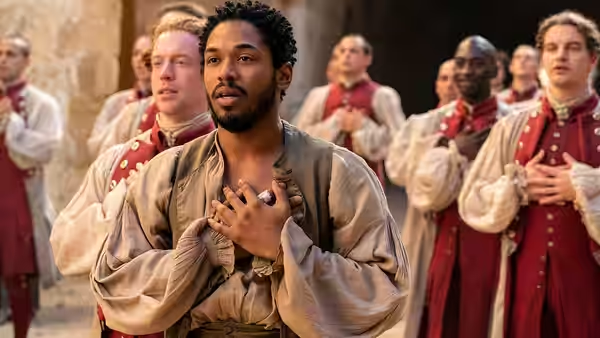
Erica Schmidt’s screenplay is less generous to Roxanne, whose desires rarely develop beyond the romantic problem at hand. Haley Bennett gives her conviction, but we wanted more of the woman doing the choosing. Kelvin Harrison Jr. has the awkward task of making Christian worth all this anguish while the film keeps drawing attention back to Cyrano. He makes the attraction plausible, but the writing gives him little room to complicate it.
Valerio Bonelli’s editing does not quite solve the problem of moving between a conversation and a number. The film can seem to be gathering itself to sing just when the scene has begun to hold our attention. This is where the solemnity becomes a drawback: the pauses ask for an emotional investment that the song does not always reward. We never doubted the strength of Cyrano’s feelings, but we did sometimes wish he could get on with expressing them.
A romantic musical need not have a flawless singer at its centre. The difficulty of getting a feeling out can be part of the attraction, and Peter Dinklage makes that difficulty matter here. Those who need every number to send them away humming may find this a frustrating evening. Go for the man trying not to show how much a conversation has hurt him.