A romantic comedy about compulsion that refuses to make compulsion the joke. Michael Sheen is remarkable, Shirley Henderson is better than the part, and the film around them is small, kind and a little too tidy in its second half.
Ian Puleston-Davies and Jeff Pope have written a romantic comedy in which the hero cannot leave a room until he has touched the door frame the right number of times. Dirty Filthy Love follows Mark Furness (Michael Sheen), whose marriage to Kathy (Claudie Blakley) has ended and whose Tourette’s and obsessive compulsive disorder, long held down, have come up for air. It is a modest film, 93 minutes, mostly flats and halls and pavements, and it is a good one. It earned its evening from us, though we had to watch a man suffer for a while before he was allowed to be happy.
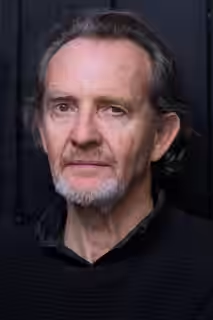
Sheen is the reason to see it. The tics are precise, a jerk of the head, a word barked at nobody, a hand that has to go back to the wall, and he does not let us see them coming, so each one lands on us as it lands on him. What he plays underneath is shame. Mark apologises constantly, to strangers, to bus stops, to the air, and Sheen makes the apologies worse to watch than the outbursts. There is a moment outside a front door, with the ritual going wrong and starting again, where we realised we had stopped breathing, and that is not a thing we expected from a comedy about a man in a crumpled suit.
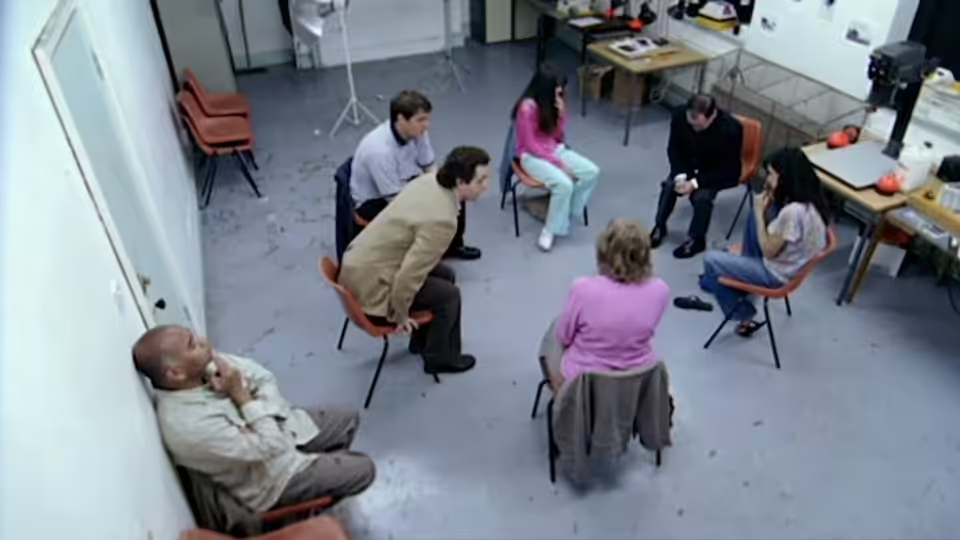
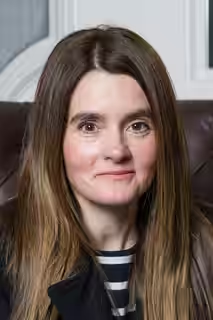
Shirley Henderson’s Charlotte will not touch anything with her bare hands and says so in the small, level voice she uses for everything, as though reporting the weather. She runs the self-help group like a woman who has heard every excuse and has one or two of her own. Henderson gives her a dry patience that never tips into saintliness, and when Mark and Charlotte are in the same frame the film has a reason to exist. Their scenes are the best written in it, two people who understand each other’s rituals and are slightly appalled by them.
Adrian Bower’s Nathan is the friend who stays, which is harder to play than the friend who leaves, and Bower does it without a speech. Claudie Blakley’s Kathy is written with care: not cruel, only tired, a woman who has been living with the illness as well and has run out of road. The script does not blame her and does not ask us to, and that restraint is one of the film’s quiet strengths.
David Odd shoots close and often handheld, grey London daylight on the street and flat strip light in the hall, and the frame rarely settles, which suits a man who cannot. Tania Reddin cuts Mark’s compulsions in short, quick beats, so we feel the count without having to sit through all of it; she lets the scenes with Charlotte breathe. Martin Phipps’s score is light and stays out of the way until it is needed, and it is needed only once or twice. David Roger’s production design keeps Mark’s rooms bare and getting barer, and Mary-Jane Reyner’s costumes track his decline in the state of one suit.
The trouble is shape. For an hour the film is content to follow Mark from humiliation to humiliation and to let each one be funny or awful or both. Then it remembers it is a romantic comedy, and the second half hurries through the required stages, the setback, the rival, the decision, with less patience than the first half earned. A few of the comic set pieces push the swearing for a laugh the film has already told us not to take, and once or twice we laughed and felt slightly ashamed of ourselves. The ending, which we will not describe, is kinder than it is surprising.
Films about illness usually cure their heroes by the credits. This one is braver than that, and treats Mark’s condition as something to live alongside rather than defeat. Adrian Shergold directs with no fuss and a great deal of trust in his two leads, and the trust is repaid.
Watch it at home, with someone who will not talk over Sheen. It is a small film and it knows it, and it left us, quite rightly, wanting to check whether we had locked the door.