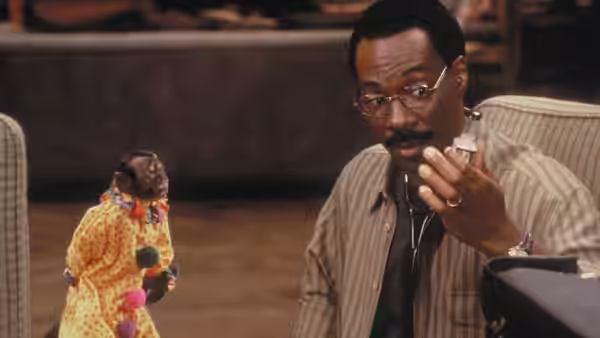
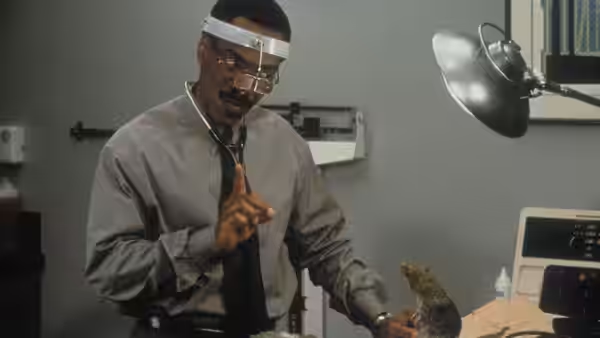
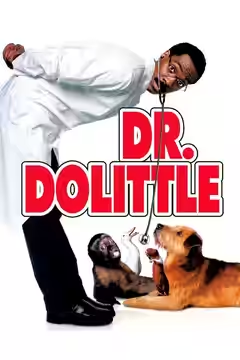
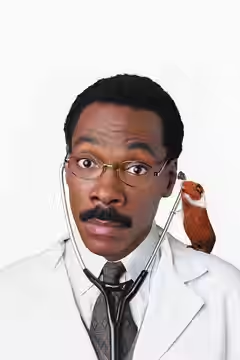
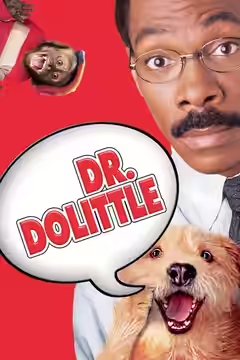
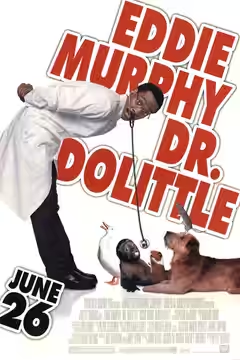
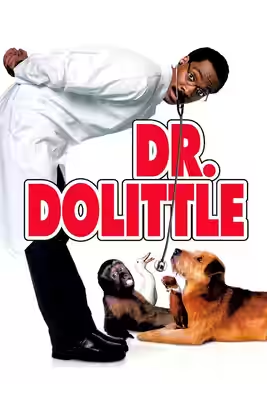
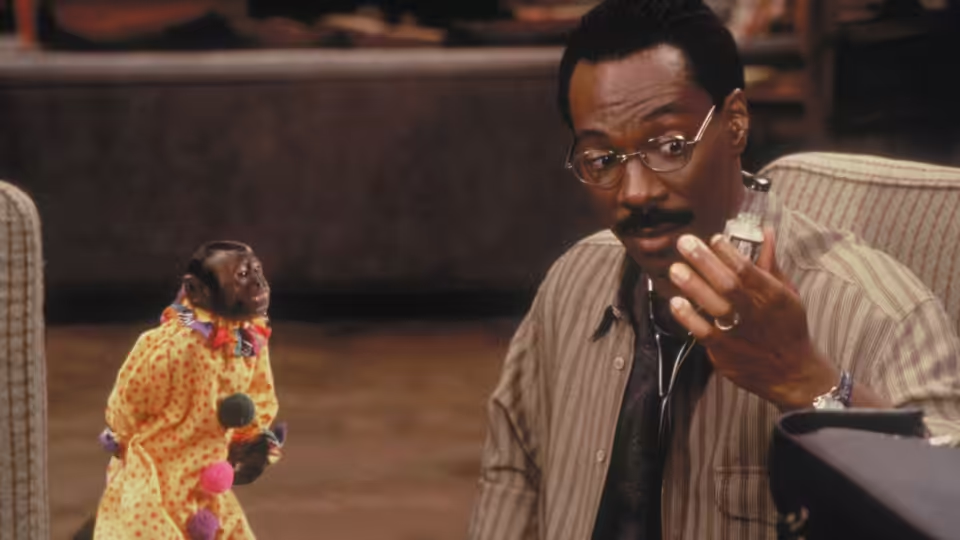
Dr. John Dolittle (Eddie Murphy) talks with a small monkey in colorful clothes
Film review

Doctor Dolittle

1998 · Directed by Betty Thomas · 1h 25m

In a sentenceThe animals get the jokes, the humans get the plot, and nobody got a second draft

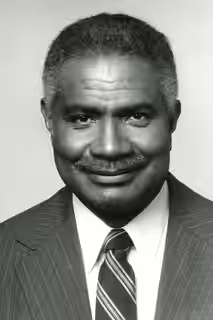
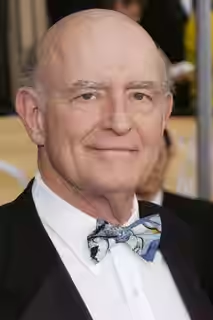
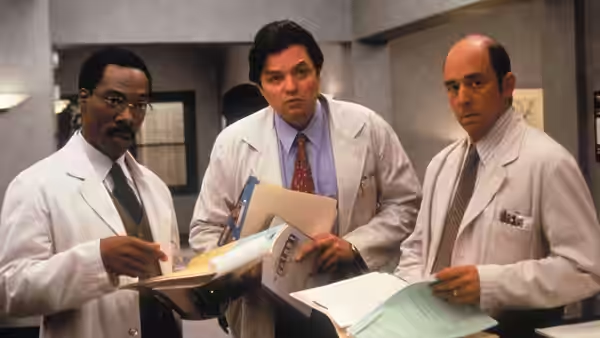
San Francisco. As a boy, John Dolittle can talk to animals, until his father Archer (Ossie Davis) decides the gift is a sickness and has it driven out of him. Years later, Dr. John Dolittle (Eddie Murphy) is a successful physician with a wife, Lisa (Kristen Wilson), two daughters, Maya (Kyla Pratt) and Charisse (Raven-Symoné), and a practice he and his partners Mark Weller (Oliver Platt) and Gene Reiss (Richard Schiff) are about to sell to a health company run by Calloway (Peter Boyle). Then he clips a stray dog with his car, and the dog sits up in the road and insults him. The gift is back. Within days the surgery is full of pigeons, rats and a guinea pig, his partners think he is cracking up, and the sale is in doubt.

Fi1m review

Eddie Murphy plays it straight and lets the menagerie do the talking, which is the right instinct and the only one the film has. Funny for a line at a time, and then the sale of the surgery comes back. For small children, and for Murphy’s patience.

Betty Thomas’s Doctor Dolittle takes the name and the gift from Hugh Lofting’s books and leaves nearly everything else behind. The doctor is now a San Francisco physician with a nice house and a sale pending; the animals are the pigeons, rats and strays of a city rather than the creatures of a storybook; and the script, by Larry Levin and Nat Mauldin, is about whether three doctors will sell their practice to a health company. It runs 85 minutes. That is the right length for the joke and about twenty minutes longer than the story, and the result is a comedy that is funny in pieces and flat across the whole.

Eddie Murphy plays Dolittle almost entirely straight. He is a man in a good suit who has just been insulted by a dog and would like it to stop, and most of his work is reaction: the blink, the look over the shoulder, the decision not to answer back in front of his partners. It is a disciplined performance and a generous one, since it hands every laugh to the animals. It also means the film has no engine of its own. The Murphy of the eighties talked faster than anyone else on screen; this one mostly listens, and when the animals are off screen there is not much to listen to.

The animals are the film. Lucky, the stray Dolittle clips with his car, is voiced by Norm Macdonald as a dog who has read the small print on life and found it wanting, and the first time he sat up in the road and called the doctor a bonehead we laughed out loud and against our better judgement. The mouths are a mix of animatronics and effects work and they are good enough that we stopped noticing them, which is the test. A guinea pig with a grievance, a pair of pigeons, a rat on the surgery floor: each gets a line, the line is usually rude, and the rudeness is usually about bottoms. Children will not mind. We minded a little by the fourth one.

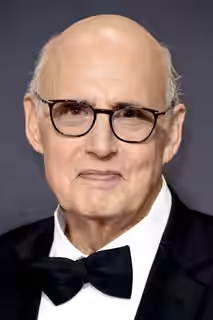
The humans are given the plot and it is not a good plot. Oliver Platt’s Mark Weller wants the money, Peter Boyle’s Calloway is the man offering it, Richard Schiff’s Gene Reiss stands between them looking anxious, and Jeffrey Tambor turns up as a psychiatrist to decide whether a man who talks to pigeons is well. We were bored by the sale of the practice, properly bored, and we doubt a child of eight cares who owns a doctor’s surgery either. Ossie Davis, as Dolittle’s father, has one scene of real weight near the start and is then left to wait. Kristen Wilson, as Lisa, gets the wife’s lot of standing in doorways. The one human strand that means anything is Kyla Pratt’s Maya, the younger, odder daughter who likes animals and is told she should like people, and the film gives her perhaps six minutes.

The craft is sitcom craft, done competently. Russell Boyd lights everything bright and even, so that the surgery, the house and the hospital look like three sets on the same lot. William A. Elliott’s production design is clean and anonymous in the same way. Sharen Davis puts Murphy in sober grey suits, which tells you more about the man he has become than the script does. Peter Teschner cuts to the animal for the reaction every time, which is the correct instinct and becomes a tic. Richard Gibbs’s score tells you when to feel warm, about a beat before the scene has earned it.

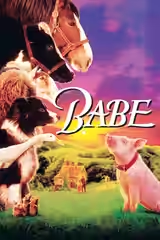
Three years earlier Babe had shown that a film could make the animals’ mouths move and still give the animals a story. Here the mouths move and the story belongs to the people, and the film never notices the mistake. Several of the reviews found it sagging in the last third, and we agree, though we would put the sag earlier: once the surgery is full and the partners are worried, the picture has about three more ideas and a tiger.

Most critics landed in the middle, one warm, three cool, three cold, and that spread is about right. For a small child on a wet afternoon it will do: the dog is funny, the rat is funny, and nothing in it will frighten anyone, which is what the PG is for. For the adults sitting beside them it is a dozen good lines, a patient leading man and a lot of waiting for the next animal.
Critical consensus AI synthesised

51
Positive
1
Mixed
3
Negative
3

The reviews lean mixed to negative, and the one point on which nearly everyone agrees is that the animals carry the film. Critics praise the animatronic creatures and the set pieces that put Murphy in among them, and several single out the voice work, Norm Macdonald’s dog Lucky in particular. Murphy himself gets credit for playing it straight and letting the menagerie take the laughs, a restraint that even the harsher notices acknowledge.

The complaints cluster on everything around the animals: a thin story, jokes pitched low and often scatological, and comedy that more than one critic finds slapdash or stuck at sitcom level. Total Film, broadly entertained, still says the final third drags. The spread is wide, from a sunny recommendation at The New York Times, the only clearly positive notice, down to Empire and Eye for Film, which find it bland and unoriginal and regret the wasted talent, Ossie Davis among it.

The New York Times
26 June 1998 · Janet Maslin
80*

Maslin calls the film a sunny, breezy family comedy. She praises Murphy’s comic restraint and the animal performers’ lively, well-integrated work.

Read the full review →
Time Out
· DA
64*

The available page labels this a film review, but its critical verdict is not visible. The accessible description mentions Dolittle’s childhood ability to talk with animals.

Read the full review →
Total Film
31 July 1998 · ★★★ · Total Film
60

The review finds it an entertaining family comedy, though it drags in the final third. It praises the animal antics and slapstick humour as a hoot.

Read the full review →
RogerEbert.com
26 June 1998 · ★★/4 · Roger Ebert
50

Ebert’s verdict is negative, finding the comedy slapdash rather than engaging. He singles out the talking animals as the film’s strongest element.

Read the full review →
Variety
24 June 1998 · Leonard Klady
35*

Klady finds the film a letdown, with a thin story and scatological humor limiting its appeal. He praises the animals and their performances, especially Norm Macdonald’s comic delivery as Lucky.

Read the full review →
Empire
23 November 2006 · Caroline Westbrook
30*

Westbrook finds the film a bland, lacklustre disappointment despite its promising premise. She praises the crafted animatronic animals and impressive man-and-animal set pieces, but says the creatures’ cheap jokes and weak story undermine them.

Read the full review →

Straight answers AI written, from our review

Is Doctor Dolittle worth watching?
Doctor Dolittle is worth watching only for small children, and we scored it 50. The talking animals, Norm Macdonald's dog in particular, are funny a line at a time, but the humans are given a dull plot about selling a surgery, and Eddie Murphy spends most of the film patiently waiting for the next joke to arrive.
How long is Doctor Dolittle, and what is it rated?
Doctor Dolittle runs 1h 25m. It is a comedy and family film.
Where can I watch Doctor Dolittle in Ireland?
Doctor Dolittle is streaming on Disney+ in Ireland, and it is also available to rent from Amazon Prime Video and Apple TV from €3.99. Availability is checked daily; the links above go straight to each service.
How does Doctor Dolittle compare to Babe?
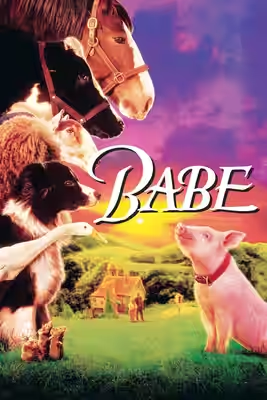
Doctor Dolittle is the weaker film beside Babe, which gives its animals a story as well as moving mouths. The Dolittle animals get the jokes while the humans get a plot nobody cares about; Babe is funnier, more tender and better made. Choose Babe for anyone over eight, and the Murphy film only when rudeness about bottoms is what is wanted.
Is Doctor Dolittle based on a true story or a book?
Doctor Dolittle is based on the books by Hugh Lofting, not on a true story, and it keeps only the name and the gift of talking to animals. Betty Thomas's film moves the doctor to San Francisco and replaces the storybook creatures with city pigeons, rats and strays. Knowing the books will not help you here and may annoy you.
What should I watch after Doctor Dolittle?
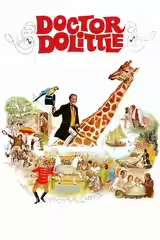
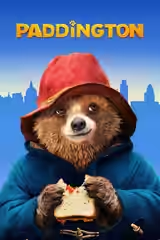
After Doctor Dolittle, try Babe (1995, Fi1m 88): The talking-animal film this one wanted to be, with a story the animals own. Then Doctor Dolittle (1967, Fi1m 50): The earlier version, closer to Lofting, with a pushmi-pullyu and a great deal of singing; and Paddington (2014, Fi1m 84): A family comedy where the effects creature has manners and the humans have parts.

Cast

Awards

BAFTA Film Awards, 1999

Nominated
BAFTA's Children & Young People Award - Feature Film

Kids' Choice Award for Favorite Movie, 1999

Nominated
Kids' Choice Award for Favorite Movie

If you liked this, try…

  1. Babe (1995, Fi1m 88)The talking-animal film this one wanted to be, with a story the animals own.

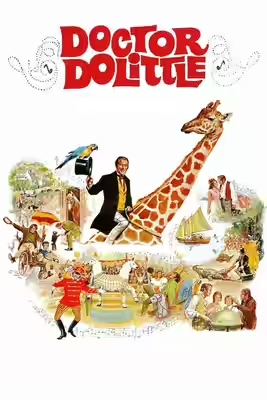
  2. Doctor Dolittle (1967, Fi1m 50)The earlier version, closer to Lofting, with a pushmi-pullyu and a great deal of singing.

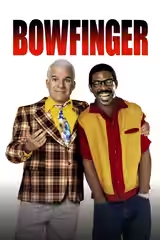
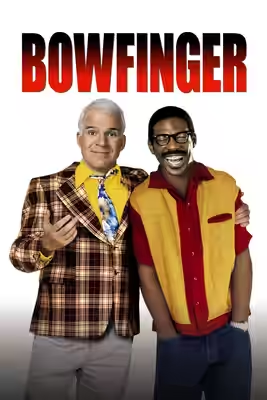
  3. Bowfinger (1999) · not reviewed yetMurphy the following year, twice over, and allowed to be funny on his own account.

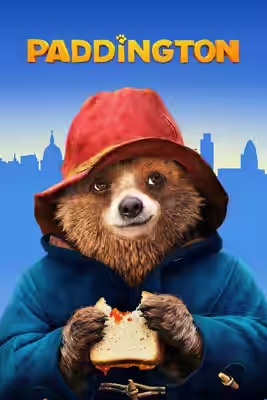
  4. Paddington (2014, Fi1m 84)A family comedy where the effects creature has manners and the humans have parts.

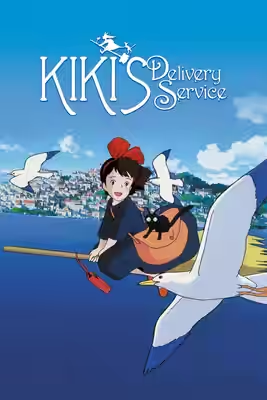
  5. Kiki's Delivery Service (1989, Fi1m 86)A girl, a talking cat and a city, from Japan, with no bottom jokes.

Free account

Know what to watch tonight

Two lists that know where things are streaming, collections you can share, your own score beside ours, and Discover that remembers what you have seen.

  • Want to see, sorted by what is streaming now
  • Seen, with your score out of ten
  • No adverts, ever