Richard Fleischer’s musical has handsome sets, a working menagerie and Rex Harrison at his driest, and it runs 151 minutes on the strength of one good song. Children may be enchanted; the adults beside them will check the time.
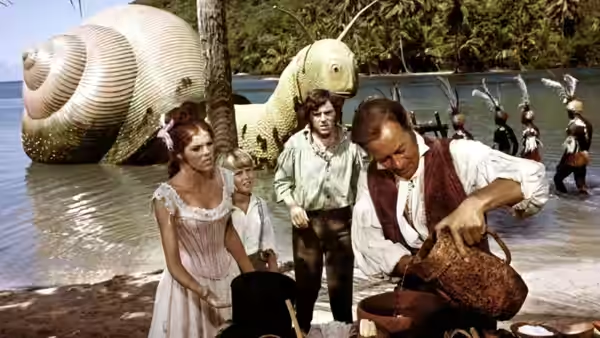
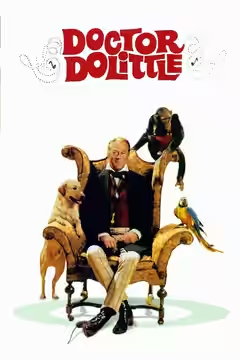
Doctor Dolittle arrived in the wake of Mary Poppins (1964), when every studio wanted a family musical with an English setting, a star from the West End and a running time that justified the price of a reserved seat. Richard Fleischer’s version of Hugh Lofting’s books has all three. It also has a working menagerie, a two-headed llama, a giant snail you can sail in, and Rex Harrison in a top hat. What it does not have is much reason to last 151 minutes, and by the end we were counting them.
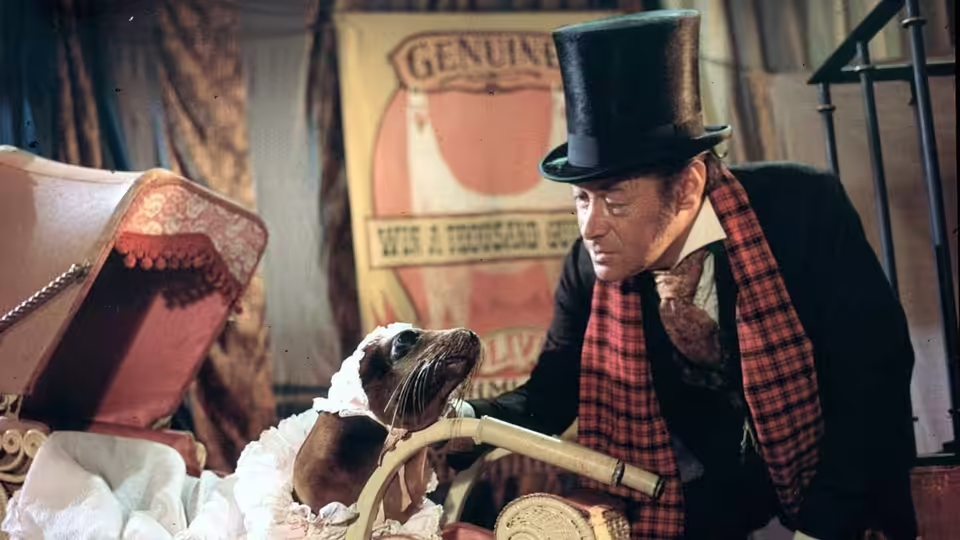
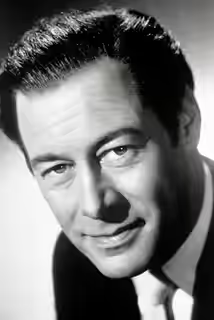
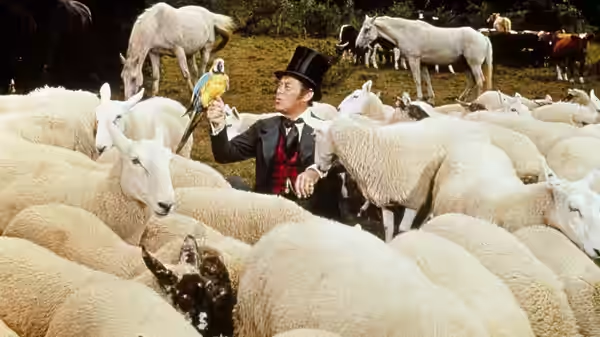
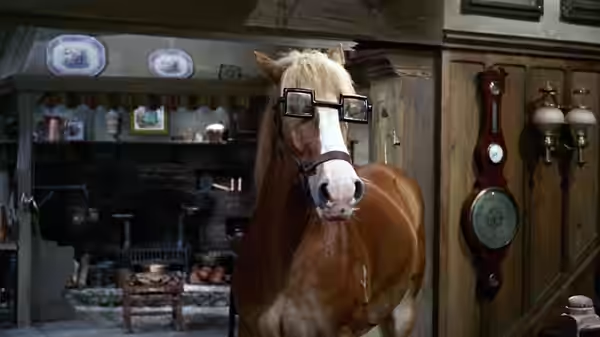
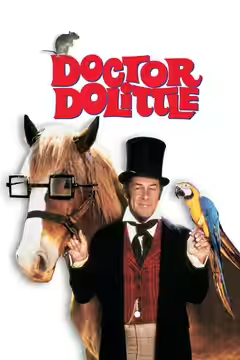
Harrison is the reason to stay. He plays Dolittle as he played Henry Higgins in My Fair Lady (1964), talking his way through the songs in that clipped, amused voice and treating the lyrics as remarks he has just thought of. He never condescends to the animals or to the joke. When a parrot tells him what is wrong with a horse, he listens as a doctor listens, head tilted, and then prescribes spectacles. ‘Talk to the Animals’ is the one Leslie Bricusse tune anybody left humming, and Harrison delivers it while feeding a duck. We smiled through the whole of it, and at little else afterwards.
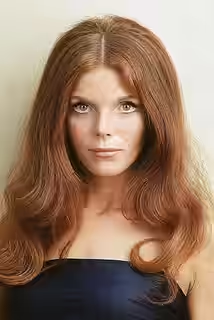
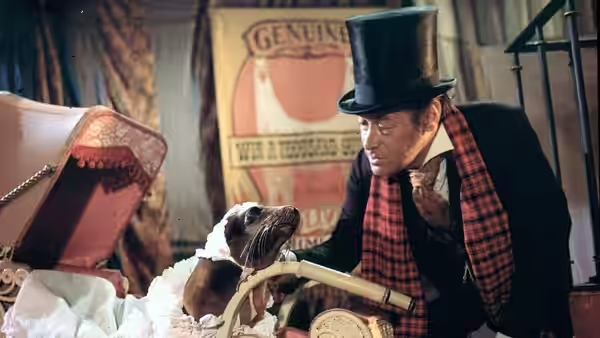
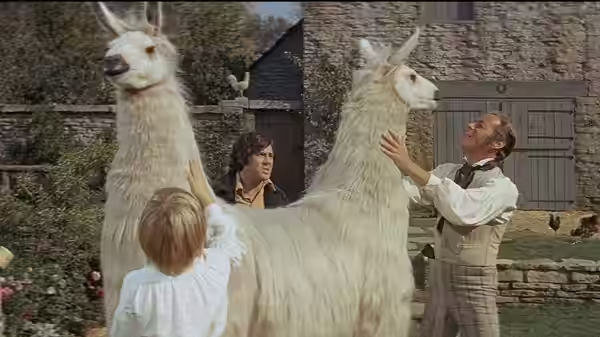
Mario Chiari builds Puddleby-on-the-Marsh as a postcard, stone cottages, a small harbour, a doctor’s house with a creature on every surface, and Robert L. Surtees photographs it in wide, evenly lit frames that let you count the animals. There are a great many to count. A seal in a shawl and bonnet, a chimpanzee who helps about the house, a pig under the table, and the Pushmi-Pullyu, two performers in a llama suit facing opposite ways, which is funnier the longer you look at it. Ray Aghayan puts Harrison in a frock coat that never gets dirty and Samantha Eggar in crinolines the colour of boiled sweets. The money is on the screen and it looks like money.
The circus stretch is the film’s second best. Richard Attenborough plays Albert Blossom, the proprietor, as a man who has spent thirty years being unsurprised and has just been surprised, and his single number, sung at the Pushmi-Pullyu, has more energy than the rest of the score put together. He is in the film for perhaps ten minutes. We noticed how much we missed him once he had gone.
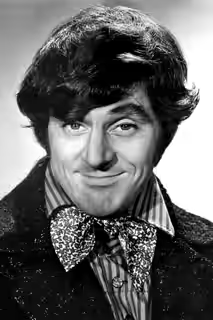
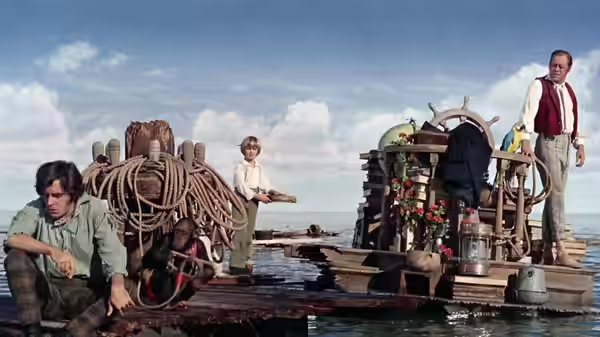
Then the film sets sail and the trouble starts. Bricusse’s songs are the weak part: pleasant, wordy, short of tunes, and there are a dozen of them, each stopping the story for three minutes to explain a feeling the previous scene had already made clear. Anthony Newley’s Matthew Mugg sings most of the worst ones, in an Irish accent and with a wink, and he wears out his welcome before the first hour is up. Eggar’s Emma Fairfax is written as a scold who comes round, and the script gives her nothing to do between the two states except glare at Harrison from under a bonnet. Samuel E. Beetley and Marjorie Fowler are credited as editors, and the film’s length suggests they lost every argument. Somewhere on the voyage, watching the ship pitch about in what is plainly a tank while the cast waited for the water to settle, we were bored, and then we were irritated at being bored by something on which so much care had been spent.
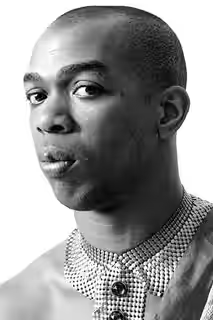
Fleischer was a director of lean thrillers. The Narrow Margin (1952) does not waste a minute, and Fantastic Voyage (1966) kept a whole crew inside a human body without losing track of anyone. Here he seems to have been told to make everything larger and slower, and he obeyed. The camera sits back, the numbers run their full length, and the animals, who cannot be directed, do what they like, so that several scenes end in a scramble of fur and feathers with nobody in charge. Geoffrey Holder turns up late as William Shakespeare X and is the only person after Attenborough who looks pleased to be there.
A child of eight will forgive most of this for the seal and the snail, and the U certificate is honest. Adults should sit next to the child and borrow the goodwill. Harrison, the animals and Attenborough’s ten minutes are worth about an hour of anybody’s evening; the film has another ninety and no clear idea what to do with them.