Film review

My Fair Lady

1964 · Directed by George Cukor · 2h 53m · MPA G

In a sentenceThree hours of a man teaching a woman to speak so that he can ignore her in better English

ComedyRomanceMusic

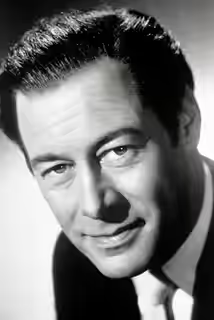
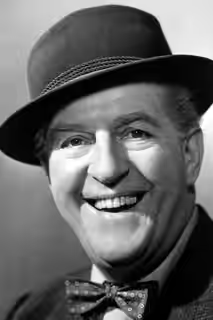
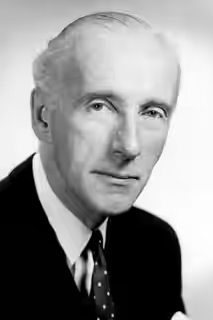
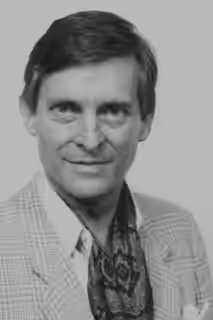
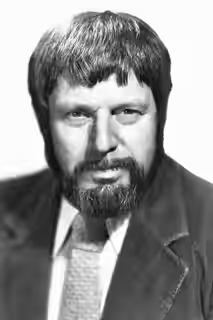
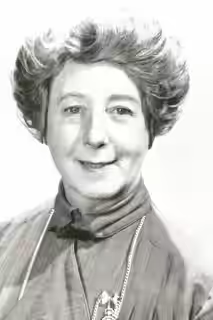
Edwardian London. Outside the Covent Garden opera house on a wet night, Eliza Doolittle (Audrey Hepburn) is selling violets when Professor Henry Higgins (Rex Harrison), a phonetician, takes down her vowels and announces that he could pass her off as a duchess within six months. Colonel Hugh Pickering (Wilfrid Hyde-White), a fellow enthusiast, takes the bet. The next morning Eliza turns up at Higgins’s house in Wimpole Street asking for lessons so she can work in a flower shop, and Mrs. Pearce (Mona Washbourne), the housekeeper, puts her in a bath. Higgins drills her on marbles, candles and ‘The rain in Spain’ while her father Alfred P. Doolittle (Stanley Holloway), a dustman, calls round to see what the arrangement is worth to him.

Plays from YouTube when you press play; nothing loads from them until then.

Fi1m review

Cukor films the Lerner and Loewe musical much as it stood on stage, dressed by Cecil Beaton, with Rex Harrison exact as Higgins. It is handsome and civilised, half an hour too long, and Audrey Hepburn’s Cockney is a problem it never solves.

George Cukor was handed the most successful stage musical of its day and asked, in effect, not to drop it. Alan Jay Lerner adapts his own book, every one of Frederick Loewe’s songs is kept, and Cecil Beaton designs the clothes and, with George James Hopkins, the rooms. It is a good film, well spoken, well dressed and good-humoured, and if you like musicals it will fill an evening. It is also 173 minutes long, and it has a lead actress who is right for half the part.

Rex Harrison is the reason to see it. He does not sing; he talks the songs, on the beat, in the voice of a man dictating a letter, and it is the best musical performance in the film by a distance. I’m an Ordinary Man is a list of the ways women ruin things, delivered while he paces his study, and Harrison makes Higgins’s rudeness sound like a chain of reasoning. We laughed out loud, more than once, at a man being unpleasant in perfect sentences. He is arrogant, funny and not at any point trying to be liked.

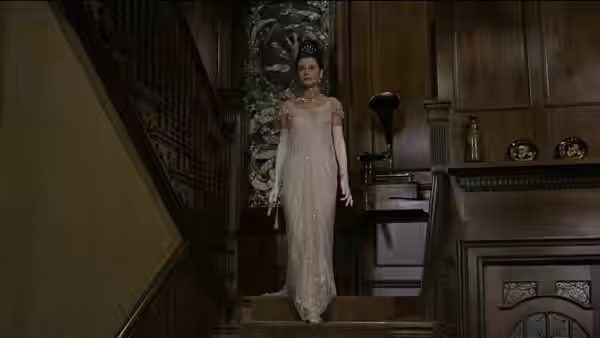
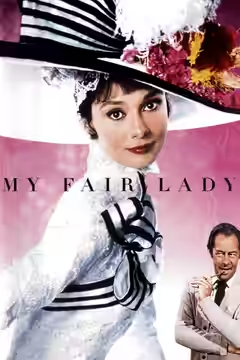
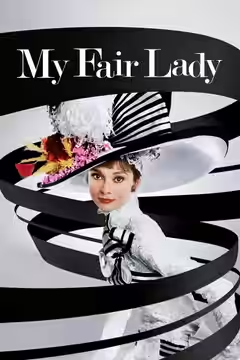
Audrey Hepburn is a different case. Julie Andrews played Eliza on the stage and was passed over, and Hepburn has been apologised for ever since; the apology is half deserved. Her Cockney is a finishing-school girl’s idea of one, the vowels put on like a hat, and in the early scenes you can see her working at it. Her singing is done by Marni Nixon, uncredited, and the join shows. During I Could Have Danced All Night we noticed that the voice and the face belonged to two different women, and then, somewhere in the second verse, we stopped minding, because Hepburn’s face was doing the work anyway. Once Eliza can speak, Hepburn is exactly right: stiff, careful, frightened of getting a word wrong, and later angry in a way the film is not quite ready for.

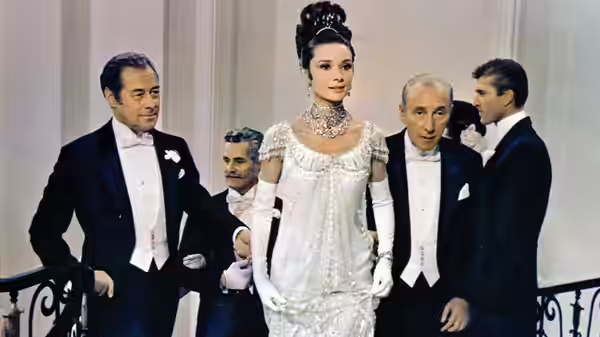
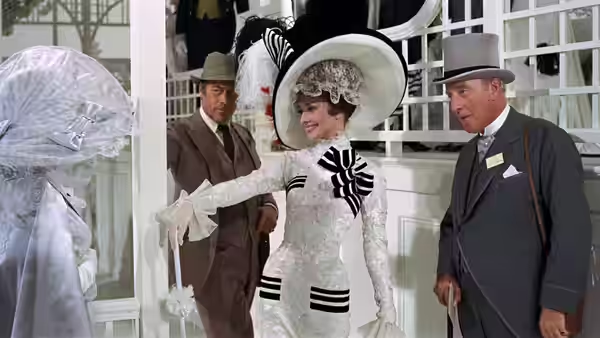
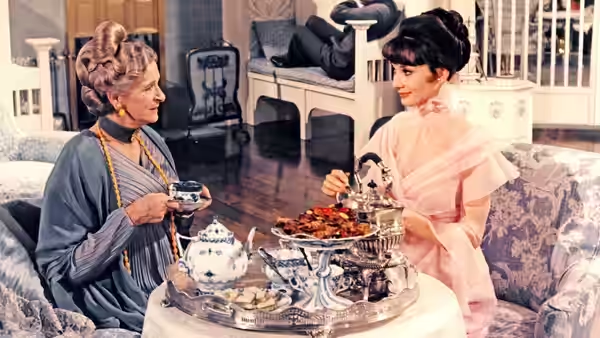
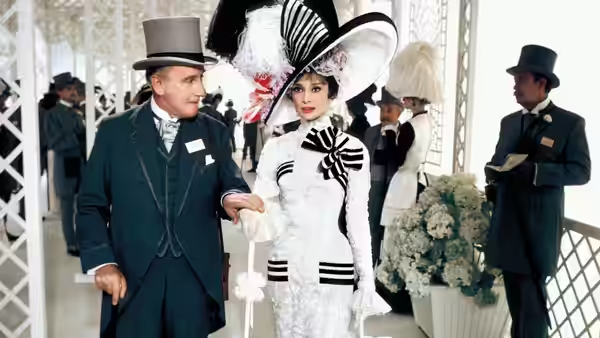
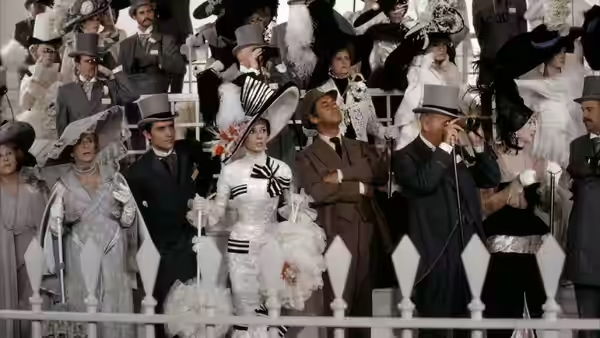
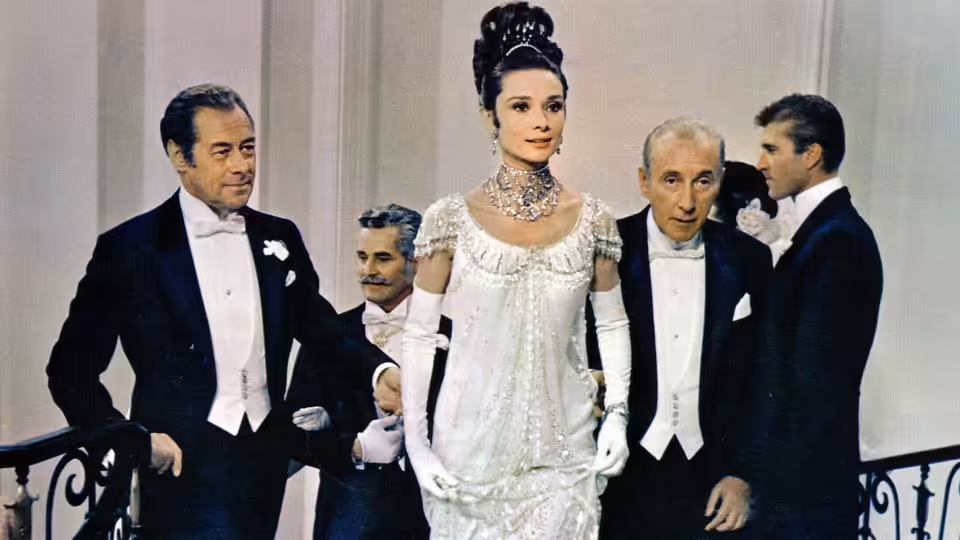
Beaton’s Ascot is the sequence people remember, and it deserves to be. Everyone is in black, white and grey, hats the size of tea trays, and they stand perfectly still while the horses go by. Harry Stradling shoots it flat and wide, like a plate from a fashion magazine, and we were delighted. Then we noticed that nobody moves much for the rest of the film either. The Wimpole Street study is a proper room, all leather and brass listening horns, but Covent Garden at night is a soundstage with painted sky and tidy puddles. Stradling lights it all warm and even, every frame composed to be looked at, which is the pleasure and the problem.

The problem is the length. William H. Ziegler cuts as little as he can, scenes run to where the curtain would have come down, and the numbers are given every verse they had on stage. Stanley Holloway is wonderful as Doolittle, a dustman with a philosophy, and Get Me to the Church on Time is a splendid knees-up that goes on about two minutes longer than it should. By the third hour we were checking the clock and feeling faintly guilty about it, since everything on the screen was well done. Wilfrid Hyde-White is gently funny as Pickering, Gladys Cooper is dry as Higgins’s mother, and Jeremy Brett, as Freddy, is handsome and given one song and nothing else to do.

Cukor made The Philadelphia Story and A Star Is Born, films in which people talk fast and the camera keeps up with them. Here he behaves like a custodian. There is no shot in the film that a theatregoer in the stalls could not have seen, and that is by choice. The ending, which we will not describe, is the musical’s and not Shaw’s, and it has bothered people for sixty years; it bothered us too, mostly because Hepburn has by then made Eliza too real for it.

Watch it at home with the lights down and the sound up, and take the interval where the film offers one. The clothes will be as good as you remember. Harrison will be better. And you may find, as we did, that by the end you are on Eliza’s side against the film’s.
Critical consensus AI synthesised

77
Positive
9
Mixed
0
Negative
2
Radio Times
★★★★★ · Tony Sloman
100

This sumptuous adaptation won eight Oscars with superb performances from Harrison and Holloway. Hepburn is wonderful as Eliza despite not being coarse enough initially, and Cukor preserves the theatricality with elegance and taste to provide a joyful experience.

Read the full review →
Empire
1 January 2000 · empire
90*

The critic praises the film as wonderfully stylish, wittily scripted and immaculately cast. Audrey Hepburn's transformation is highlighted as a timeless, captivating classic.

Read the full review →
RogerEbert.com
1 January 2006 · Roger Ebert
90*

Ebert finds the film a visual and verbal triumph that holds up beautifully, praising its literate screenplay, performances, and Cecil Beaton's designs while noting the legendary casting controversy around Audrey Hepburn versus Julie Andrews.

Read the full review →
The Guardian
23 October 2014 · Alistair Cooke
90*

The critic praises the film as a great one, highlighting Jack Warner, George Cukor’s direction that preserves the romanticism, Cecil Beaton’s designs, and especially Audrey Hepburn’s sensitive, poignant performance as Eliza that adds unexpected depth and pathos.

Read the full review →
The Hollywood Reporter
21 October 2016 · James Powers
90*

The critic calls the film a fabulous musical that surpasses its stage origins as an exquisite and unique gem of filmmaking. They single out its breathtaking visual beauty in Technicolor, Cukor's crisp direction, and the witty, sentimental story with strong performances from Rex Harrison and Audrey Hepburn.

Read the full review →
Variety
27 October 1964 · Robert J. Landry
85*

Landry calls the film a stunning screen entertainment and Hollywood at its best, praising Rex Harrison and Cecil Beaton's designs as standout contributions along with the overall production values and direction by George Cukor.

Read the full review →

Cast

Awards

Academy Awards, 1965

Nominated
Best Film Editing
Nominated
Best Supporting Actor
Nominated
Best Supporting Actress
Nominated
Best Writing, Adapted Screenplay
Won
Best Actor
Won
Best Art Direction, Color
Won
Best Cinematography, Color
Won
Best Costume Design, Color
Won
Best Director
Won
Best Picture
Won
Best Score, Adaptation or Treatment
Won
Best Sound

Silver nugget for the best foreign film, 1965

Won
Silver nugget for the best foreign film

If you liked this, try…

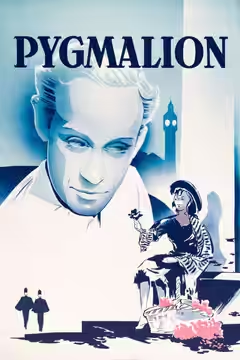
Pygmalion poster

Pygmalion

1938 · Shaw’s play without the songs, faster and sharper, with Leslie Howard’s colder Higgins.

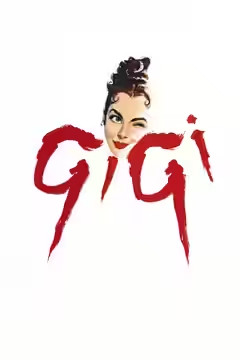
Gigi poster

Gigi

1958 · Lerner, Loewe and Beaton again, in Paris, at a much brisker pace.

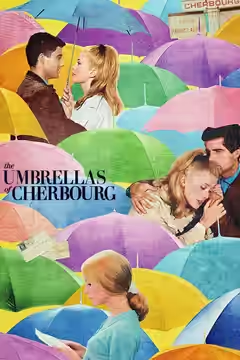
The Umbrellas of Cherbourg poster

The Umbrellas of Cherbourg

1964 · A French musical from the same year that sings everything and wastes nothing.

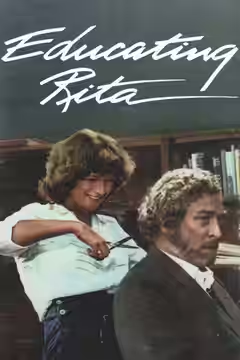
Educating Rita poster71

Educating Rita

1983 · A Liverpool hairdresser and a drunk tutor; the same story, told from her side.

Singin' in the Rain poster93

Singin' in the Rain

1952 · Another musical about borrowed voices and elocution lessons, and a good deal shorter.