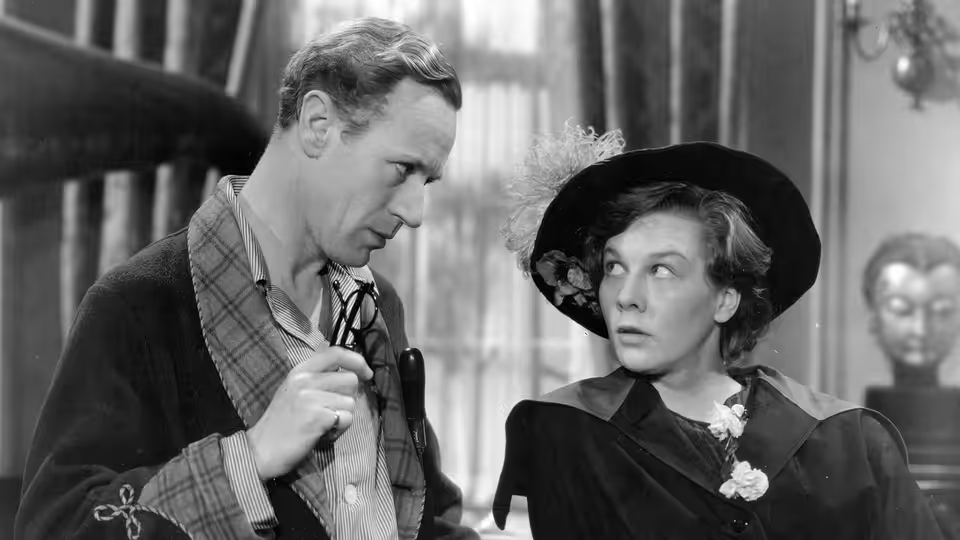
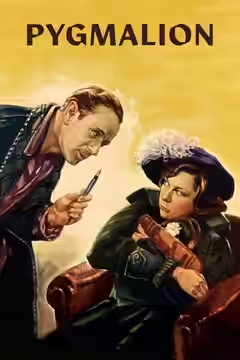
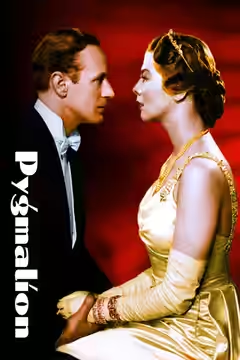
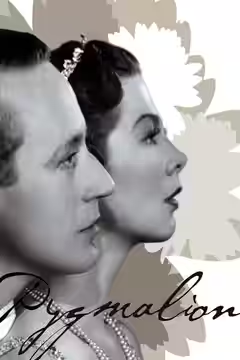
The first Shaw film that works, cut by David Lean to move at twice the speed of the play. Wendy Hiller’s Eliza is the reason to see it; Leslie Howard’s Higgins is more charming than the text deserves, and the last stretch softens.
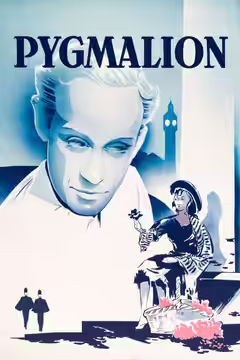
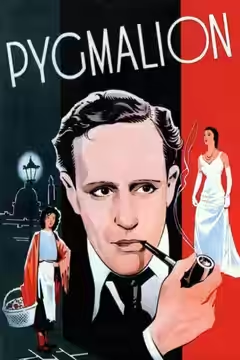
George Bernard Shaw refused for years to let anyone film his plays, and when he gave in to Gabriel Pascal he took the screenplay credit himself. Pygmalion was made by people who knew his way of telling it would not work on a screen, so they changed the telling and left his lines standing. It is the best film anyone has made from Shaw and one of the liveliest British comedies of its decade. It has a slow patch after the ball and a last two minutes we do not believe, and we recommend it anyway.
Anthony Asquith and Leslie Howard share the direction, but the pace belongs to David Lean, who edited it. The play tells you about Eliza’s lessons; the film shows them, in a montage of marbles in the mouth, a candle flame that must not flicker at the aitches and a gramophone horn, and it does in four minutes what Shaw did with a scene change. Harry Stradling opens on a wet Covent Garden at night, umbrellas and rain running off the portico, and gives the Wimpole Street house a hard, clean light in which Eliza looks like a smudge. Arthur Honegger’s score mostly stays out of the way, then arrives in full for the embassy reception, a waltz the film enjoys more than Higgins does.
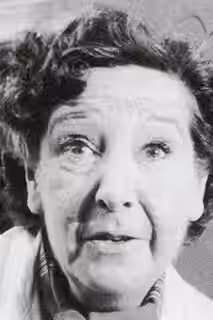
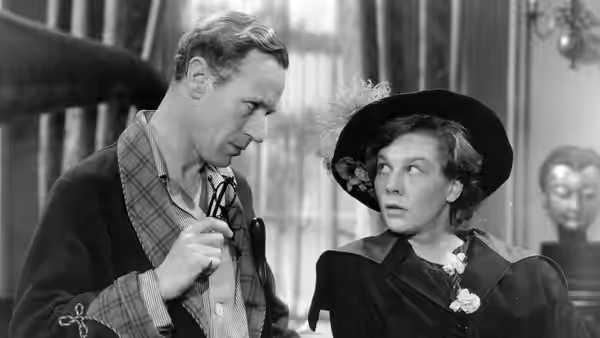
Wendy Hiller is the reason to watch. She does the two halves of Eliza without a join: the flower girl who howls when Higgins takes her name down, and the composed woman in the white dress who has learned to say nothing. Her tea party at Mrs. Higgins’s house, telling the story of an aunt’s death in the vowels of a duchess and the grammar of Lisson Grove, is the funniest ten minutes in the film, and we laughed. Then comes the scene after the ball, Eliza alone in the study while the men congratulate each other, and we found we had stopped laughing before the film asked us to. It is the way Hiller holds still while Howard talks about how bored he has been. She is not playing hurt; she is waiting to see if anyone notices her.
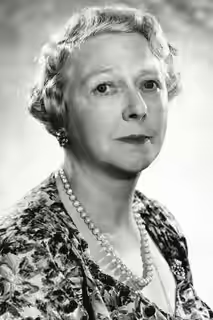
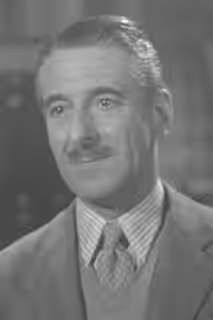
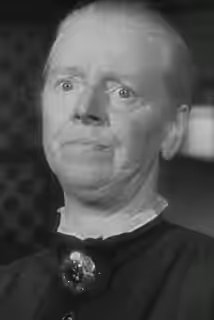
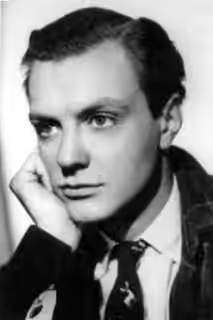
Howard is a lighter Higgins than the text asks for. Shaw’s professor is a bully who happens to be right; Howard plays him as an overgrown schoolboy who has never been contradicted, appalled that anyone should take offence. It is well timed, and it makes the man more likeable than he ought to be, which tilts the last act somewhere the play resisted. Wilfrid Lawson, as Eliza’s father, has two scenes and takes both: a dustman with a philosopher’s contempt for middle-class morals, arriving to sell his daughter for five pounds and turning down ten on principle. Scott Sunderland’s Pickering is decent and slightly dim, and Marie Lohr, as Higgins’s mother, has the best raised eyebrow.
The trouble is in the second half. Once the bet is won, the film has to return to Shaw’s argument about what you do with a woman you have made unfit for her old life and unwelcome in a new one, and the argument arrives as talk. The scenes at Mrs. Higgins’s house are played at stage speed, and there is only so much an editor can do with people disagreeing in a drawing room. The embassy reception is added with a rival phonetician (Esme Percy) and an ambassadress (Violet Vanbrugh); it is handsome and a little empty. The last two minutes take a turn we will not describe; it is the one place the film chooses comfort over the play, and we did not believe it.
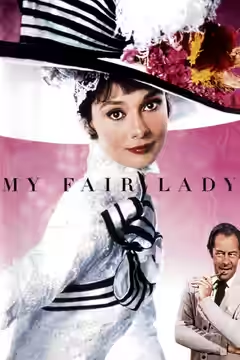
Set beside My Fair Lady, which added songs and nearly three hours, this is the harder and quicker film. At 96 minutes it is spare where the musical is plush, and it is clearer here that what Higgins does to Eliza is done to her rather than for her.
Watch it with someone who knows My Fair Lady by heart, and enjoy their face when they realise nobody is going to sing.