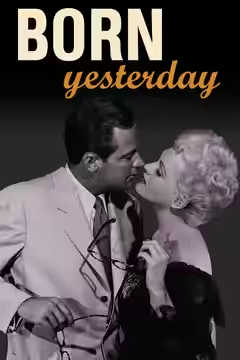
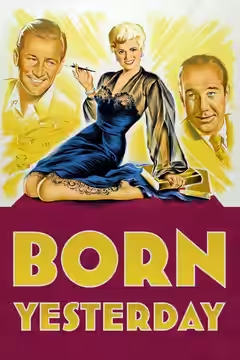
Judy Holliday makes a comedy out of a woman deciding to pay attention, and she is worth the evening on her own. Around her, George Cukor’s film of Garson Kanin’s play keeps stopping to read us the Constitution.
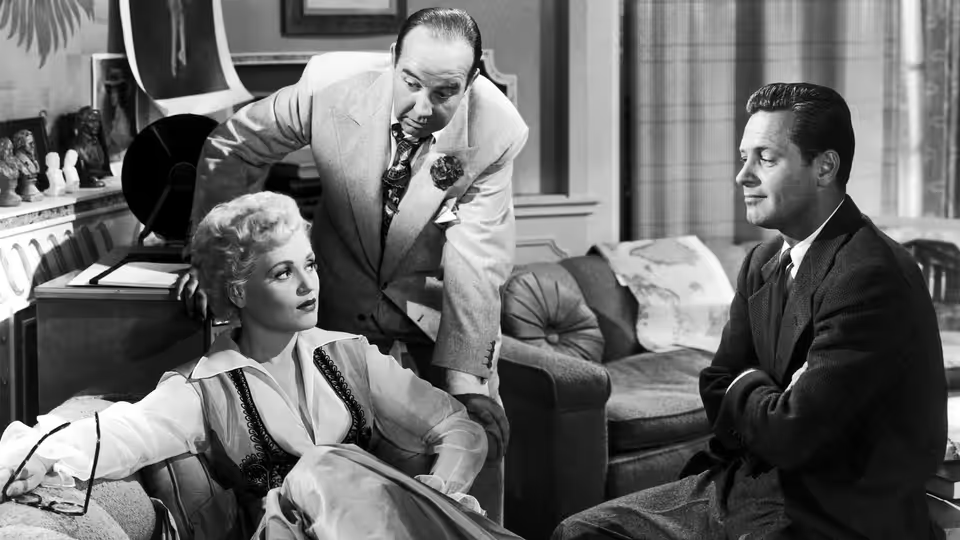
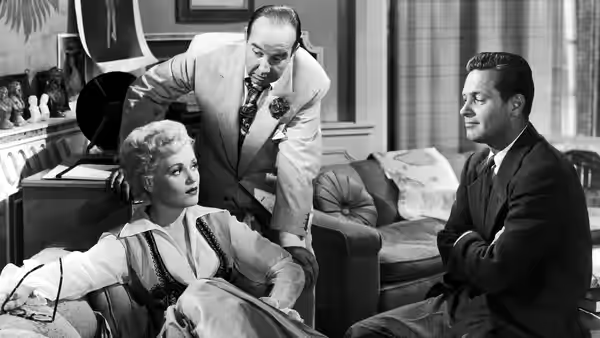
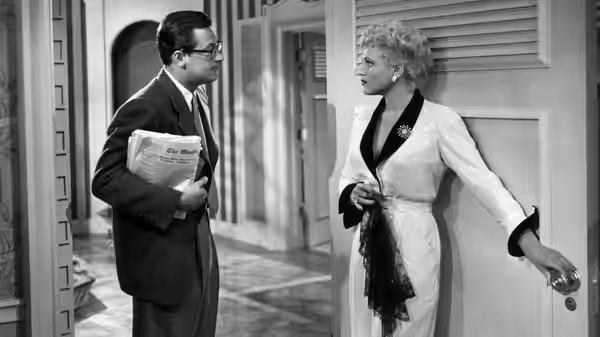
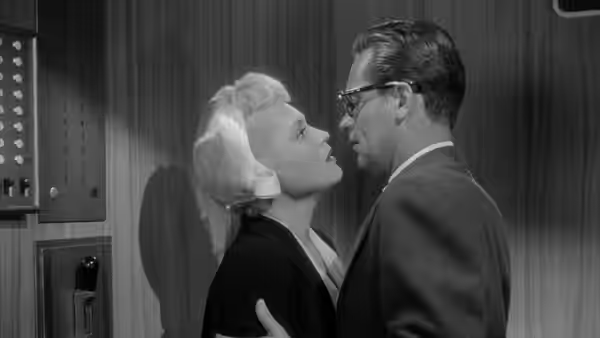
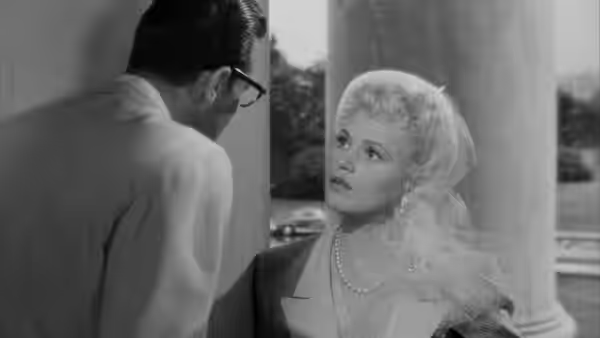
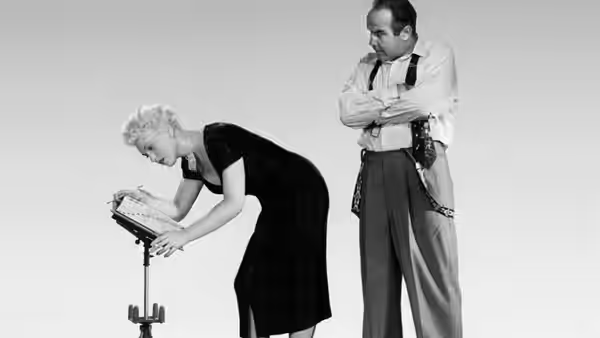
George Cukor’s film of Garson Kanin’s play sends a junk millionaire to Washington to buy himself a congressman, and he brings his girl along. Harry Brock (Broderick Crawford) shouts. His lawyer Jim Devery (Howard St. John) drinks and signs whatever is put in front of him. Billie Dawn (Judy Holliday), a former chorus girl, says the wrong thing to a congressman’s wife over dinner. So Harry hires Paul Verrall (William Holden), a journalist who has come to interview him, to teach her enough to pass. It is a good comedy with an exceptional performance in the middle of it, and a civics lesson wrapped round the outside that we could have done without.
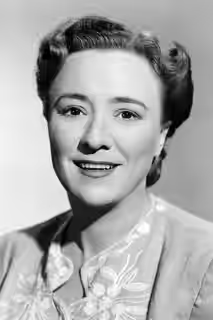
Holliday is the reason to watch. Her voice comes out flat and slightly down her nose, every vowel a small complaint, and she uses it to make a line as plain as telling Harry to drop dead sound like the funniest thing anyone has said all week. She plays Billie as a woman who stopped paying attention years ago because attention was not part of the arrangement. The joke is never that she is stupid. The joke is that everyone else has assumed she is.
The best scene has almost no dialogue in it. Billie and Harry play gin rummy in the hotel suite, and she beats him hand after hand, humming, shuffling with a little flourish, laying down her cards without looking up, while Crawford’s face darkens by degrees. Cukor lets it run, and Charles Nelson’s editing keeps the two of them in the frame together rather than cutting away to help the joke along. We laughed harder than at anything else in the film, and we laughed because nobody was explaining anything.
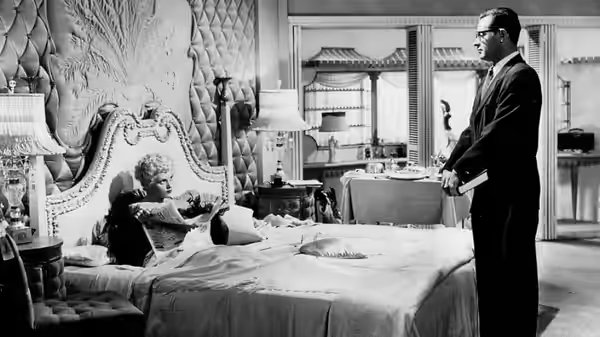
Harry Horner’s production design gives the film one main set, a hotel suite with too much gilt and too many doors, and Joseph Walker lights it evenly, so that it looks like what it is: a stage with the fourth wall taken off. Jean Louis does the rest of the storytelling. Billie starts in satin and mink and a hat like a sea anemone, and as Paul’s books take hold the clothes get plainer, the shoulders straighter, the hats smaller, so you can tell how far she has got before she opens her mouth. Friedrich Hollaender’s score stays out of the way for most of the 103 minutes, which is right, and then does not, which is the problem.
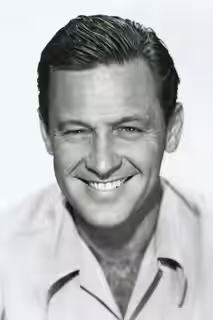
Because the film goes sightseeing. Paul takes Billie round the monuments, the Jefferson Memorial, the Library of Congress, the Supreme Court, and the music swells while she reads the inscriptions and the comedy goes quiet. Paul is written as a decent man who reads aloud from the Constitution, and Holden, who is good at decency, cannot find anything funny in him. We felt lectured, and by the second monument we felt the film had confused Billie’s education with ours. Albert Mannheimer’s screenplay keeps the play’s shape, long stretches of talk in the one room, and the film breathes properly only when it stays there.
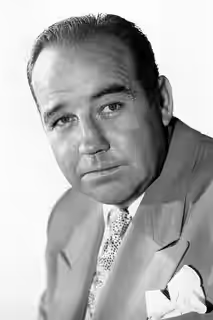
Crawford plays Harry at one volume, and some critics have held that against him. We thought the volume was right for the first hour, when the film needs a man nobody has ever said no to, and wearing by the second, when the script asks Harry to change and gives Crawford nothing to do but get louder. The second half turns on a decision of Billie’s that we will not describe. It is well built and a little neat.
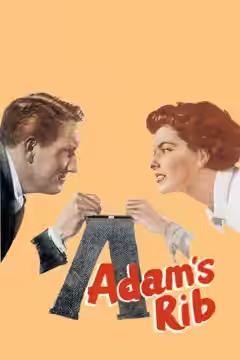
Cukor’s gift was for actresses and for letting a scene play at its own speed, and both are on show here, as they were the year before when he directed Holliday in Adam’s Rib. Most critics rate the film a little higher than we do, and we understand why: Holliday is that good. We simply wish the film had trusted her to make its point and spared us the guidebook.
Watch it for Holliday: the card game, the walk across the suite in the new suit, the moment she reads something and stops. When the monuments start, go and put the kettle on.