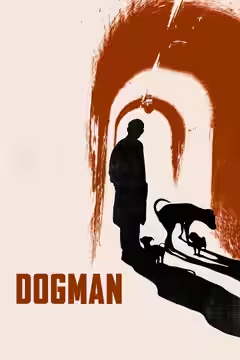
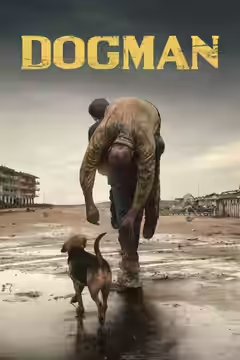
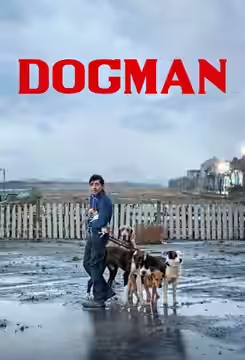
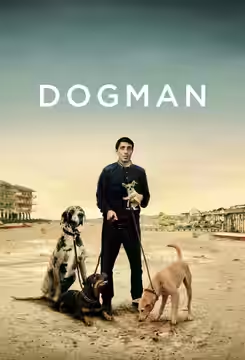
Matteo Garrone’s Dogman is a grim, affecting crime drama with a tender performance from Marcello Fonte. The story leans too heavily on its bully, but the uneasy bond between its two men makes the cruelty difficult to watch.
Matteo Garrone’s Dogman is a good, uncomfortable crime film about remaining attached to someone who frightens you. Marcello, a dog groomer in a decaying seaside town, has an affection for Simoncino that makes his life harder to bear. The film watches that attachment closely enough for us to feel its pull, even when we struggle to believe it. Its main weakness is the limited attention it gives to what keeps the bully bullying.
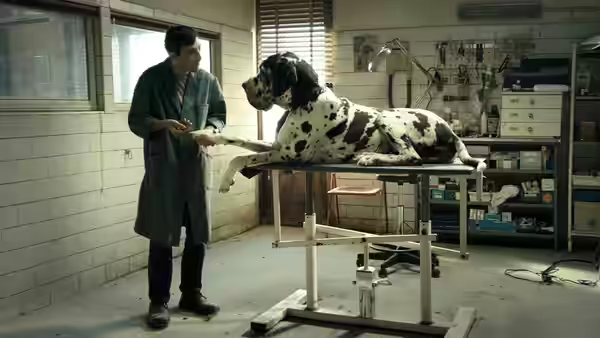
Marcello Fonte gives Marcello a tenderness that survives the story’s rough treatment of him. His affection for the dogs is essential: it lets us see him being capable and caring, rather than simply waiting to be hurt. We were moved by that care, because it makes his tolerance of Simoncino’s intimidation so difficult to watch. There is gentle humour in this man and his work, and Matteo Garrone is sensible enough to let us enjoy it.
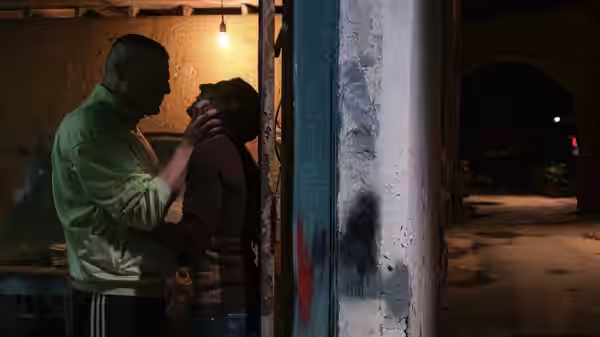
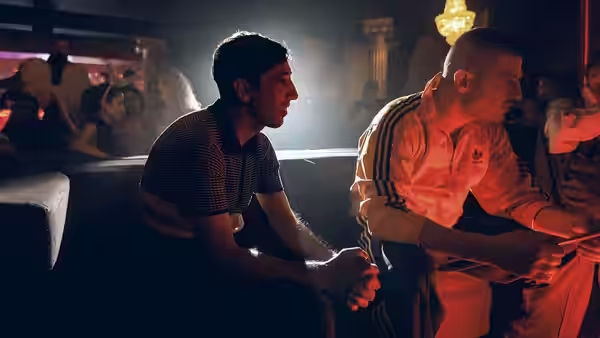
Edoardo Pesce makes Simoncino frightening enough to explain why Marcello might submit to him, though the continued loyalty is harder to account for. Their physical contrast does considerable work, allowing an unequal relationship to register without much explanation. Yet Simoncino is drawn so narrowly that we begin to see what each encounter will require of him. The writing by Ugo Chiti, Massimo Gaudioso and Matteo Garrone needs more from this man than menace, however forcefully the actor supplies it.
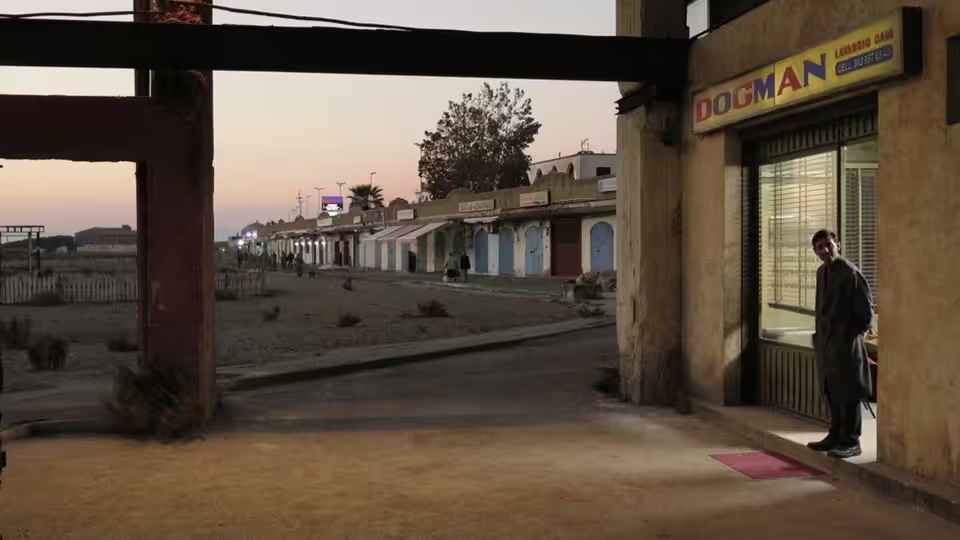
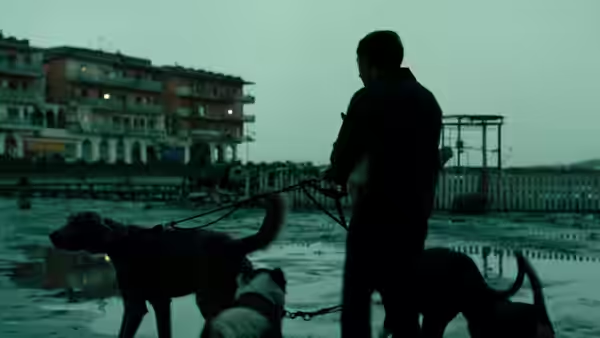
Nicolaj Brüel’s cinematography makes the bleak beaches and derelict buildings worth looking at without making them inviting. We can understand the attraction of these images while still feeling how dispiriting it would be to live among them. Dimitri Capuani’s production design makes those battered surroundings feel inhabited, which matters when the story is so close to a fable. The place contributes to our sense of Marcello having few comfortable alternatives, although the repeated bleakness can become a little insistent.
Marco Spoletini’s editing keeps the pressure on the central relationship, and the pared-down dialogue gives the actors room to carry it. That concentration suits a story in which a small shift in behaviour can matter more than a lengthy explanation. Michele Braga’s music helps sustain the discomfort, but the tension between the two performances remains the stronger draw. At 103 minutes, the film has room for those exchanges without requiring a sprawling account of the town around them.
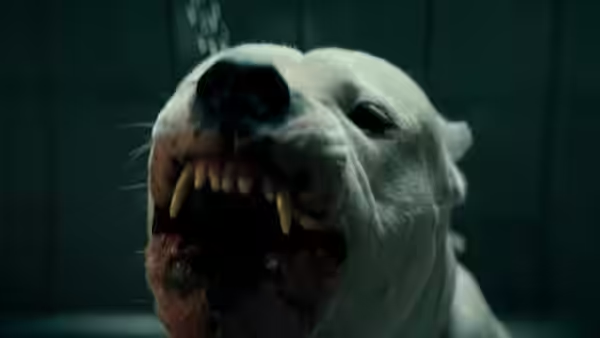
The comparison between the dogs and the men can also become heavy-handed. Marcello’s ease with animals and his helplessness around Simoncino make the point clearly enough without our needing to keep returning to it. As a crime fable, Dogman sometimes presses that comparison too hard, and the people risk becoming illustrations of a lesson already understood. Marcello Fonte keeps bringing us back to an individual whose affection and poor judgement can occupy the same face.
This is a stronger choice for an evening of uneasy character drama than for anyone seeking the pleasures of a brisk thriller. Its compassion is what makes the violence difficult to sit with, and the humour offers only limited relief. There is enough human interest here to justify the discomfort, even when the story makes its point too firmly. Save it for an evening when neither of you needs cheering up.