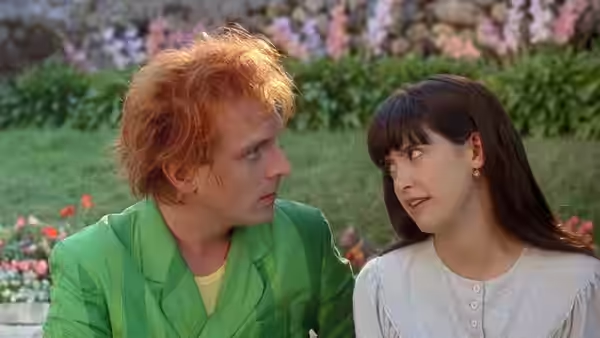
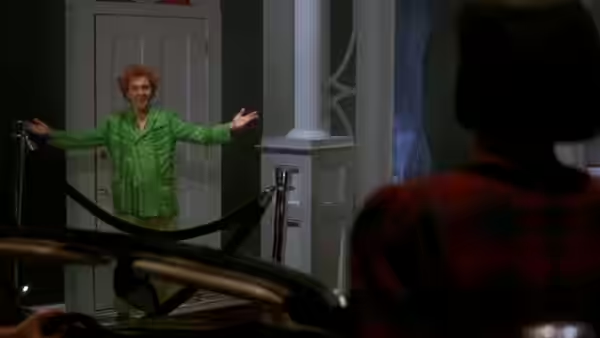
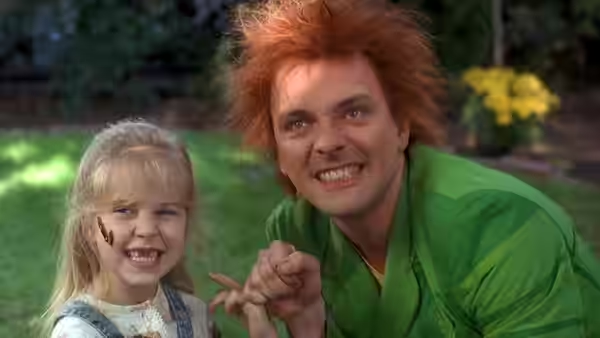
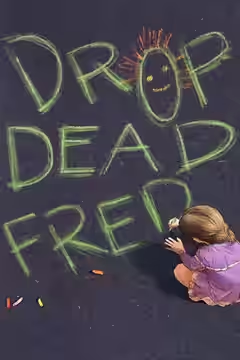
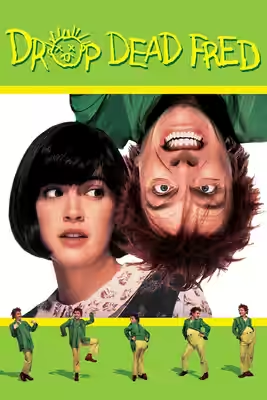
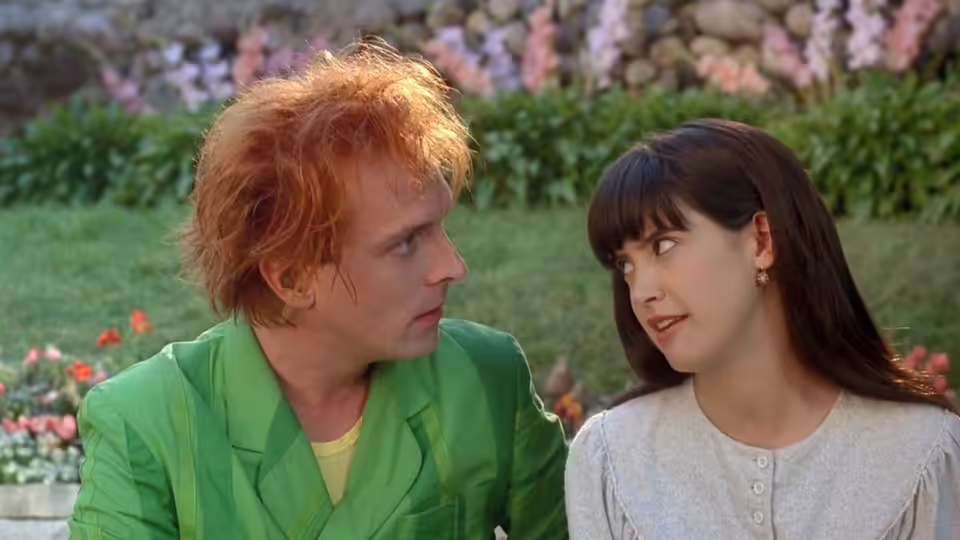
Drop Dead Fred (Rik Mayall) and Elizabeth (Phoebe Cates) sit together in a garden
Film review

Drop Dead Fred

1991 · Directed by Ate de Jong · 1h 39m

In a sentenceAn imaginary friend this badly behaved should not need quite so much explaining

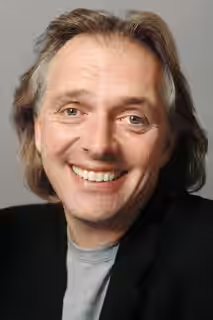
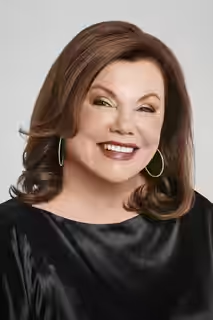
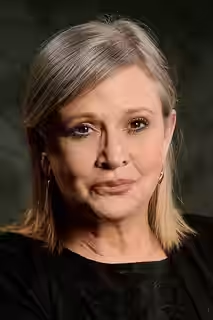
Elizabeth (Phoebe Cates) has an imaginary friend, Drop Dead Fred (Rik Mayall), and the friendship brings trouble. Fred’s enthusiasm for misbehaviour makes him an awkward companion for anyone hoping for a quiet life. Elizabeth has to contend with his antics as their relationship turns companionship into a succession of practical problems. Marsha Mason plays Polly, Tim Matheson plays Charles and Carrie Fisher plays Janie in a fantasy comedy built around the difficulties of dealing with someone whose freedom to behave badly seems considerably greater than everyone else’s.

Fi1m review

Rik Mayall supplies the bad behaviour and Phoebe Cates makes the nuisance bearable. There are laughs in this imaginary-friend comedy, but the jokes overstay and the warmth never quite persuades us.

Drop Dead Fred has enough comic talent to make its disappointments irritating. Rik Mayall commits himself to being an intolerable imaginary friend, and Phoebe Cates supplies the physical comedy that makes his company intermittently worth enduring. We find the result mixed: a fantasy with some warmth and too many jokes left running after they have stopped being funny. Director Ate de Jong wants the bad behaviour to lead somewhere emotionally useful, but spends too much time explaining the trouble and too little inventing it.

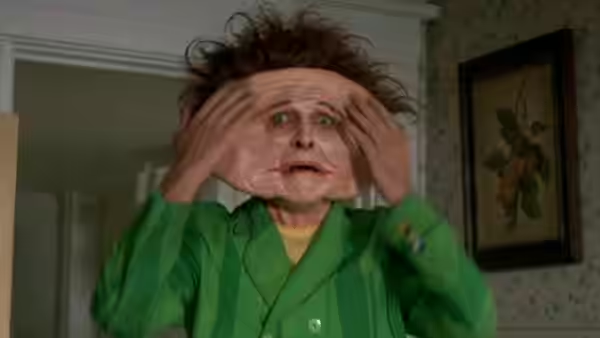
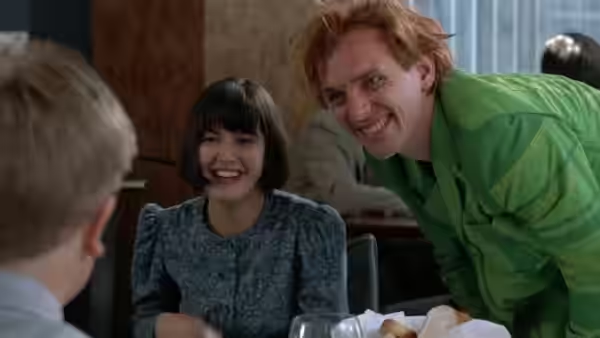
Rik Mayall understands the appeal of giving an imaginary friend no obligation to be pleasant. His performance has the energy of someone enjoying freedoms the rest of the cast cannot claim, and that energy is the film’s main resource. It also becomes exhausting when a scene offers him no fresh comic obstacle. We can enjoy his readiness to be objectionable while wishing the screenplay gave him more to do than keep insisting on it.

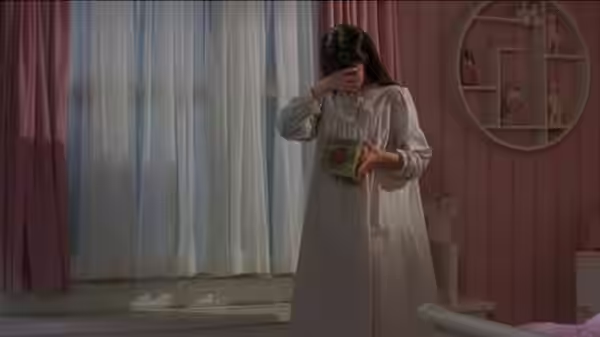
Phoebe Cates gives that energy something to work against. Her physical responses make the inconvenience of Fred’s company feel immediate, and her attempts to cope often provide the better comedy. Peter Deming’s cinematography keeps those responses readable, an important service in a film so dependent on one person’s reaction to another. There is pleasure in watching her work through the nuisance, even when the joke itself has become predictable.

Anthony Fingleton and Carlos Davis’s screenplay has an appealing problem to explore: how a friendship can become a nuisance without ceasing to matter. The explanations keep getting ahead of the comic invention, however, as though the premise requires defending before it can be enjoyed. Marshall Harvey’s editing does not solve the problem of slapstick that continues beyond its useful length. A performance this forceful needs firmer limits on how long each bout of misbehaviour can occupy the screen.

Joseph T. Garrity’s production design has its clearest comic use in the waiting room. The children there have imaginary companions of their own, briefly giving the fantasy something to do beyond accommodating Fred. We laughed at the suggestion that such companions might be an everyday problem other people also have. The setting makes the idea easy to grasp, and for once the film can trust a comic situation without explaining it into submission.

The difficulty is sustaining that confidence while making room for the gentler material. Randy Edelman’s score helps encourage a warmer response, but the music cannot quite persuade us to feel the affection the film asks for. Against the freedom promised by fantasy comedy, the repeated explanations and prolonged routines feel restrictive. At 99 minutes, the film is not unusually long, but its limited supply of comic ideas makes the stretches between successful jokes feel longer than they should.

There are enough signs of effort here to make outright dismissal unfair, particularly in the two central performances. An appetite for Rik Mayall’s naughtiness may carry an evening further than the writing does, and Phoebe Cates deserves attention for making so much of the reactions. Anyone who tires quickly of prolonged misbehaviour should leave Fred to more patient company.

Critical consensus AI synthesised

38
Positive
0
Mixed
2
Negative
4

Most critics find Drop Dead Fred an unfunny comedy with scattered pleasures rather than sustained comic momentum. Praise centres on the performances and individual bits of slapstick, though there is little agreement about how much they salvage. Rik Mayall’s energy attracts attention even in otherwise dismissive reviews, while the Los Angeles Times singles out Phoebe Cates’s physical comedy. The imaginary-friend premise also earns some credit for its possibilities.

The reservations are more consistent: jokes outstay their welcome, the execution disappoints and the fantasy produces too few laughs. Yet the complaints point in different directions. Time Out finds Mayall’s licence to misbehave both a strength and an irritation; the Los Angeles Times wants less explanation and more manic invention. The balance runs from mixed to strongly negative, with no clearly positive verdict among the six reviews, although the limited material available for one makes its position harder to establish.

The New York Times
24 May 1991 · Janet Maslin
66*

The headline suggests the review finds some fun in the film’s troubles-with-an-imaginary-friend premise. The article text is unavailable, so its fuller verdict and specific praise or complaint cannot be verified.

Read the full review →
Time Out
· CM
50*

The review presents the comedy as boisterous but exasperating. It singles out Rik Mayall’s freedom to be naughty and shocking, while noting that this can become irritating.

Read the full review →
Radio Times
★★ · Peter Freedman
40

Freedman finds the comedy largely uninteresting and unfunny, with poor execution. He singles out Rik Mayall’s high-energy performance as its chief point of interest.

Read the full review →
Variety
31 December 1990 · Variety Staff
40*

The review finds the film’s premise appealing but says its rewards are too sporadic for adults and its pace too slow for children. It praises the slapstick and warmth, while criticizing jokes that go on too long.

Read the full review →
Los Angeles Times
24 May 1991 · MICHAEL WILMINGTON
20*

Wilmington finds the comedy too restrained and overly explained to make its fantasy work. He singles out Phoebe Cates’s comic physicality as a bright spot, but says the film lacks manic inventiveness.

Read the full review →
Empire
1 January 2000 · Angie Errigo
15*

Errigo finds the comedy largely unfunny and its emotional resolution unpersuasive. She singles out the waiting-room scene with children and their imaginary friends as the one excellent idea.

Read the full review →

Straight answers AI written, from our review

Is Drop Dead Fred worth watching?
Drop Dead Fred is a mixed proposition we score 48/100, with most to offer viewers who enjoy Rik Mayall’s relentless misbehaviour. We find laughs in his energy and Phoebe Cates’s physical reactions, but the routines run too long and the attempts at warmth never quite persuade us.
How long is Drop Dead Fred, and what is it rated?
Drop Dead Fred runs 1h 39m. It is a comedy and fantasy film.
Where can I watch Drop Dead Fred in Spain?
Drop Dead Fred is available to rent from Amazon Prime Video from €3.99. Availability is checked daily; the links above go straight to each service.
How violent or frightening is Drop Dead Fred, and is it suitable for children?
Drop Dead Fred carries a UK 12 certificate, so its family-comedy label should not be taken as a recommendation for younger children. The certificate points towards viewers aged 12 and above; the comedy centres on disruptive misbehaviour and prolonged slapstick, rather than offering grounds for a more specific warning about violence or scares.
How does Drop Dead Fred compare to Beetlejuice?
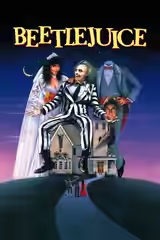
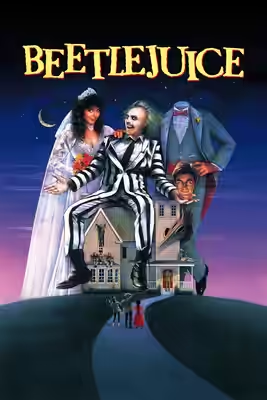
Drop Dead Fred is the weaker comedy beside Beetlejuice, which we recommend for its sharper timing and more inventive surroundings. Both feature troublesome company, but Beetlejuice finds more warmth beneath its bad behaviour and grotesque effects, even when its story wanders; Fred chiefly suits those with a particular appetite for Rik Mayall.
What should I watch after Drop Dead Fred?
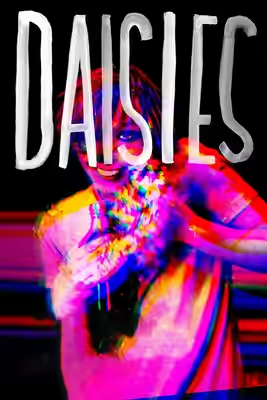
After Drop Dead Fred, try Beetlejuice (1988, Fi1m 83): Another unwelcome visitor, with sharper comic timing and more inventive surroundings. Then Daisies (1966, Fi1m 85): For misbehaviour that keeps inventing new ways to wreck polite company.

Cast

If you liked this, try…

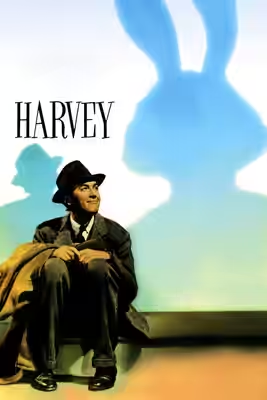
  1. Harvey (1950) · not reviewed yetFor imaginary companionship handled with more patience, wit and affection.

  2. Beetlejuice (1988, Fi1m 83)Another unwelcome visitor, with sharper comic timing and more inventive surroundings.

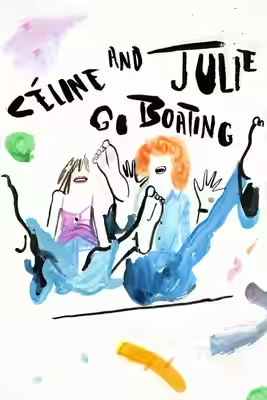
  3. Céline and Julie Go Boating (1974) · not reviewed yetA freer fantasy in which friendship makes ordinary life agreeably unstable.

  4. Daisies (1966, Fi1m 85)For misbehaviour that keeps inventing new ways to wreck polite company.

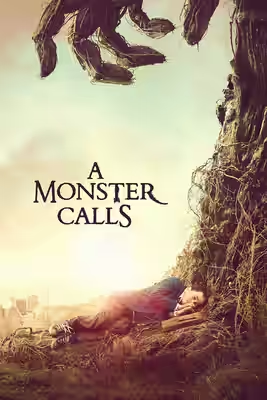
  5. A Monster Calls (2016) · not reviewed yetA darker companion piece about fantasy helping someone face difficult feelings.

Free account

Know what to watch tonight

Two lists that know where things are streaming, collections you can share, your own score beside ours, and Discover that remembers what you have seen.

  • Want to see, sorted by what is streaming now
  • Seen, with your score out of ten
  • No adverts, ever