Dennis Hopper’s road film is worth watching for its landscapes and Jack Nicholson’s persuasive humanity. The wandering has a pull, though thin characterisation sometimes leaves the scenery doing more work than the people.
Easy Rider is worth the journey, though its men are not always the most rewarding company. Dennis Hopper makes a road film whose strongest passages give us time to look, and whose weaker ones ask us to supply more depth than the writing provides. The scenery and Jack Nicholson are reasons enough to stay with it. At 96 minutes, it has room to wander without becoming an ordeal, but some of the wandering is more absorbing than the rest.
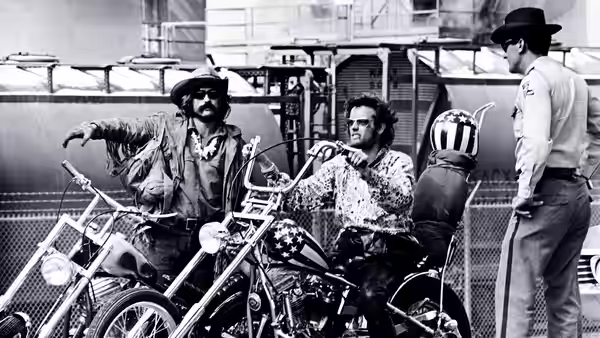
The drug-dealing premise complicates the film’s sympathy for men who want to live outside conventional society. The screenplay, credited to Peter Fonda, Dennis Hopper and Terry Southern, leaves a useful awkwardness here: freedom does not become admirable simply because its seekers find ordinary life unsatisfactory. We do not need these men tidied up before taking an interest in them. The trouble is that the writing sometimes seems satisfied with having established their discontent, when there are further questions worth asking about it.
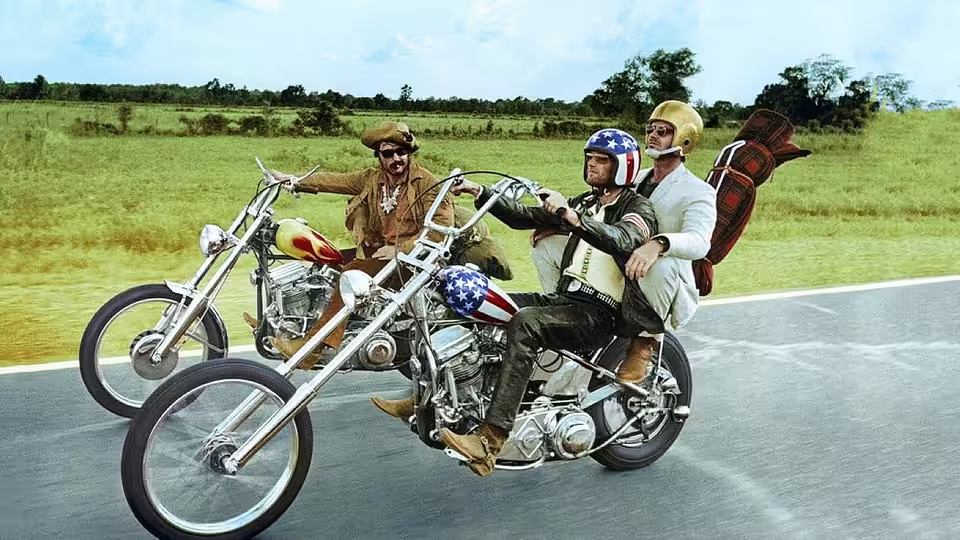
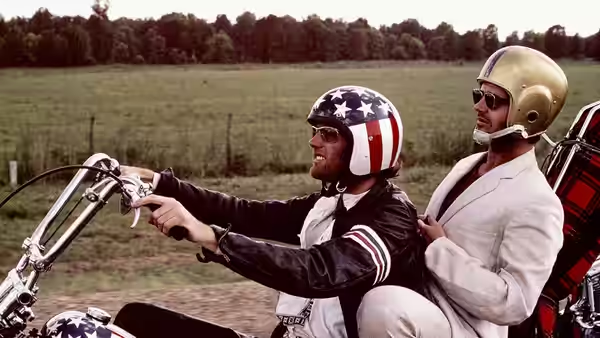
László Kovács gives the landscapes enough weight to make travelling the film’s main pleasure. We were unexpectedly stirred by those views. The space in them makes the desire to keep moving easy to understand, and for a while that is enough to carry our interest in the men. The photography allows us to feel the attraction of their journey without needing to find every aspect of their behaviour sympathetic, which is a considerable part of why the film works.
Donn Cambern’s editing helps the images gather into a loose, drifting journey, with individual impressions allowed to retain their force. That looseness suits Dennis Hopper’s direction, which rarely seems anxious to hurry us towards the next piece of information. It also gives the weaker passages room to expose themselves: when our interest in the people falters, another stretch of travelling cannot always restore it. A firmer cut might have helped in places, though too much tidiness would have cost the film something we value.
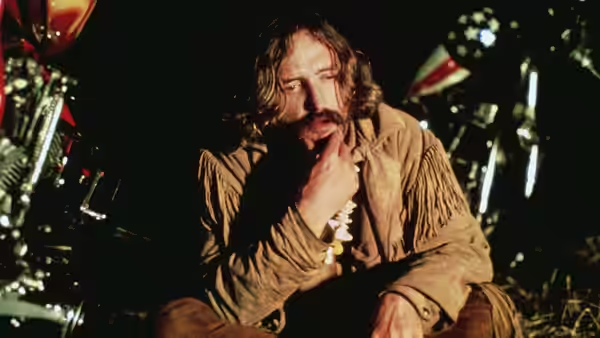
Peter Fonda’s Wyatt and Dennis Hopper’s Billy can feel too dependent on what they represent, leaving us to supply some of the curiosity their characters ought to provoke. Jack Nicholson, as George Hanson, makes the film’s discontent easier to recognise as an individual person’s feeling. There is enough nuance in his performance to keep us interested without constantly translating him into a statement about America. His presence also makes the limitations of the central pair more noticeable, which is hardly his fault.
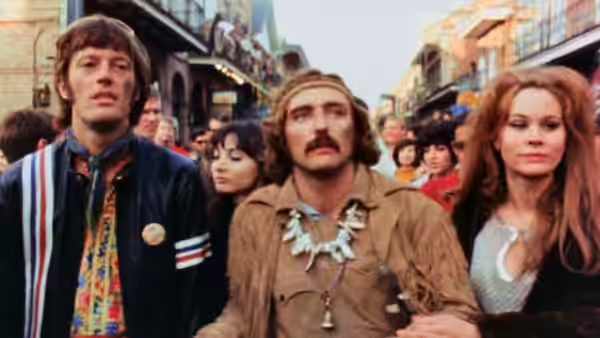
For a road film, the balance between travelling and spending time with the travellers matters. Here, the landscapes carry more than their share, and the film’s interest in alienation occasionally becomes too general to be affecting. Still, its countercultural spirit has enough conviction to survive that vagueness. The wish to live differently remains recognisable, even when the men pursuing it have not made a particularly persuasive case for themselves.
Anyone looking for a tightly built drama should make another choice. This rewards a willingness to spend time looking, and a tolerance for people whose dissatisfaction is easier to grasp than their intentions. Watch it when the prospect of going somewhere matters more than arriving promptly.