Ari Aster’s small-town western sets a sheriff against a mayor in the summer of 2020 and is sharply funny about phones, masks and men who are certain they are right. Then it starts shooting.
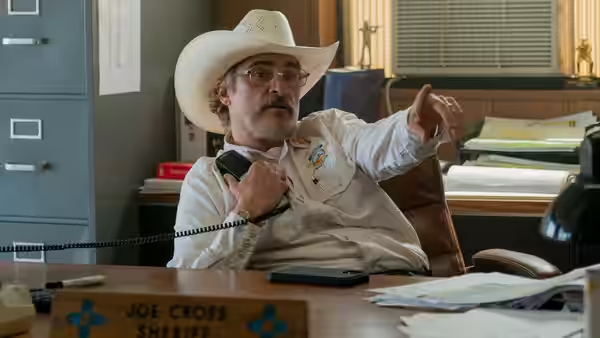
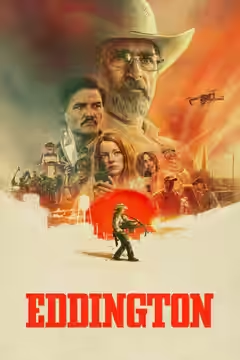
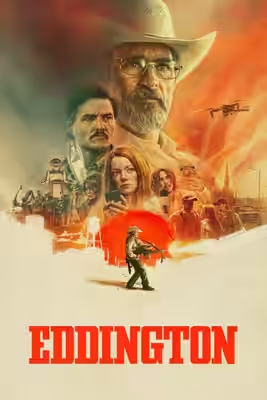
Ari Aster has made a western about the summer of 2020, and for an hour it is the film about that year we did not know we wanted. Joe Cross (Joaquin Phoenix) is the sheriff of a small New Mexico town with no cases of the virus, and he will not wear a mask because he has asthma and because he has been told to. An argument about it in a shop, filmed by the other customers, sends him home angry, and by morning he has decided to run for mayor against Ted Garcia (Pedro Pascal). Eddington is sharp and funny about all of this, and then, somewhere past its midpoint, it stops being about it.
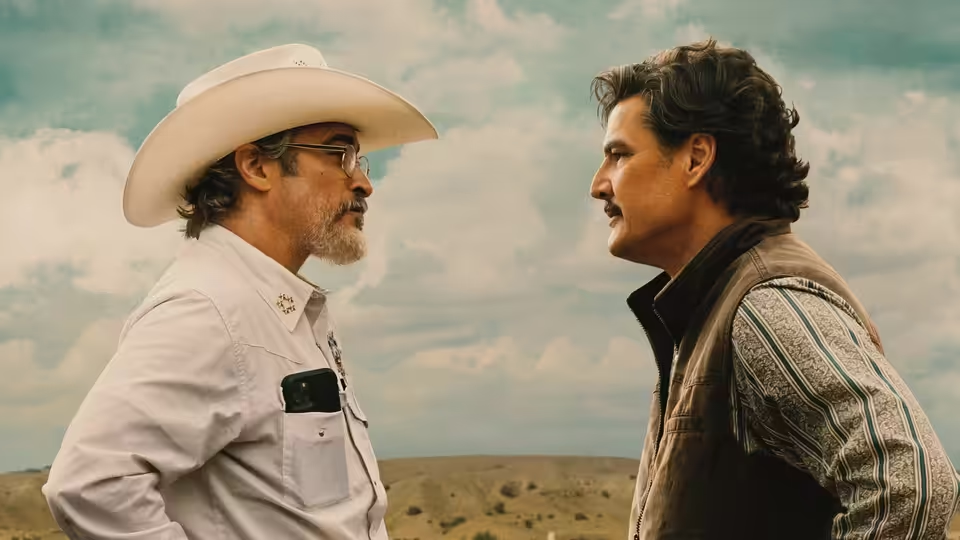
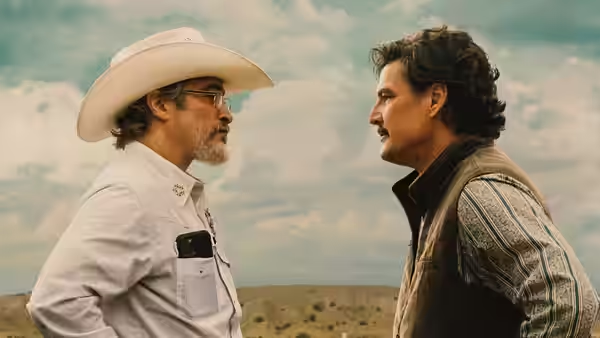
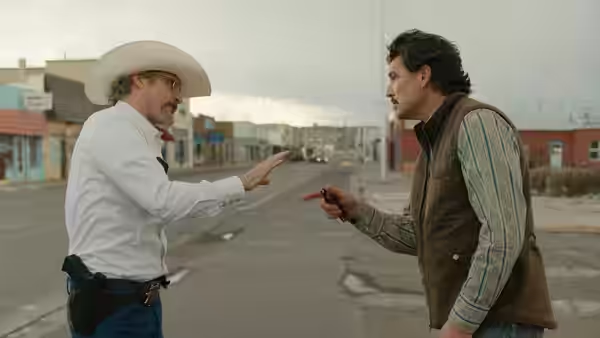
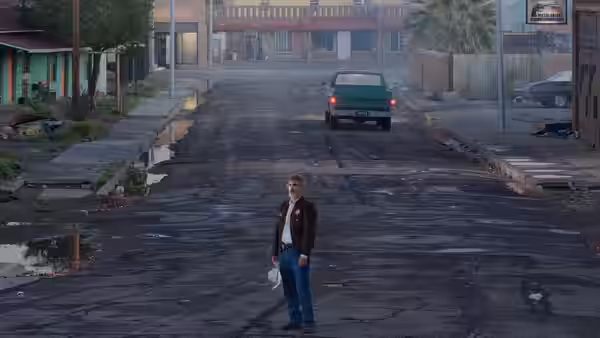
Phoenix is the reason to go. He plays Joe as a man whose body is against him, wheezing through the mask when he does wear it, hat too big, voice pitched half a step higher than he would like, and he campaigns from his pickup with a slogan hand-painted on the side and a loudhailer he cannot quite work. Aster writes him as neither hero nor fool, and Phoenix keeps him there. Pascal’s Ted is the smoother article, a mayor who says the correct thing in the correct order and believes about half of it, and the two of them circling each other outside the town hall is the best the film gets.
The household is where Aster is quietest and best. Emma Stone’s Louise barely leaves her room; she speaks softly and rarely and Stone lets us guess at the history. Deirdre O’Connell’s Dawn, her mother, sits at a laptop all day and reads out what it tells her, and O’Connell plays her without a flicker of irony, which is why it lands. Austin Butler’s Vernon Jefferson Peak arrives on a screen first, a guru with a following and a steady gaze, and Butler is good enough that we wanted more of him.
Darius Khondji shoots the town in flat, white desert light with the street empty and the shadows short, and he keeps returning to phone screens, held in the frame so that we watch events through the footage the characters take of them. Elliott Hostetter’s Eddington is a real-feeling place, a sheriff’s office with bad carpet, a diner, a shuttered bar, and on the edge of it the scaffolding of a data centre nobody asked for. Anna Terrazas dresses the masks as costume: who wears one, who has it under the chin, who has one hanging from a wing mirror. Daniel Pemberton and Bobby Krlic supply a low hum for the first half that turns into something twangier and more western later, which tells you where the film is going before the film does.
We laughed hard at the shop scene, at Joe being told he could order online by a boy young enough to be his son, and then felt uneasy about it, because Aster had shot it so that the laugh was on everyone in the shop, including us. The trouble is the middle stretch. Lucian Johnston’s cut is patient in the first hour and then long; the teenagers’ protests, the deputies, Dawn’s videos, the data centre, the guru, all get their scenes and none of them gets a shape. Cameron Mann’s Brian and Matt Gomez Hidaka’s Eric are written to be laughed at, and the film’s evenhandedness starts to look like a man saying everyone is stupid.
The second half takes a turn we will not describe. It is staged with real skill, and Khondji finds night-time images of the town that are the most striking in the film. But by the last half hour we had stopped following, and Aster had stopped asking us to.
Hereditary (2018) and Midsommar (2019) each had one family and one horror and followed both to the end. This is the first time Aster has taken on a whole town, and the widening costs him. See it for Phoenix, for the first hour and for the household scenes, and take someone who will argue about the rest. It carries a 15 and runs 148 minutes; you will feel the second number.