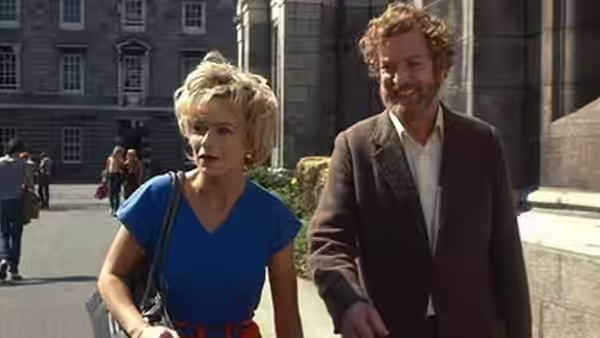
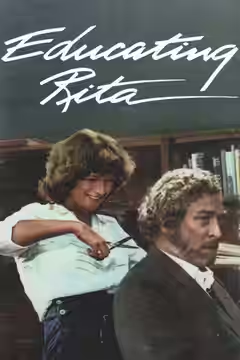
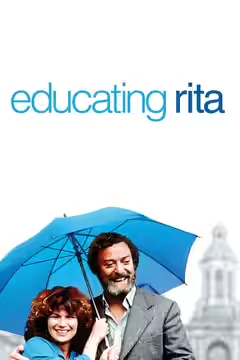
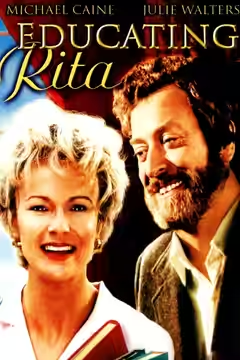
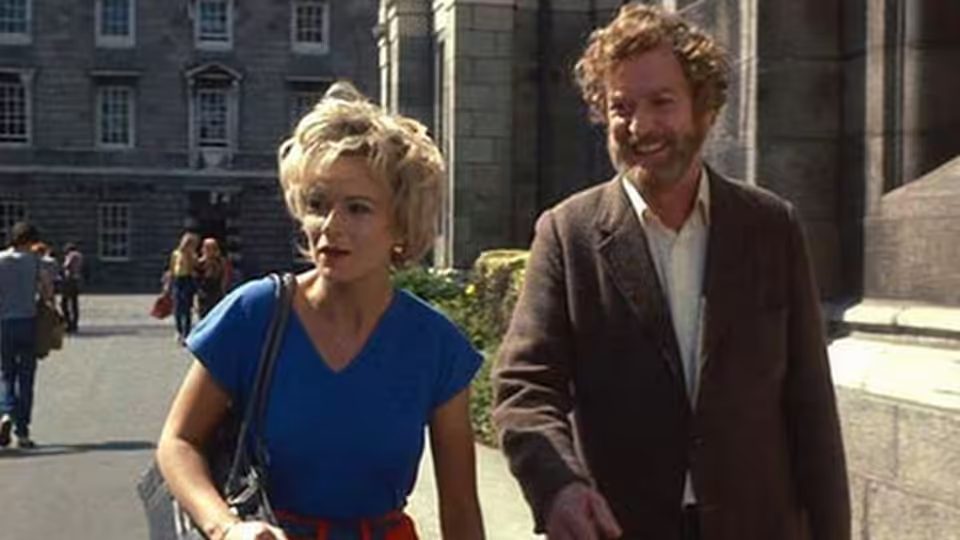
Rita (Julie Walters) and Frank (Michael Caine) walking together past a stone building
Film review

Educating Rita

1983 · Directed by Lewis Gilbert · 1h 46m

In a sentenceJulie Walters wants an education and Michael Caine looks as though he needs a lie-down

Rita (Julie Walters) wants an education, and Dr Frank Bryant (Michael Caine) becomes her teacher. She is a working-class woman drawn to literature; he is a professor whose disappointment in himself has worn away much of his enthusiasm. Their lessons bring together two people with different experiences of what books, and learning, can offer. Rita’s eagerness gives Frank a demanding pupil, while his expertise offers her access to a life she wants to understand. As their relationship develops, questions about education become questions about confidence, class and what each expects from the other.

Fi1m review

Julie Walters and Michael Caine make Educating Rita worth an evening. Lewis Gilbert’s direction can be plodding and the lessons are thin, but the actors make Rita’s wish to learn matter.

Educating Rita is a likeable, uneven comedy, worth seeing for Julie Walters and Michael Caine. Willy Russell’s screenplay gives them a promising difficulty: Rita wants an education from a professor who has become thoroughly disappointed in himself. Lewis Gilbert directs with more care than ease, and there are stretches when the effort shows. But the wish to learn matters here, and Walters makes it easy to care about a woman pursuing it.

Walters supplies the energy that Gilbert’s direction sometimes lacks. A working-class pupil confronting an educated man can too easily become an excuse for making him look foolish, with every exchange arranged to let her put him right. Russell occasionally settles for that easy laugh, but Walters makes Rita’s curiosity feel too pressing for the character to become smug. Her enthusiasm keeps the lessons alive even when the writing is content to offer another joke.

Caine is just as important, because Frank’s weariness prevents the relationship from settling into straightforward encouragement. His self-disgust moved us more than we expected: Caine makes it uncomfortable to watch a man teach when he has so little respect left for himself. He allows enough warmth through to make Rita’s interest in him credible, without asking us to find the professor’s unhappiness charming. The two performances suit each other, and their differences give Russell’s dialogue a liveliness that the direction cannot always supply.

Gilbert’s handling of the play is less assured outside that central relationship. The supporting characters add company without always adding much life, and their subplots take time away from the people we want to watch. Frank Watts’s photography is serviceable, but we rarely get a sense that the images help us understand these people beyond what they say. Garth Craven’s editing keeps their exchanges clear; it does less to prevent the subplots from breaking our concentration.

David Hentschel’s music keeps the tone amiable, sometimes more insistently than these performances require. The larger problem is Russell’s treatment of literature. We understand that Rita wants access to it, but the film is much less convincing about what she finds there, or why a particular piece of writing might change her mind. For a story built around education, it is surprisingly willing to let the relationship do the work of the lessons.

As a teacher-and-pupil comedy, it has the virtue of not making the teacher a comfortable figure of authority. Caine’s unhappiness keeps reminding us that knowing about books does not guarantee much contentment. That gives Walters something more interesting to work against than a succession of obstacles placed in her path. We believe in the difference between these people, and in their interest in each other, even when the film is vague about what they are studying.

These limitations keep the film from being as satisfying as its central pairing promises, but they do not cancel the pleasure of watching that pairing. Caine never makes weariness look like a lack of effort, and Walters supplies enough life to carry the more dutiful passages. At 106 minutes, it asks for a manageable amount of patience. See it for the conversation between these two; do not expect much of a reading list.

Critical consensus AI synthesised

66
Positive
4
Mixed
1
Negative
2
Variety
31 December 1982
90*

Lewis Gilbert has done a marvelous job bringing the charming British play to the screen with an expert adaptation by Willy Russell, resulting in an irresistible story about a lively lower-class woman hungering for education and the degenerating professor who provides it.

Read the full review →
Empire
1 January 2000 · Ian Nathan
80*

The critic praises the film's energy and life-affirming quality despite its familiar British realism, highlighting two career-best performances from Julie Walters and Michael Caine. The script by Willy Russell is singled out for dressing working-class characters with self-respect and delivering an optimistic message about transcending one's environment.

Read the full review →
Radio Times
★★★★ · Sue Heal
80

This adaptation is a joy from start to finish thanks to the lead actors' perfect suitability for their roles. Julie Walters and Michael Caine deliver standout, warm and insightful performances that earned them Baftas.

Read the full review →
Time Out
10 September 2012 · SJo
50*

The critic finds the film mostly faithful to the play with serviceable but stolid direction, containing flashes of wit amid clichés and evasion. Julie Walters' ebullient performance is singled out as the main source of life in the film.

Read the full review →
RogerEbert.com
28 October 1983 · Roger Ebert
40*

The film fails to convince that the characters are genuinely engaging with literature, turning what could have been a charming story into a formulaic relationship drama padded with unnecessary subplots. Credit goes mainly to Michael Caine's weary, self-hating professor.

Read the full review →
The New York Times
21 September 1983 · Janet Maslin
30*

The film is an awkward blend of intellectual pretension and cute obvious humor, opening up the two-character play with ponderous direction and subordinate figures that never feel lifelike. It is the perfect play about literature for anyone who wouldn't dream of actually reading books.

Read the full review →

Straight answers AI written, from our review

Is Educating Rita worth watching?
Educating Rita is worth watching for Julie Walters and Michael Caine, and we scored it 71. Lewis Gilbert's direction is plodding in places, the subplots break the concentration and the film is vague about what Rita is actually studying. The two performances carry it, and at 106 minutes it asks for a manageable amount of patience.
How long is Educating Rita, and what is it rated?
Educating Rita runs 1h 46m. It is a drama and comedy film.
Where can I watch Educating Rita in the Philippines?
Educating Rita is not on any streaming or rental service in the Philippines at the moment. It is available in 3 other countries; change your country at the top of the page to see where. Availability is checked daily.
How violent or frightening is Educating Rita, and is it suitable for children?
Educating Rita is not violent or frightening; it is a comedy about a woman and her weary teacher, and its UK 15 certificate reflects adult language and themes rather than anything alarming. Younger children would find little in it to hold them, since it is mostly two people talking about books and themselves. Teenagers interested in the subject should be fine.
How does Educating Rita compare to The Station Agent?
Educating Rita is the noisier film and The Station Agent the calmer, though both are about guarded people learning to enjoy each other's company. The earlier film gives you Walters and Caine sparring; the later one gives Peter Dinklage room to be watchful, and we find it the more even piece of work. Choose Educating Rita for the performances, The Station Agent for the quiet.
What should I watch after Educating Rita?
After Educating Rita, try The Station Agent (2003, Fi1m 82): For the pleasure of watching guarded people slowly learn to enjoy each other’s company. Then Local Hero (1983, Fi1m 86): Dry humour and carefully matched performers make another unlikely encounter worth the journey.

Cast

Awards

Academy Awards, 1984

Nominated
Best Actor
Nominated
Best Actress
Nominated
Best Writing, Adapted Screenplay

If you liked this, try…

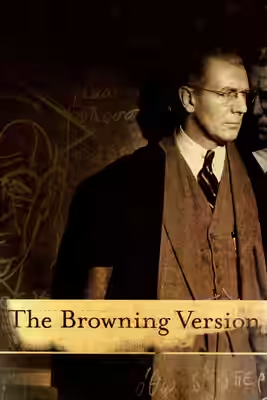
  1. The Browning Version (1951) · not reviewed yetA teacher’s disappointments receive a sterner examination, with less room for comforting laughter.

  2. The Class (2008) · not reviewed yetFor a classroom drama that takes language, authority and social friction seriously.

  3. English Vinglish (2012) · not reviewed yetAnother adult student discovers how much learning can alter her standing at home.

  4. The Station Agent (2003, Fi1m 82)For the pleasure of watching guarded people slowly learn to enjoy each other’s company.

  5. Local Hero (1983, Fi1m 86)Dry humour and carefully matched performers make another unlikely encounter worth the journey.

Free account

Know what to watch tonight

Two lists that know where things are streaming, collections you can share, your own score beside ours, and Discover that remembers what you have seen.

  • Want to see, sorted by what is streaming now
  • Seen, with your score out of ten
  • No adverts, ever