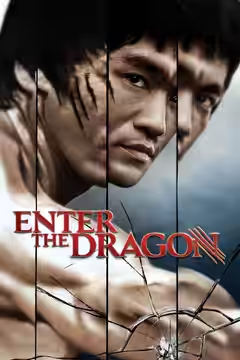
Bruce Lee makes Enter the Dragon worth the evening through precision, speed and sheer presence. Robert Clouse keeps the fights clear and lively, though the spy plot makes us impatient for the next one.
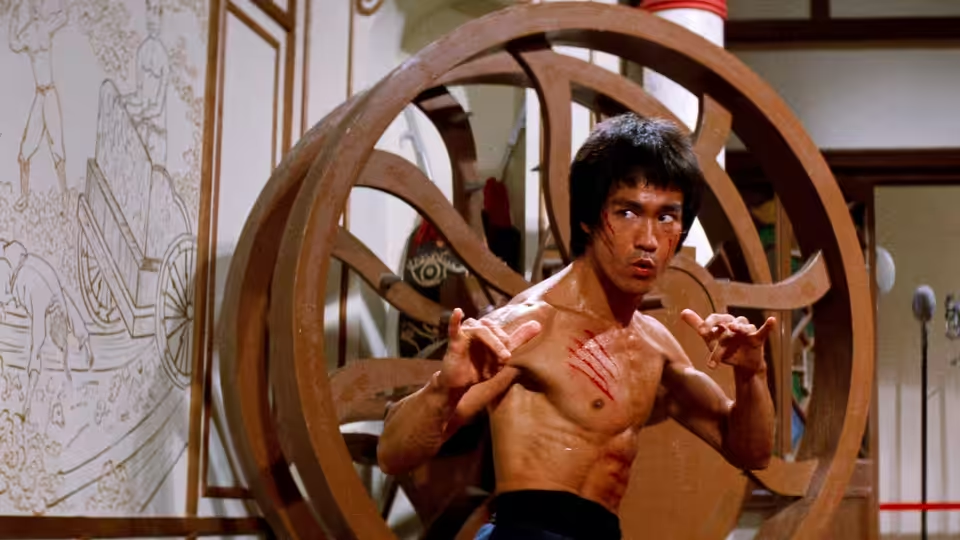
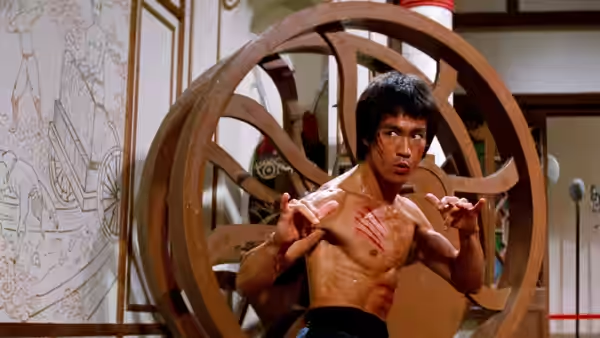
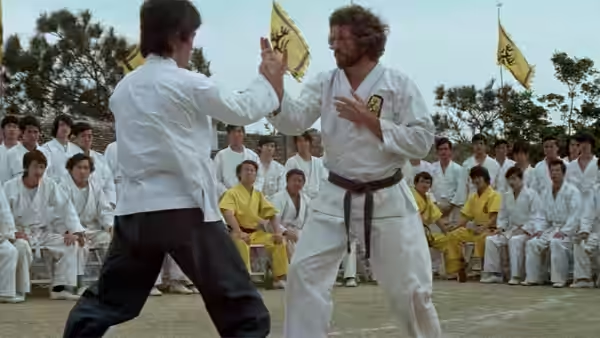
Enter the Dragon is worth an action lover’s evening, even though its story rarely deserves the attention its leading man commands. Robert Clouse gives Bruce Lee enough space to make fighting interesting as performance, and the pleasure survives some ordinary writing. The spy business supplies a reason for the action without giving us much to ponder between bouts. At 102 minutes, the film can accommodate these diversions, but we are seldom sorry when it returns to Lee.
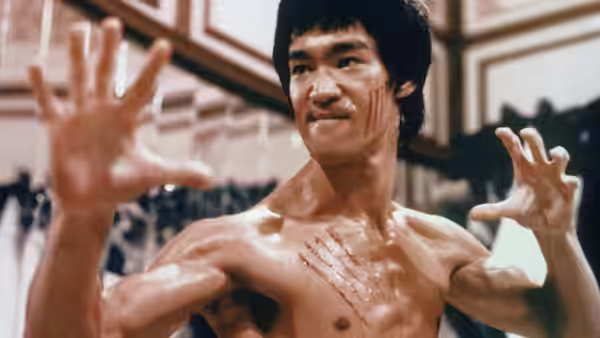
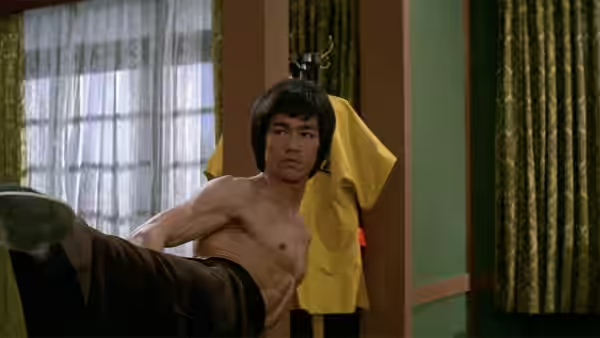
Lee’s appeal is the precision: the force of a movement never obscures how carefully it has been made. We were exhilarated by his fighting, because his speed does not turn the action into an unreadable rush. He seems to think quickly as well as move quickly, giving the fights a sense of decisions being made under pressure. That makes his skill interesting to watch even without much help from the story, and keeps our attention on the person delivering the blows.
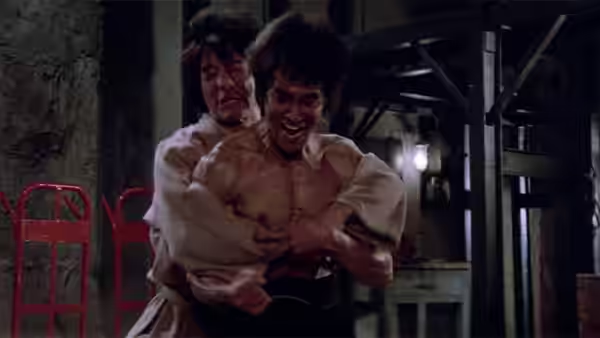
Gil Hubbs’s cinematography serves that performance without trying to compete with it. The action is readable, and we have time to appreciate a movement instead of simply accepting that a blow has landed. Peter Cheung, Kurt Hirschler and George Watters keep the editing brisk without making Lee’s ability feel like an effect assembled after the event. The pace matters, but so does the opportunity to see what the performer is doing; the film generally gives us enough of both to enjoy the fighting without struggling to follow it.
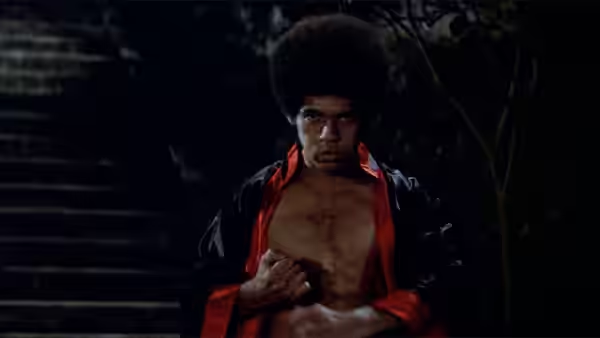
Michael Allin’s screenplay is less sure about what should happen when nobody is fighting. The espionage material feels familiar, and the attention paid to Roper repeatedly interrupts the attraction without adding much to it. John Saxon gives Roper a welcome ease, while Jim Kelly makes Williams good company; neither is the reason the film feels slower away from Lee. The difficulty is that these passages ask for interest which the writing has not done enough to earn, however agreeable the people carrying it may be.
Lalo Schifrin’s music helps, supplying a rhythmic energy that keeps the routine material from becoming solemn. It encourages us to enjoy the adventure without insisting that we mistake it for a serious account of espionage. Shih Kien’s Han likewise benefits from a film that requires little subtlety from its antagonist, only enough presence to justify the trouble taken over him. The broadness can be agreeable, even when the dialogue gives us little to remember, and Clouse wisely avoids treating every exchange as something we ought to find important.
By the standards we ask of martial-arts entertainment, the important achievement is that the fights remain enjoyable as performances. Lee rewards close attention, and Clouse recognises that he need not complicate the presentation to keep us interested. The familiar intrigue is a limitation we can live with, although it prevents the film from being equally satisfying whenever the fists stop. It carries an 18 certificate, worth noting before making it a family choice. Choose it for an action evening, with a little patience for the passages between fights.