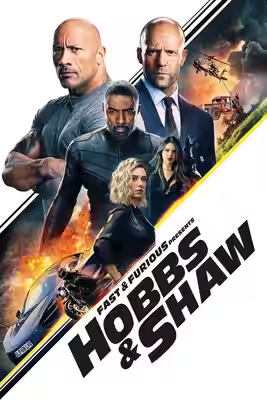
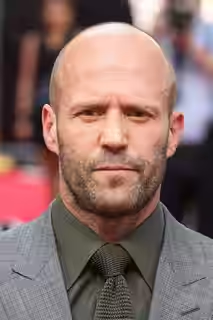
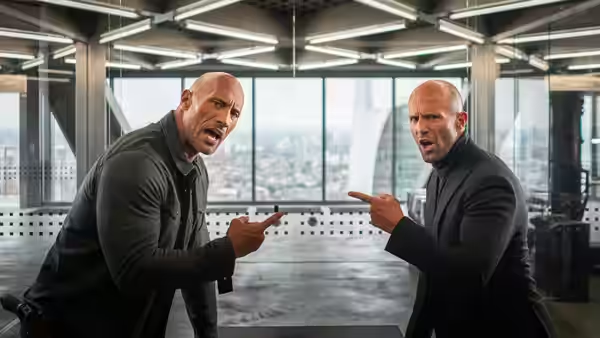
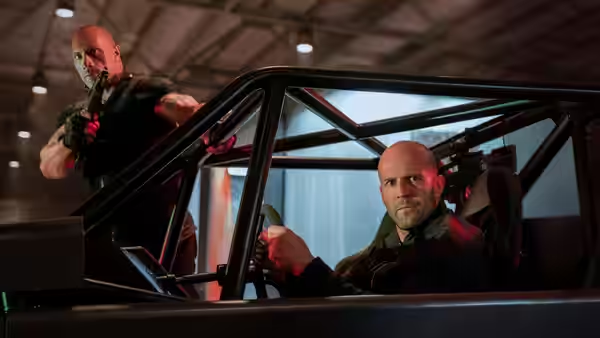
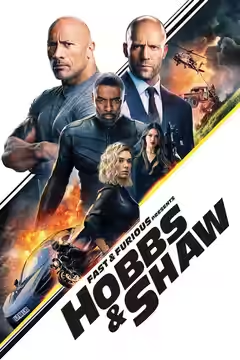
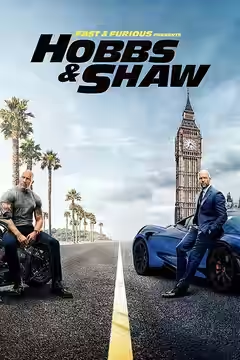
Dwayne Johnson and Jason Statham make enjoyable company, and Vanessa Kirby gives the action a welcome briskness. The trouble is how long this modest pleasure lasts: 137 minutes is more bickering than the film can support.
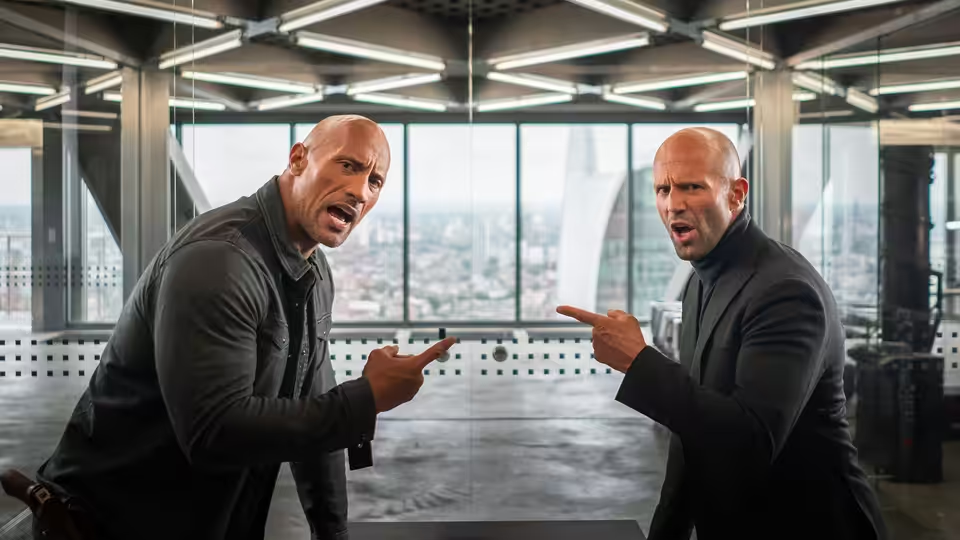
David Leitch’s Fast & Furious Presents: Hobbs & Shaw is fitfully enjoyable and much too long for the pleasures it offers. It wants to be a buddy comedy whose arguments happen to be interrupted by large-scale action, and the casting gives that a fair chance. Dwayne Johnson and Jason Statham can make a competitive sulk entertaining without much assistance. The difficulty is that the film keeps giving them time to prolong it, well after we have understood the joke.
Luke Hobbs and Deckard Shaw establish an easy rhythm of mutual provocation. Their different energies are enough to make familiar material feel lively, and neither needs to be especially likeable for the pairing to work. We enjoyed their company at first. Then the arguments kept going, and the pleasure wore off because too many exchanges simply repeated the fact that these men irritate each other. Screenwriters Chris Morgan and Drew Pearce too often mistake another insult for a new joke.
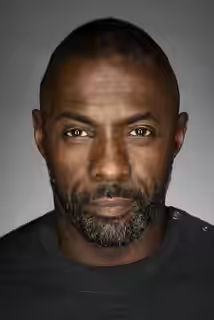
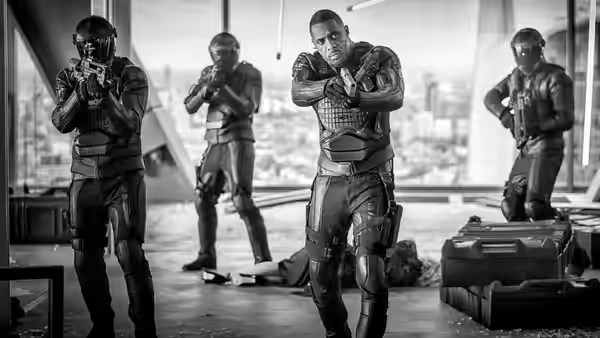
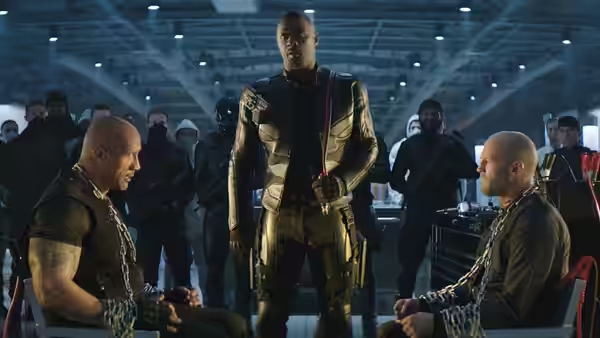
Vanessa Kirby, as Hattie Shaw, is the useful interruption. Her wit and physical assurance give the action a briskness that the central pair sometimes talk away, and she earns our attention without having to compete for the longest speech. Idris Elba brings enough menace to Brixton to make an impression, although the film’s prevailing silliness limits how much danger we feel. Both performances help when the partnership at the centre begins to feel overworked.
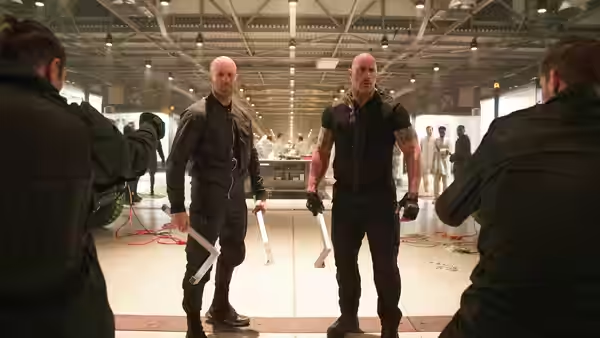
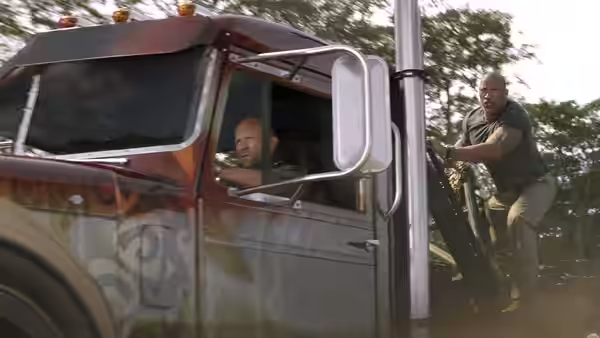
The action gives David Leitch firmer ground. Jonathan Sela’s cinematography keeps the physical business readable, particularly during the London chase, where being able to follow the movement is a considerable part of the fun. The corridor fight gives Jason Statham a tighter space and a clearer purpose. We were properly gripped by it, because the choreography made each movement worth watching. The closely worked physical action is where the film most reliably earns our attention.
David Scheunemann’s production design supplies settings that serve the action without becoming much of an attraction in themselves. That is no great failing in a film built around physical performers, but the larger sequences do not consistently repay the attention lavished on them. Tyler Bates’s score is serviceable accompaniment, though it never gives us a reason to listen past the commotion. The film has plenty of force already, and could use more variation in pace and volume.
Christopher Rouse’s editing cannot solve the more basic problem that the film has too much of everything it does adequately. At 137 minutes, it asks a modest comic premise to sustain an evening that could have done with considerably more pruning. The extended final stretch drags, even if the emphasis on family gives it some welcome warmth. These characters have something to care about beyond winning the next argument, and allowing that to matter helps the film recover some interest.
Buddy action films depend on the pleasure of seeing mismatched people learn to share the same space, and this pairing has enough appeal to survive a weak plot. It does not quite have enough to justify the running time. For devotees of these stars, there are fights and exchanges worth waiting for. A tolerance for repeated insults is a more useful qualification than a love of action.