Fletch is worth an evening for Chevy Chase’s dry delivery and Geena Davis’s warmth. The mystery holds together, but slack pacing and a streak of smugness keep the comedy from being consistently good company.
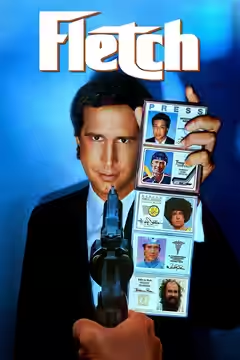
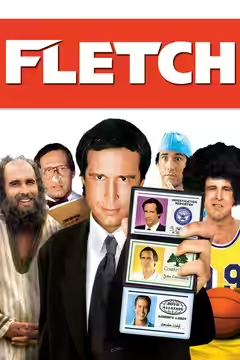
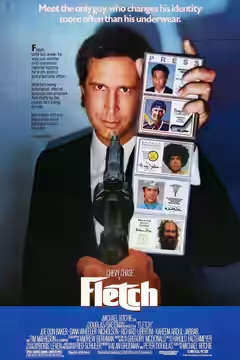
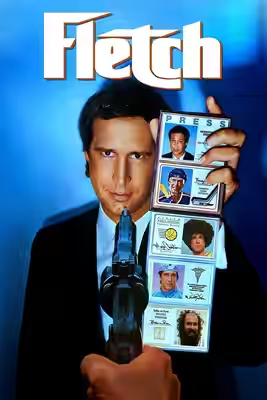
Michael Ritchie’s Fletch is a good comedy with an adequate mystery attached, and it is worth an evening if Chevy Chase’s dry delivery appeals. The attraction is a man who changes identities while remaining recognisably, sometimes stubbornly, himself. The film enjoys giving him fresh opportunities to talk, and several of its funniest moments depend on how little effort he seems to make. It runs 98 minutes, although the slower passages make it feel longer.
Andrew Bergman’s screenplay, adapted from the novel by Gregory McDonald, fits two plots together neatly enough to keep the mystery intelligible. The individual stretches are less reliable, particularly when the film has to sustain interest between jokes. We found ourselves waiting for the next offhand answer rather than the next piece of information. That is a weakness in a crime story, but the dialogue is sufficiently funny to make it a tolerable one.
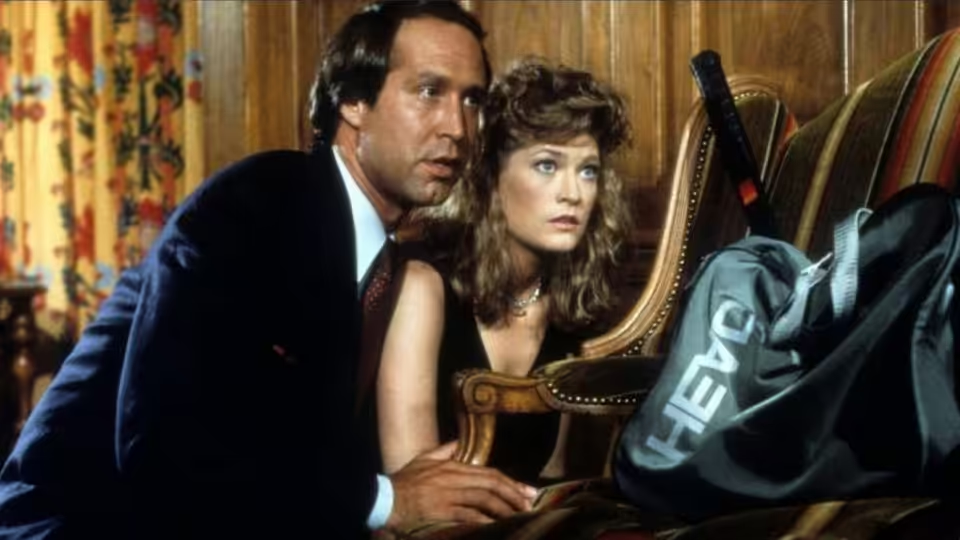
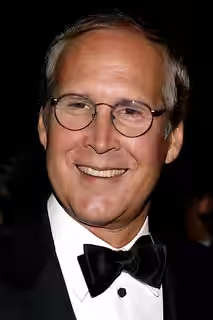
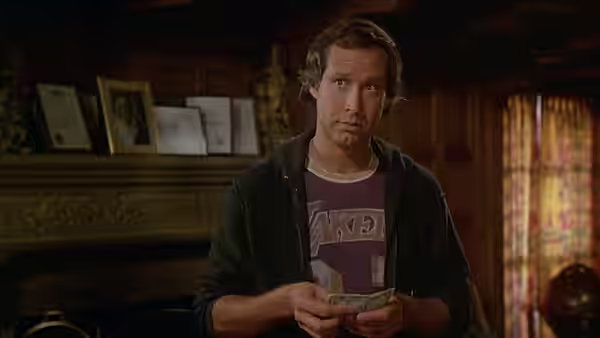
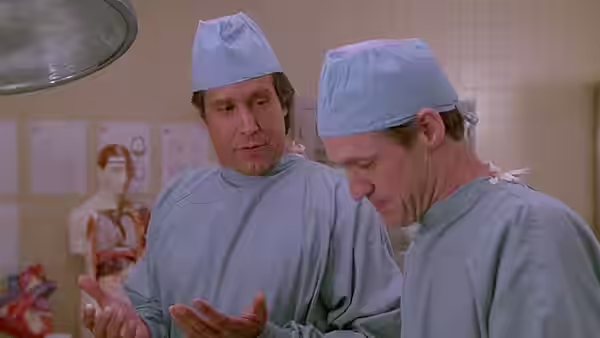
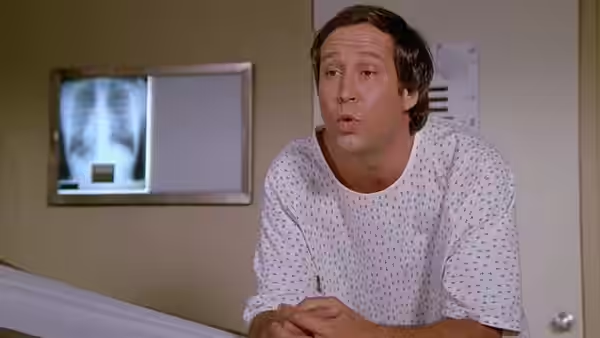
Chevy Chase makes the one-liners sound as though they have occurred to him a second before he says them. He gives the non sequiturs no special emphasis, trusting us to notice how little they belong in the conversation. We laughed at the identity changes because he carries that casual manner into each fresh impersonation, as though inventing another person were scarcely worth the trouble. The condescending streak is less appealing: sometimes the joke depends too heavily on everyone else seeming slow.
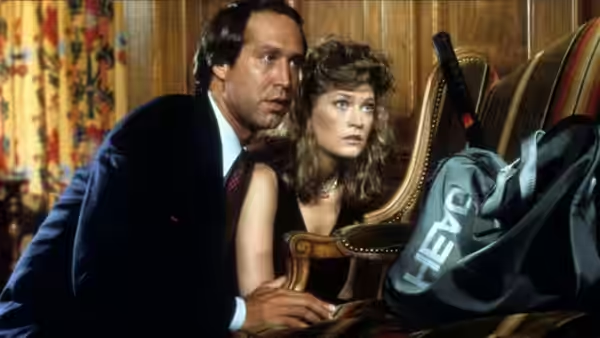
Geena Davis, as Larry, brings a welcome warmth, and her sunny presence makes the film easier company. We would happily exchange a few of the weaker jokes for more of her. The supporting cast gives Michael Ritchie something solid to work with, but he keeps returning to his leading man’s ability to talk his way through a scene. When that manner gives way to broader panic, the performance becomes strained and the comedy less certain.
Fred Schuler’s cinematography is unobtrusive, although we rarely found ourselves interested in looking beyond the performer. Boris Leven’s production design is similarly undemanding, giving the comedy somewhere to happen without supplying much pleasure of its own. Neither contribution distracts from the delivery, which is useful in a film so dependent on it. Still, a comic mystery ought to offer something worth looking at when the jokes pause, and we missed that here.
Richard A. Harris’s editing has to accommodate an unhurried comic style while keeping the mystery moving, and the balance is uneven. There are passages when a dry pause begins to feel merely slow. Harold Faltermeyer’s music is agreeable company, but it cannot make those stretches seem any shorter. A more decisive pace might have helped the weaker material, though some of the jokes would fall flat however briskly the film arrived at them.
The pleasures here are familiar ones for a mystery-comedy: a resourceful central character, tangled business and dialogue that makes the detours worthwhile. There is enough of each to forgive the occasional lull, especially when an apparently disposable remark turns out to be the funniest thing in a scene. We would recommend it to anyone who enjoys that loose, conversational approach to crime. For an evening that depends on being gripped by the case, choose something else.