Forbidden Planet makes space exploration feel inviting and dangerous. Its electronic music and imagined technology do much of the work, and we recommend it despite the stiff dialogue and uneven acting.
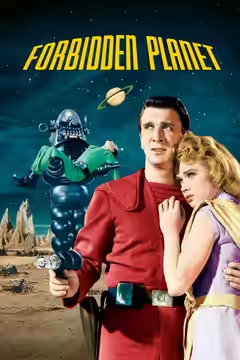
Fred M. Wilcox makes Forbidden Planet inviting enough that its dangers matter. Space exploration is something to be curious about here, and the film takes pleasure in imagining what people might build before worrying about what they might do with it. We recommend it for that curiosity, the electronic music and the effects, with a warning about the stiff dialogue. The human exchanges can be hard work.
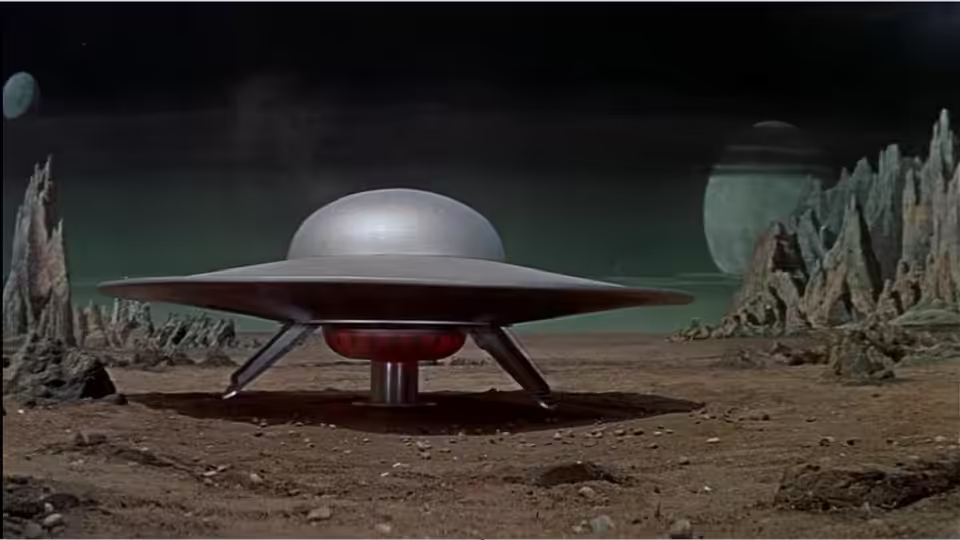
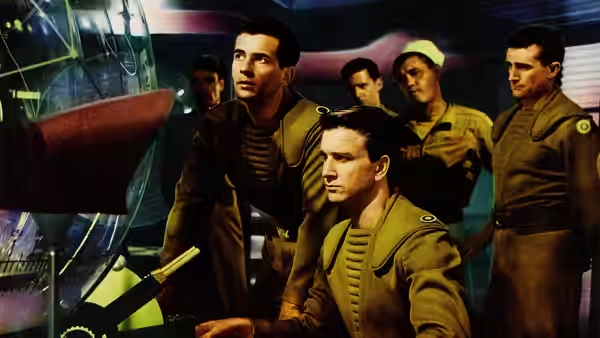
George J. Folsey’s cinematography makes the rich colours an invitation to look more closely. Irving Block and Mentor Huebner’s production design makes the technology seem worth investigating. There is pleasure in looking at machinery and trying to understand it, a useful foundation for a story about scientific overconfidence. The film allows us to enjoy the inventions before asking us to distrust them.
Louis Barron and Bebe Barron’s electronic music is the part we would least want replaced. We were surprised by how uneasy it made us: the unfamiliar sounds suggest that the machinery might be capable of something its users have not intended. That unease gives the attractive technology a danger which dialogue alone could not supply. The music makes a useful companion to the monster effects, which remain disturbing without needing us to make allowances for their age.
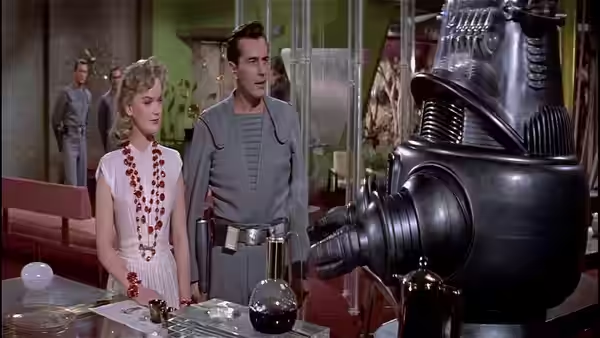
Robby the Robot supplies the humour with less fuss than the humans supply their explanations. The comedy matters because it lets the film enjoy its technology, instead of treating every invention as advance notice of disaster. A robot can simply be good company, which gives the warnings about human judgement more weight. There is something appealing about a science-fiction film that can be suspicious of progress without making curiosity itself seem foolish.
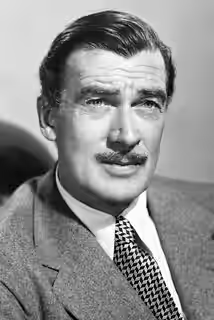
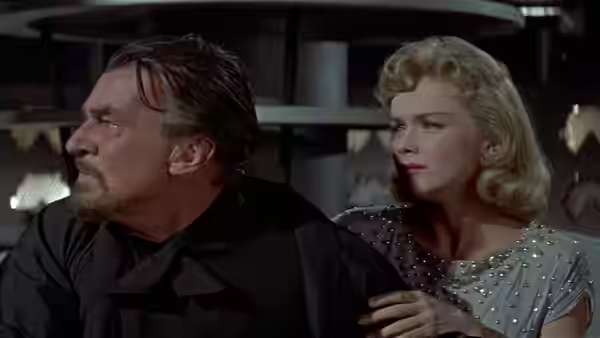
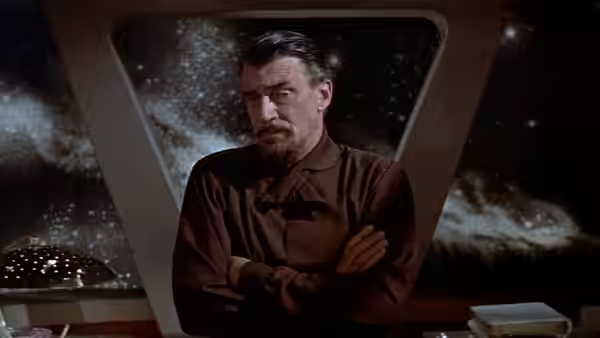
Walter Pidgeon, as Dr. Edward Morbius, is most convincing when the dialogue gives him authority to exercise. Leslie Nielsen brings suitable firmness to Commander John J. Adams, though firmness becomes a limited resource when a scene needs warmth. Anne Francis, as Altaira Morbius, offers some welcome lightness, but the writing does not give the human exchanges the ease of the robot’s comedy. Cyril Hume’s screenplay is more assured about its technological concerns than about conversation. Too often, a line is there to supply information, and we can hear the effort of supplying it.
Ferris Webster’s editing keeps the adventure manageable across 98 minutes, although the talk sometimes slows it more than the suspense requires. A sharper cut could shorten an explanation; it could not make the dialogue sound natural. That matters in science fiction, where somebody has to convince us that extraordinary equipment belongs to an ordinary working life. When the actors sound as though they are delivering information for our benefit, the imagined future feels briefly like a presentation.
For anyone wary of older science fiction, the comedy is a useful way in. The robot gives us company while the electronic music makes us uncomfortable, and that mixture keeps the film from becoming a solemn lesson about dangerous inventions. Allow for some wooden exchanges; the curiosity deserves an evening.