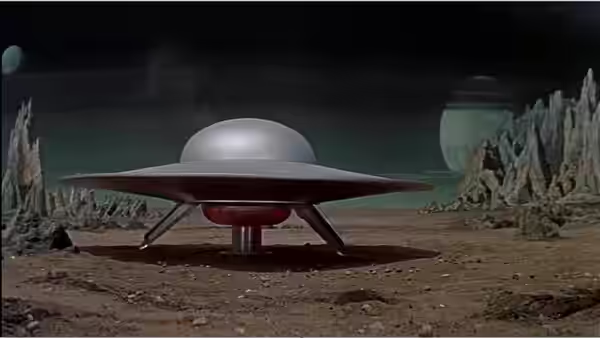
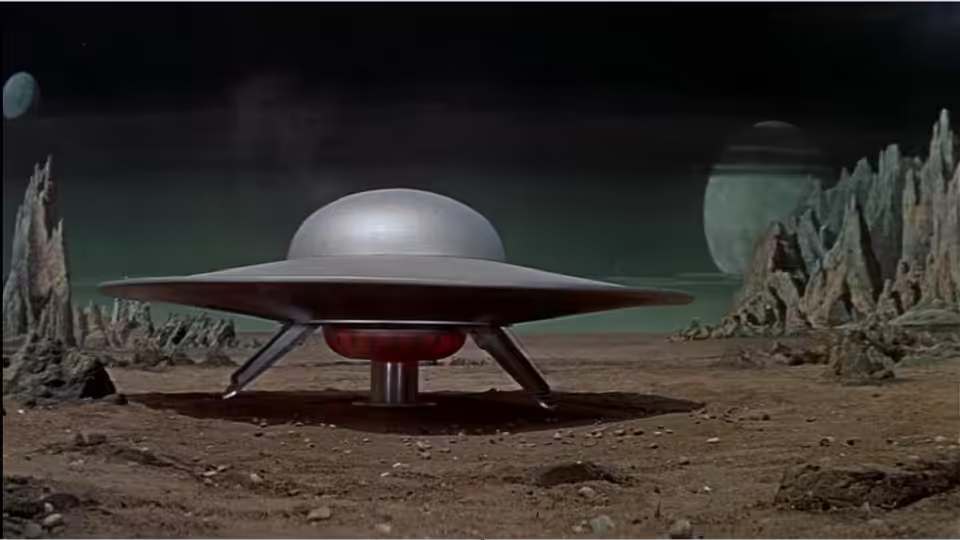
A disc-shaped spacecraft rests on a barren alien landscape between towering rock formations
Film review

Forbidden Planet

1956 · Directed by Fred M. Wilcox · 1h 38m

In a sentenceSpace looks inviting until the electronic score gets a word in

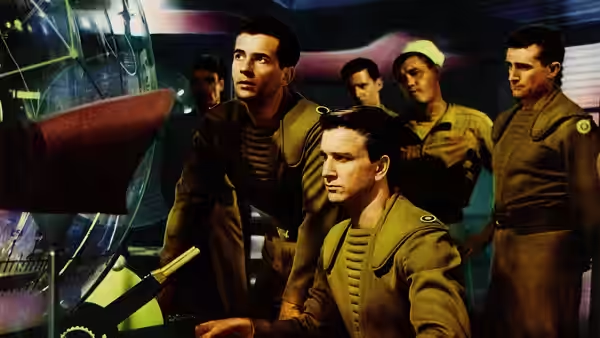
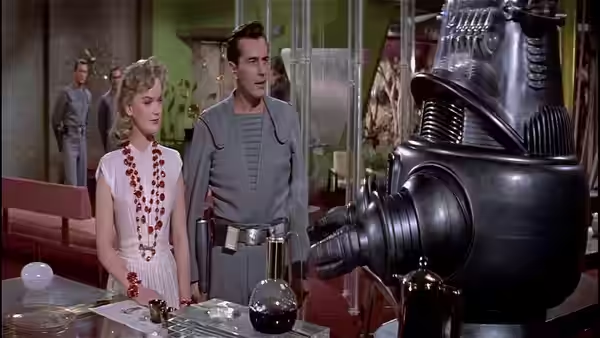
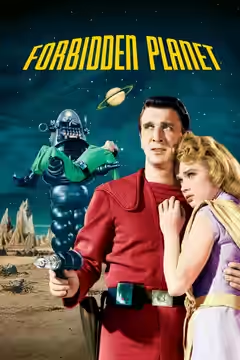
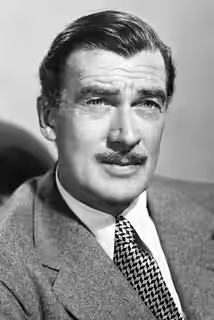
Commander John J. Adams (Leslie Nielsen), Dr. Edward Morbius (Walter Pidgeon) and Altaira Morbius (Anne Francis) are the central figures in a space adventure about exploration and technology escaping human control. The company includes Lt. ‘Doc’ Ostrow (Warren Stevens), Lt. Jerry Farman (Jack Kelly) and Chief Engineer Quinn (Richard Anderson), alongside Robby the Robot. Scientific progress raises questions about what knowledge permits people to do, what they can safely build, and what their understanding of machinery cannot protect them from.

Plays from YouTube when you press play; nothing loads from them until then.

Fi1m review

Forbidden Planet makes space exploration feel inviting and dangerous. Its electronic music and imagined technology do much of the work, and we recommend it despite the stiff dialogue and uneven acting.

Fred M. Wilcox makes Forbidden Planet inviting enough that its dangers matter. Space exploration is something to be curious about here, and the film takes pleasure in imagining what people might build before worrying about what they might do with it. We recommend it for that curiosity, the electronic music and the effects, with a warning about the stiff dialogue. The human exchanges can be hard work.

George J. Folsey’s cinematography makes the rich colours an invitation to look more closely. Irving Block and Mentor Huebner’s production design makes the technology seem worth investigating. There is pleasure in looking at machinery and trying to understand it, a useful foundation for a story about scientific overconfidence. The film allows us to enjoy the inventions before asking us to distrust them.

Louis Barron and Bebe Barron’s electronic music is the part we would least want replaced. We were surprised by how uneasy it made us: the unfamiliar sounds suggest that the machinery might be capable of something its users have not intended. That unease gives the attractive technology a danger which dialogue alone could not supply. The music makes a useful companion to the monster effects, which remain disturbing without needing us to make allowances for their age.

Robby the Robot supplies the humour with less fuss than the humans supply their explanations. The comedy matters because it lets the film enjoy its technology, instead of treating every invention as advance notice of disaster. A robot can simply be good company, which gives the warnings about human judgement more weight. There is something appealing about a science-fiction film that can be suspicious of progress without making curiosity itself seem foolish.

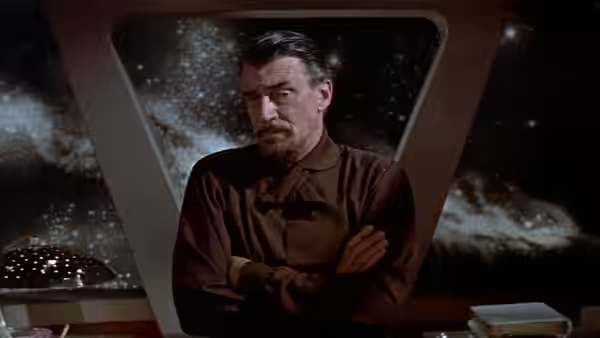
Walter Pidgeon, as Dr. Edward Morbius, is most convincing when the dialogue gives him authority to exercise. Leslie Nielsen brings suitable firmness to Commander John J. Adams, though firmness becomes a limited resource when a scene needs warmth. Anne Francis, as Altaira Morbius, offers some welcome lightness, but the writing does not give the human exchanges the ease of the robot’s comedy. Cyril Hume’s screenplay is more assured about its technological concerns than about conversation. Too often, a line is there to supply information, and we can hear the effort of supplying it.

Ferris Webster’s editing keeps the adventure manageable across 98 minutes, although the talk sometimes slows it more than the suspense requires. A sharper cut could shorten an explanation; it could not make the dialogue sound natural. That matters in science fiction, where somebody has to convince us that extraordinary equipment belongs to an ordinary working life. When the actors sound as though they are delivering information for our benefit, the imagined future feels briefly like a presentation.

For anyone wary of older science fiction, the comedy is a useful way in. The robot gives us company while the electronic music makes us uncomfortable, and that mixture keeps the film from becoming a solemn lesson about dangerous inventions. Allow for some wooden exchanges; the curiosity deserves an evening.
Critical consensus AI synthesised

83
Positive
8
Mixed
0
Negative
0

The reviews are uniformly positive about Forbidden Planet, with praise clustering around its visual effects, imaginative technology and spirit of exploration. Critics repeatedly single out the monster and Robby the Robot, whose appeal includes effective comic touches as well as futuristic invention. The electronic score also draws praise, while the borrowing from Shakespeare’s The Tempest is regarded as effective rather than merely decorative. Suspense and a hopeful sense of adventure underpin much of the enthusiasm.

The differences concern the degree of enthusiasm rather than any divide over the film’s merits. Empire offers the clearest reservations, finding some dialogue creaky and performances wooden, but argues that the strengths outweigh those flaws, particularly the theme of technology running out of control. There is no negative dissent in this selection: the range runs from qualified appreciation to emphatic endorsement.

Radio Times
★★★★★ · Alan Jones
100

Jones calls it one of the finest science-fiction films ever made and an enthralling spectacle. He praises its superb monster effects and outstanding technology, including Robby the Robot.

Read the full review →
The New York Times
4 May 1956 · Bosley Crowther
85*

The headline indicates a strongly positive review of the film. It singles out the imaginative appeal of its journey through space.

Read the full review →
Variety
31 December 1955 · Variety Staff
80*

Variety considers the film a top offering in space adventure, praising its suspense and thrills. It singles out Robby the Robot for adding effective comedy touches.

Read the full review →
Empire
1 January 2000 · Adam Smith
75*

The critic finds the film’s strengths easily outweigh its flaws and regards it as a major work. He particularly praises its prescient technology-out-of-control theme, while faulting some creaky dialogue and wooden performances.

Read the full review →
Time Out
· GA
70*

The review presents the film as an effective classic of 1950s science fiction. It singles out its surprisingly effective borrowing from Shakespeare’s The Tempest.

Read the full review →
Collider
2 October 2010 · Andre Dellamorte
90*

The critic calls Forbidden Planet a thoroughly entertaining science-fiction classic. They praise its hopeful spirit of adventure and exploration, along with its charming vision of the future.

Read the full review →

Straight answers AI written, from our review

Is Forbidden Planet worth watching?
Forbidden Planet is worth watching for its curious, uneasy approach to space exploration, and we score it 81 out of 100. We recommend it to science-fiction viewers who enjoy imagined technology, disturbing monster effects and electronic music that makes attractive machinery feel dangerous, provided they can allow for stiff dialogue and uneven acting.
How long is Forbidden Planet, and what is it rated?
Forbidden Planet runs 1h 38m. It is a science fiction and adventure film.
Where can I watch Forbidden Planet in India?
Forbidden Planet is not on any streaming or rental service in India at the moment. It is available in 3 other countries; change your country at the top of the page to see where. Availability is checked daily.
How does Forbidden Planet compare to The Day the Earth Stood Still?
Forbidden Planet is the more inviting adventure, while The Day the Earth Stood Still offers patient suspense and a tense warning about human judgement. We favour Forbidden Planet for the pleasure of exploring imagined technology and Robby the Robot’s humour, despite the wooden exchanges. The Day the Earth Stood Still is the better choice for sustained unease, though its supporting characters also labour through explanations.
What should I watch after Forbidden Planet?
After Forbidden Planet, try The Day the Earth Stood Still (1951, Fi1m 82): An alien visitor tests human judgement, with patient suspense and little reassurance. Then Solaris (1972, Fi1m 87): Space exploration runs into grief, memory and things scientific confidence cannot settle.

Cast

Awards

Academy Awards, 1957

Nominated
Best Special Effects

If you liked this, try…

  1. The Day the Earth Stood Still (1951, Fi1m 82)An alien visitor tests human judgement, with patient suspense and little reassurance.

  2. Ikarie XB 1 (1963) · not on Fi1m yetA spacecraft becomes a workplace, with curiosity and unease sharing the corridors.

  3. Solaris (1972, Fi1m 87)Space exploration runs into grief, memory and things scientific confidence cannot settle.

  4. Fantastic Planet (1973) · not on Fi1m yetStrange creatures and unfamiliar landscapes make human certainty look a little foolish.

  5. After Yang (2021) · not on Fi1m yetA quieter encounter with artificial life, attentive to affection and ordinary loss.