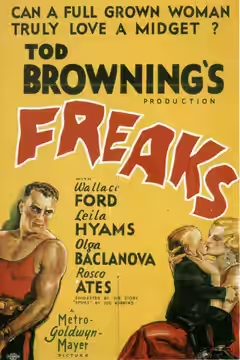
Tod Browning’s circus horror is worth seeing for its affection for the performers, even when its romance creaks. The troubling business of turning bodily difference into entertainment is never tidied away.
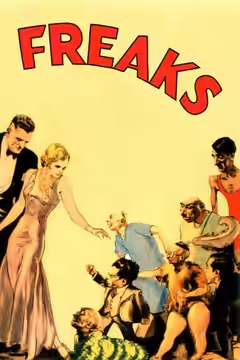
Freaks is worth seeing for its circus community, even when its romance becomes hard work. Tod Browning gives the performers enough attention to make us interested in their lives, and their company is the film’s chief pleasure. The horror comes with a discomfort that cannot simply be dismissed as squeamishness. There is affection here, but we cannot pretend that turning bodily difference into entertainment is an innocent business.
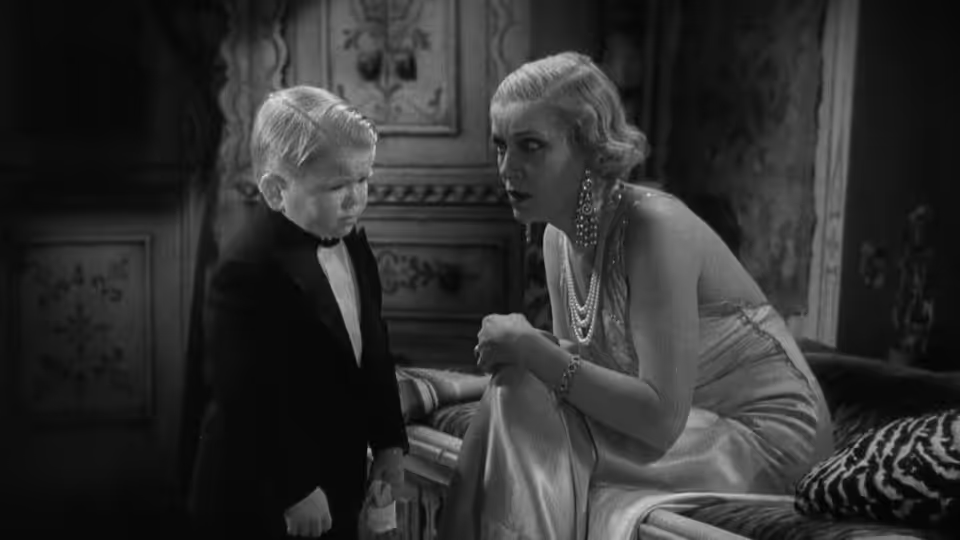
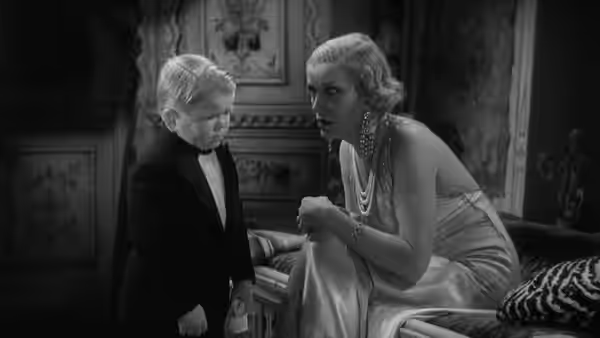
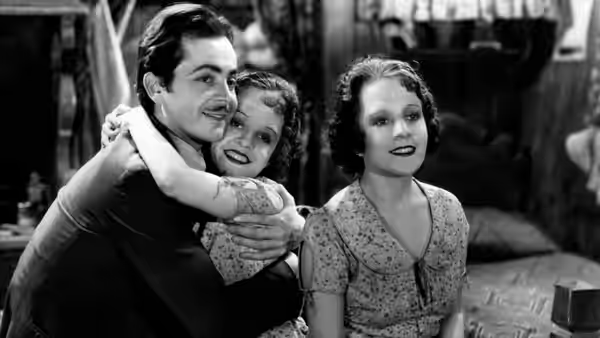
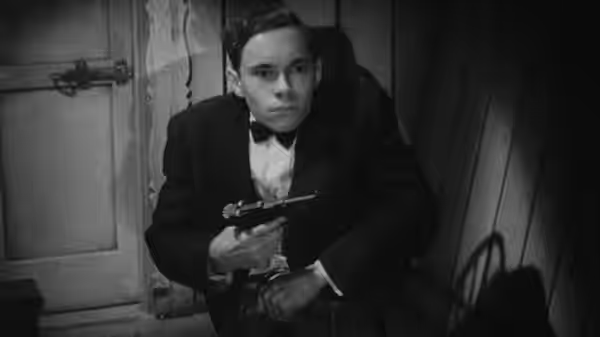
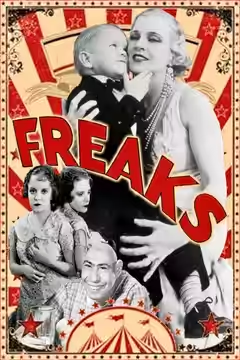
Harry Earles as Hans, Olga Baclanova as Cleopatra and Daisy Earles as Frieda are caught in a melodrama whose dialogue does them few favours. The screenplay by Leon Gordon and Willis Goldbeck asks romantic feeling to survive some stiff exchanges, and several performances struggle with the task. Harry Earles has a directness that we find affecting, though the writing can make sincerity sound rehearsed. The romance needs us to believe in these people more readily than the dialogue allows.
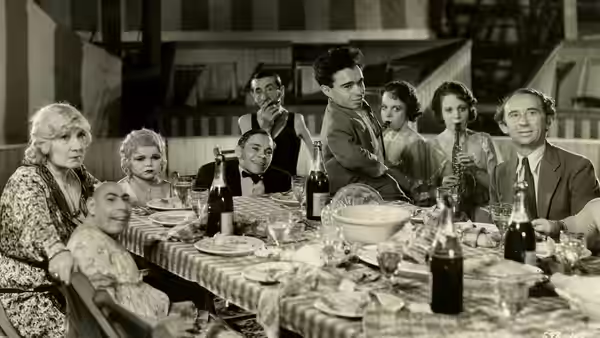
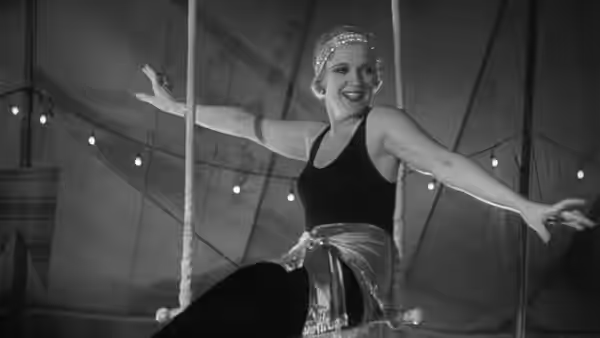
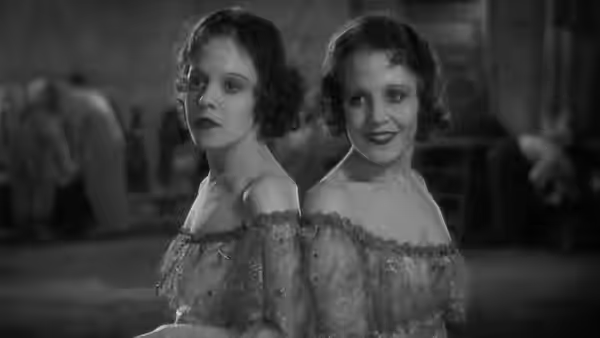
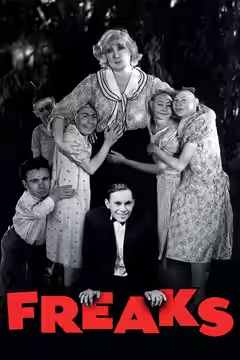
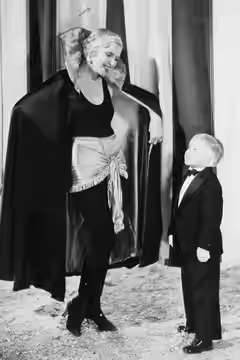
The life of the circus is more persuasive, because Tod Browning seems interested in the performers even when they are not advancing the story. We were moved by their ease in one another’s company. That feeling comes from seeing a group allowed to belong together without having to justify its existence to us. We are given time to regard the circus as their home, with relationships that matter to them regardless of what an audience might think of their appearance.
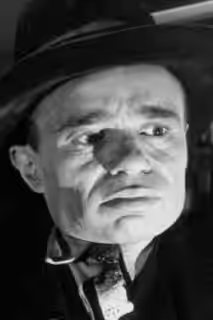
Merritt B. Gerstad’s cinematography helps make the circus feel like a place occupied by people, not just a setting for a macabre story. The images give the performers a presence that does not depend on the quality of their lines. Tod Browning uses that presence well, and the film can be absorbing simply because of who is on screen. Its visual assurance makes the awkwardness of the spoken scenes more noticeable, particularly when the actors have already secured our attention.
Basil Wrangell’s editing gives the ensemble room within a running time of 64 minutes. We would not want the passages spent among the performers shortened just to hurry the romance along. Those passages are where the film earns our interest in the circus as a community. Yet brevity does not cure the stiffness: when the dialogue falters, even this short film can feel as though it is waiting to get moving again.
As horror, Freaks gains force from the time it spends getting us interested in the circus performers. The harder question is how much that interest still depends on the invitation to stare. It asks us to reconsider what counts as beautiful or abnormal while offering the prospect of a disturbing sight, and Tod Browning’s affection does not settle that difficulty. We value the film without accepting that every troubling choice becomes admirable merely because it is troubling. Go for the performers, and be prepared to forgive some of the lines they have been given.