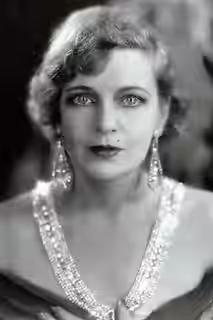
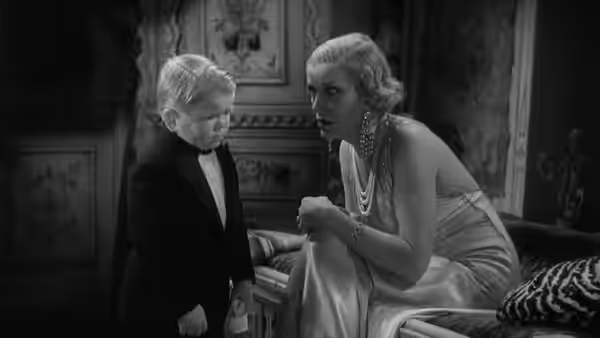
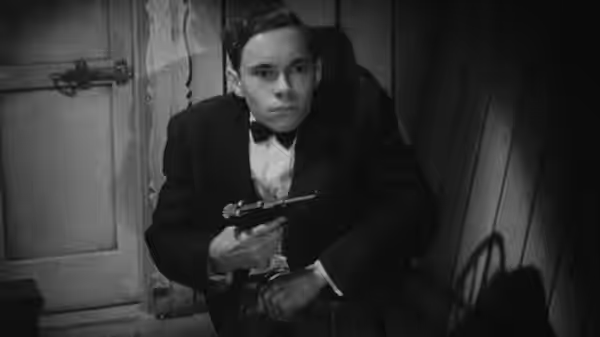
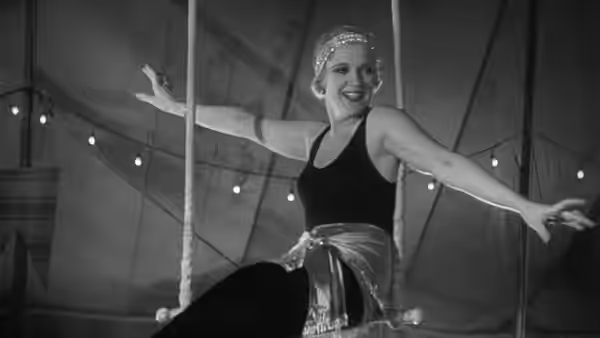
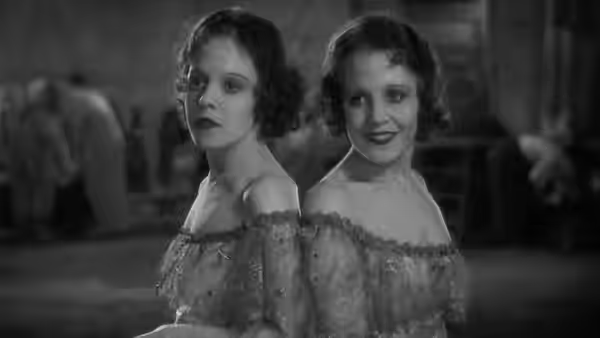
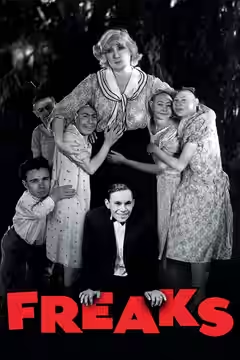
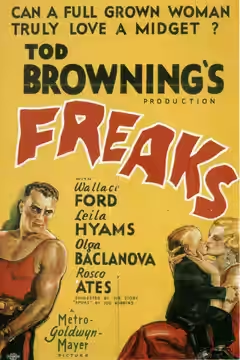
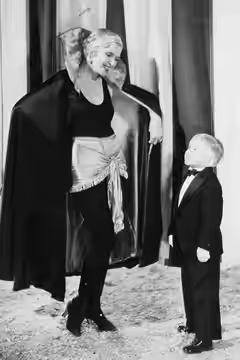
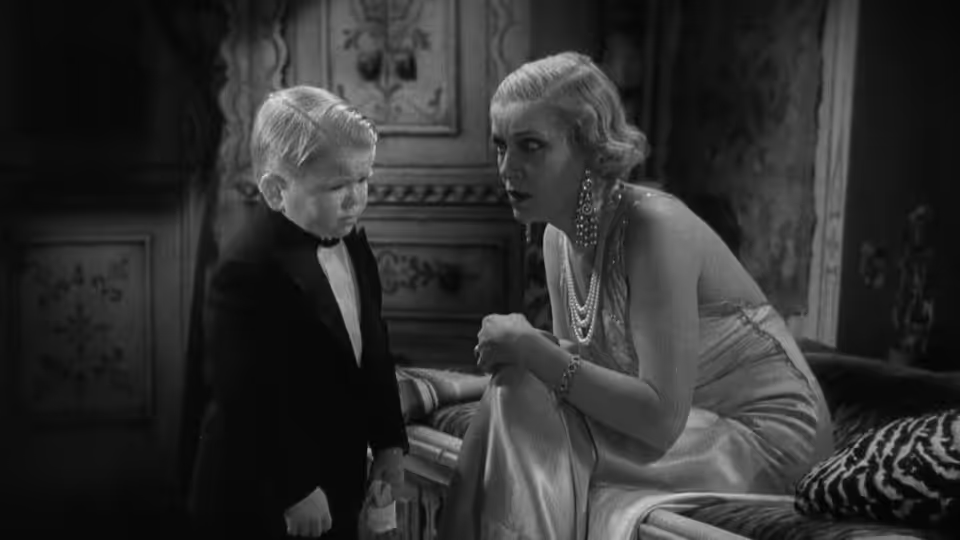
Hans (Harry Earles) sits beside Cleopatra (Olga Baclanova) in an ornate room
Film review

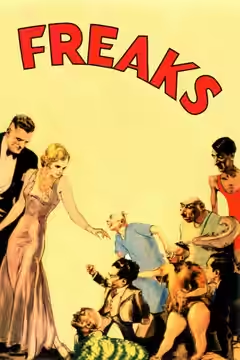
Freaks

1932 · Directed by Tod Browning · 1h 04m · IGAC M/12

In a sentenceA circus full of people worth knowing, interrupted by some stiff romantic dialogue

Within a circus community, Hans (Harry Earles), Cleopatra (Olga Baclanova) and Frieda (Daisy Earles) live among performers whose bodies draw the attention of an audience. Romance brings questions of attraction and acceptance into their shared life. Hercules (Henry Victor), Phroso (Wallace Ford) and Venus (Leila Hyams) are also part of the company. Away from the public spectacle, the performers have relationships and loyalties of their own. The distinctions between those considered beautiful and those labelled abnormal shape how people look at one another, both inside the circus and beyond it.

Fi1m review

Tod Browning’s circus horror is worth seeing for its affection for the performers, even when its romance creaks. The troubling business of turning bodily difference into entertainment is never tidied away.

Freaks is worth seeing for its circus community, even when its romance becomes hard work. Tod Browning gives the performers enough attention to make us interested in their lives, and their company is the film’s chief pleasure. The horror comes with a discomfort that cannot simply be dismissed as squeamishness. There is affection here, but we cannot pretend that turning bodily difference into entertainment is an innocent business.

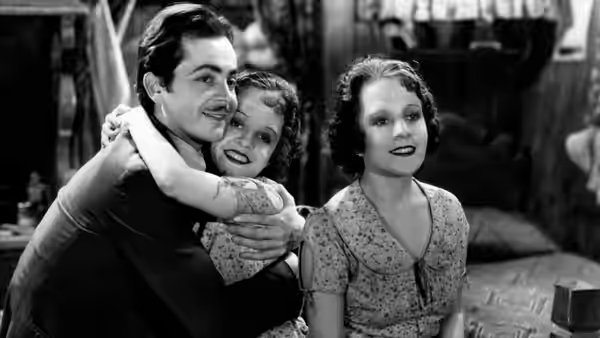
Harry Earles as Hans, Olga Baclanova as Cleopatra and Daisy Earles as Frieda are caught in a melodrama whose dialogue does them few favours. The screenplay by Leon Gordon and Willis Goldbeck asks romantic feeling to survive some stiff exchanges, and several performances struggle with the task. Harry Earles has a directness that we find affecting, though the writing can make sincerity sound rehearsed. The romance needs us to believe in these people more readily than the dialogue allows.

The life of the circus is more persuasive, because Tod Browning seems interested in the performers even when they are not advancing the story. We were moved by their ease in one another’s company. That feeling comes from seeing a group allowed to belong together without having to justify its existence to us. We are given time to regard the circus as their home, with relationships that matter to them regardless of what an audience might think of their appearance.

Merritt B. Gerstad’s cinematography helps make the circus feel like a place occupied by people, not just a setting for a macabre story. The images give the performers a presence that does not depend on the quality of their lines. Tod Browning uses that presence well, and the film can be absorbing simply because of who is on screen. Its visual assurance makes the awkwardness of the spoken scenes more noticeable, particularly when the actors have already secured our attention.

Basil Wrangell’s editing gives the ensemble room within a running time of 64 minutes. We would not want the passages spent among the performers shortened just to hurry the romance along. Those passages are where the film earns our interest in the circus as a community. Yet brevity does not cure the stiffness: when the dialogue falters, even this short film can feel as though it is waiting to get moving again.

As horror, Freaks gains force from the time it spends getting us interested in the circus performers. The harder question is how much that interest still depends on the invitation to stare. It asks us to reconsider what counts as beautiful or abnormal while offering the prospect of a disturbing sight, and Tod Browning’s affection does not settle that difficulty. We value the film without accepting that every troubling choice becomes admirable merely because it is troubling. Go for the performers, and be prepared to forgive some of the lines they have been given.
Critical consensus AI synthesised

74
Positive
7
Mixed
1
Negative
2

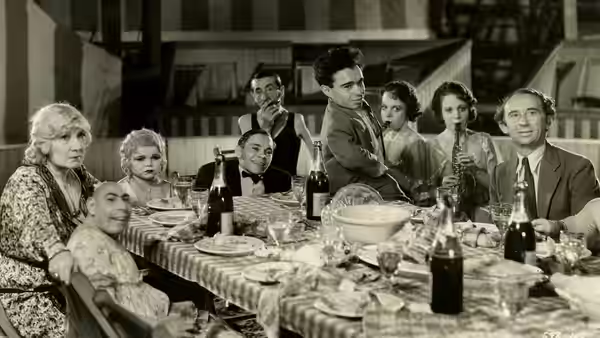
Most critics respond warmly to Freaks, finding compassion for its circus performers beneath the horror. Praise centres on Browning’s attention to the carnival community and his challenge to conventional ideas of beauty and abnormality. The performers’ everyday lives matter to these reviews as much as the film’s capacity to disturb. Several critics single out the wedding feast, with The AV Club particularly praising the sound and chant for making the scene emotionally complex as well as unsettling.

The spread of opinion is wide, and even favourable reviews question whether the film’s humanity sits comfortably with its exploitative aspects. The strongest dissent comes from Variety and Eye for Film: the former admires the direction but finds the story unengaging and the romance unconvincing; the latter finds the dialogue stilted and the performances awkward. The central disagreement concerns whether compassion outweighs the discomfort, though the negative reviews also identify basic dramatic weaknesses.

Slant Magazine
29 October 2003 · ★★★★/4 · Ed Gonzalez
100

The review argues that the film’s significance lies in its humanity, not merely its shock value. It praises Browning’s compassionate portrayal of the circus performers and his challenge to conventional ideas of beauty and abnormality.

Read the full review →
Time Out
7 June 2015 · ★★★★★ · Tom Huddleston
100

The review calls the film heartbreaking and empathetic, and an unforgettable achievement. It singles out its compassionate portrayal of circus life.

Read the full review →
The New Yorker
8 July 1932 · John C. Mosher
85*

Mosher calls the film a remarkable, chilling gem, while warning that it is not for everyone. He especially singles out the wedding feast, where the circus performers toast the bride and promise to accept her.

Read the full review →
Radio Times
★★★★ · Alan Jones
80

Jones calls the film a deserved cult masterpiece, both nightmarish and compassionate. He praises how Browning immerses viewers in the carnival community before chillingly showing the consequences of betrayal.

Read the full review →
The Guardian
14 June 2015 · Mark Kermode
80*

Kermode regards the film as a modern classic and argues that Browning’s sympathies are clear. He singles out Johnny Eck’s remarkable agility and the respectful, admiring effect of his performance.

Read the full review →
Empire
1 January 2000 · Kim Newman
75*

Newman finds the film an oddly charming, one-of-a-kind masterpiece, despite its disturbing ending. He praises its fondness for the carnival performers, while noting that the finale turns them into the monsters society expects.

Read the full review →

Straight answers AI written, from our review

Is Freaks worth watching?
Freaks is worth watching for its affectionate portrait of a circus community, and we score it 79 out of 100. We find the performers’ ease together moving, but the stiff romantic dialogue slows even its 64 minutes; it suits viewers interested in the people as much as the horror.
How long is Freaks, and what is it rated?
Freaks runs 1h 04m and is rated M/12 by the IGAC in Portugal. It is a drama and horror film.
Where can I watch Freaks in Portugal?
Freaks is not on any streaming or rental service in Portugal at the moment. Availability is checked daily.
How violent or frightening is Freaks, and is it suitable for children?
Freaks carries a UK 12 certificate, so it is not a choice for younger children. We find its horror troubling partly because it turns bodily difference into spectacle even as it encourages affection for the performers; that discomfort is worth considering for older children, rather than treating the certificate as a promise of an easy watch.
How does Freaks compare to The Elephant Man?
Freaks offers more of a circus community’s shared life, while The Elephant Man gives more room to private feeling. Both trouble us with the way people become objects of public curiosity, but we recommend The Elephant Man more readily for emotional involvement: its performances make the sympathy convincing, whereas the romance in Freaks struggles with stiff dialogue.

Cast

If you liked this, try…

  1. The Elephant Man (1980, Fi1m 84)Another troubling look at public curiosity, with more room for private feeling.

  2. The Unknown (1927) · not on Fi1m yetA circus melodrama with dangerous romantic fixation and little room for tenderness.

  3. Eyes Without a Face (1960) · not on Fi1m yetFor the uneasy mixture of bodily horror, tenderness and beauty made suspect.

  4. La Strada (1954) · not on Fi1m yetTravelling performers, damaged affections and a harsher account of life beyond the ring.

  5. Chained for Life (2018) · not on Fi1m yetA film set becomes another place where bodily difference attracts the wrong attention.