Mckenna Grace and a farmhouse full of old equipment give Jason Reitman’s sequel a first hour worth having. Then the film starts retracing the 1984 original step by step, and a story about a family becomes a guided tour of someone else’s.
Jason Reitman directs and, with Gil Kenan, writes a 124-minute sequel to the film his father Ivan Reitman made in 1984; the father produces. The set-up is a good one. A hard-up mother and two children arrive in a dying Oklahoma town to clear out a dead man’s farmhouse, and the younger child works out, piece by piece, what he was for. For about an hour this is a small, likeable film about a clever girl in a place with nothing to do. Then the film remembers whose name is on the poster, and everything after that is a matter of ticking things off.
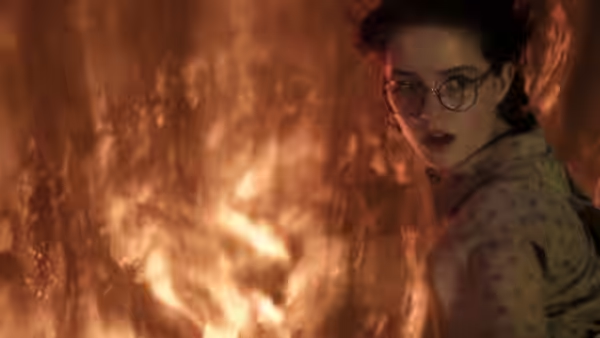
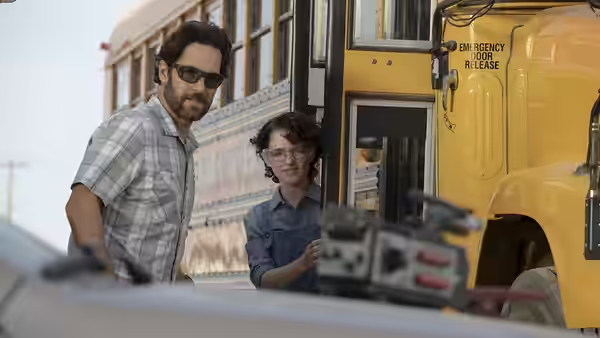
Mckenna Grace is the reason to watch. She plays Phoebe as a child who talks to adults as equals and cannot see why they mind, and she delivers jokes flat, into the middle distance, like someone who has read that jokes help people relax and is testing the theory. It is a performance rather than a cute turn. Carrie Coon gives Callie a tired, funny bitterness, a woman let down by a parent who is not going to pretend otherwise for the children’s sake. Paul Rudd does what he does, which is make a room lighter by standing in it, and his scenes with Coon are the only ones in which two adults seem to enjoy each other’s company.
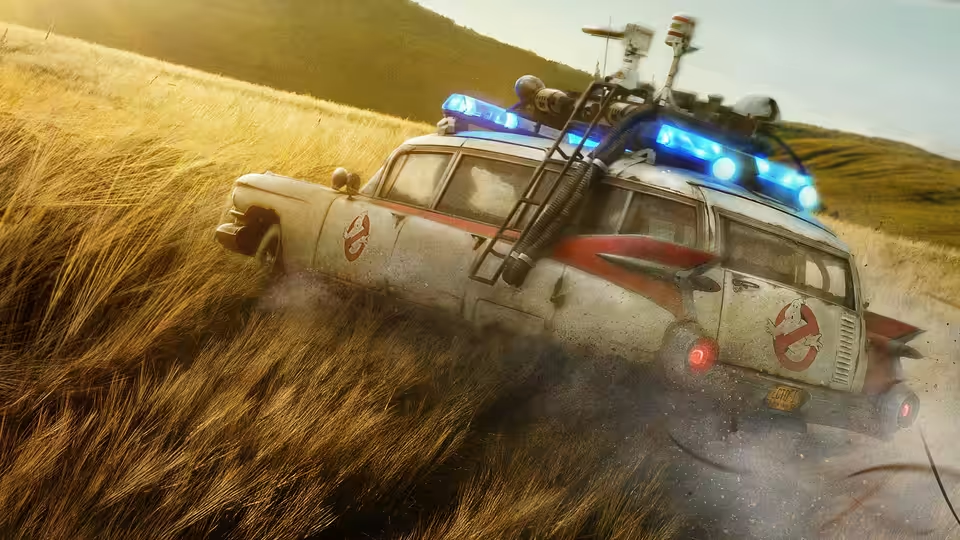
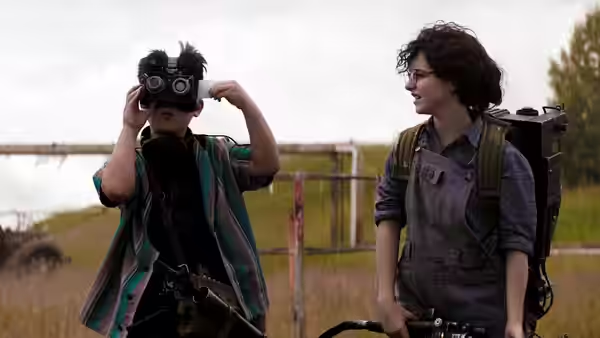
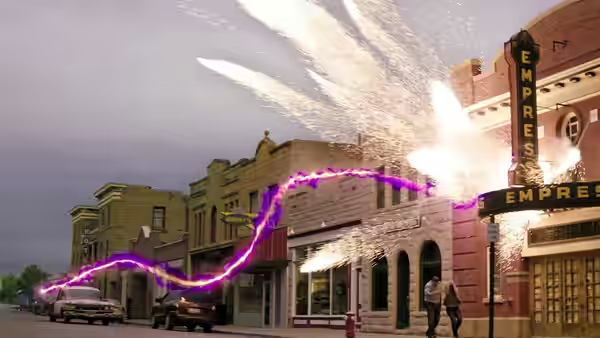
The town is well made. Eric Steelberg shoots Summerville in long, low evening light, a grain elevator, an empty main street, the farmhouse against a flat horizon. François Audouy’s production design fills that house with a lifetime of tinkering: wiring under the floorboards, a basement laboratory, junk in every room that turns out not to be junk. Danny Glicker puts Phoebe in a cut-down flight suit that does not fit her and never quite will. When she takes a proton pack out into a cornfield at night and tries it, we grinned, because for a few minutes the film had found the thing the original had, which is a gadget, a target and a child who is better at this than the grown-ups.
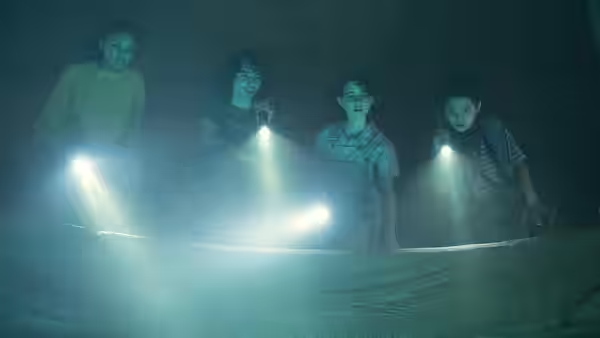
Then the second half arrives, and the film stops being about this family and starts following the 1984 film, in ways we will not describe, almost beat for beat. Every recognisable object is introduced with a pause so we can clock it. Rob Simonsen’s score quotes the old themes so often that it stops being music for these scenes and becomes a reminder of other ones. Dana E. Glauberman and Nathan Orloff cut the action cleanly enough, but it is mostly action we have seen before, staged in a smaller place with fewer people watching.
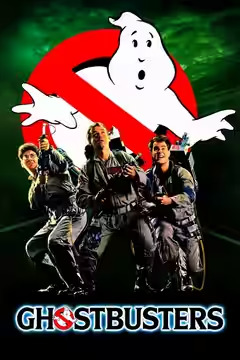
There is one properly funny sequence, in which a shelf of small marshmallow men in a supermarket aisle set about torching, skewering and eating one another. We laughed out loud, and then noticed it was the only joke in twenty minutes that did not need us to have seen another film to land. The original was a comedy about three men who found a way to bill New York for its ghosts. This is not a comedy. It is a children’s adventure with jokes at the edges, and when Bill Murray, Dan Aykroyd, Ernie Hudson, Annie Potts and Sigourney Weaver turn up, they are treated as visiting dignitaries rather than as performers with anything to do. The closing minutes reach for a tribute we will not describe, and we felt worked on rather than moved, because the film had spent two hours telling us to feel it and had not done the work.
Reitman’s Juno and Up in the Air were about people talking in rooms, and he is good at that; the first hour here shows it, with Grace and Coon and Rudd doing the talking. Against the run of films in which suburban children stumble on something enormous, this one has a better lead than most and a more borrowed plot than any. Most critics have split down the middle on it, and so have we.
Watch it with a child who has not seen the original. They will enjoy the first hour, and then ask you a great many questions about the second, and the answers will be more interesting than what is on screen. The 12A is about right: a few jumps, no real fright, and nothing a bag of sweets will not settle.