Film review

Ghostbusters II

1989 · Directed by Ivan Reitman · 1h 48m · MPA PG

In a sentenceManhattan’s bad mood turns out to be pink, glowing and living under First Avenue, which explains a great deal

ComedyFantasy

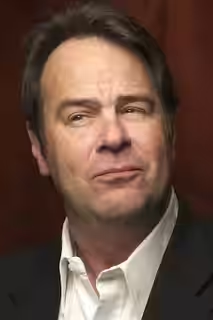
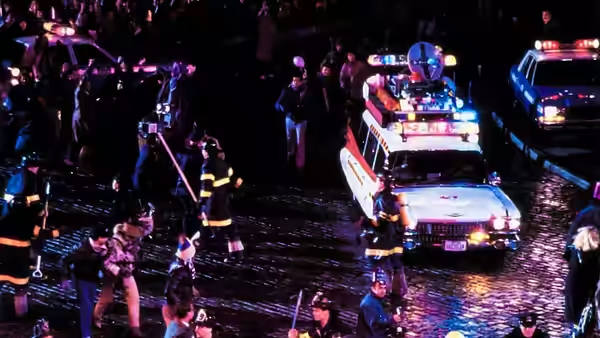
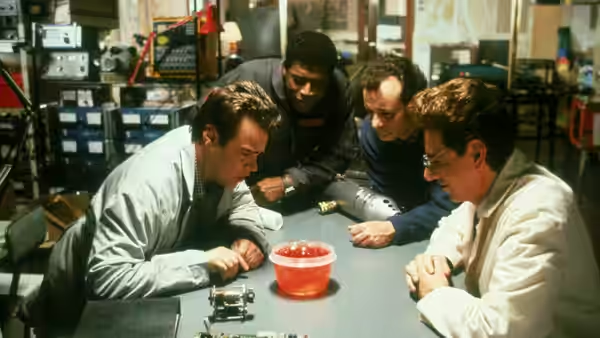
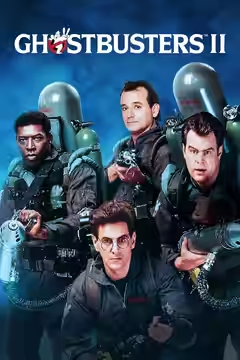
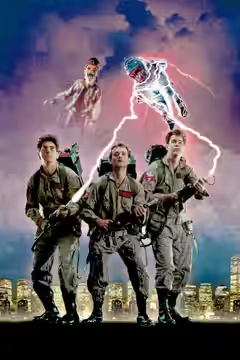
New York, five years after the Ghostbusters saved it. The city sued them for the damage and a court barred them from the trade. Peter Venkman (Bill Murray) hosts a cable programme called World of the Psychic; Raymond Stantz (Dan Aykroyd) works children’s parties with Winston Zeddemore (Ernie Hudson); Egon Spengler (Harold Ramis) is back in the laboratory. Dana Barrett (Sigourney Weaver) restores paintings at the Manhattan Museum of Art under Janosz Poha (Peter MacNicol), who has become fixated on a portrait of Vigo the Carpathian. When her baby’s pram rolls off down First Avenue by itself, she calls Venkman. Stantz and Spengler dig up the road at night, find a river of pink slime, and land the team in front of a judge (Harris Yulin).

Plays from YouTube when you press play; nothing loads from them until then.

Fi1m review

Ivan Reitman’s sequel runs the first film again with the volume turned down and a baby in the pram. It is amiable, occasionally funny and never once necessary; Peter MacNicol’s possessed curator is the one thing in it that is new.

Five years after the first film, the Ghostbusters are out of work. New York sued them for the damage they did saving it, a court has barred them from the trade, and Peter Venkman (Bill Murray) hosts a cable programme called World of the Psychic. Raymond Stantz (Dan Aykroyd) does children’s parties with Winston Zeddemore (Ernie Hudson). Ivan Reitman directs again, Aykroyd and Harold Ramis write again, and what they have written is the first film with the names changed: a woman in danger, a possessed building, an official who does not believe them, a giant thing in the last reel. It is agreeable company for 108 minutes and there is no reason for it to exist.

The one new idea is good and the film hardly uses it. Under First Avenue runs a river of pink slime that feeds on the city’s bad temper. There is one good scene, Stantz and Egon Spengler (Harold Ramis) drilling through the road at night and finding the stuff below them, and then the script moves on. Mostly the slime is a device to find a body for Vigo the Carpathian, a tyrant living inside a portrait at the Manhattan Museum of Art, who needs a living child to come back through. The child is the baby son of Dana Barrett (Sigourney Weaver), whose pram sets off down the street on its own in the opening minutes.

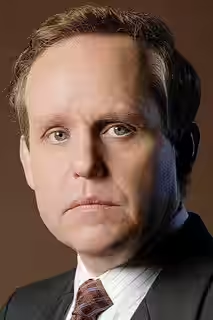
Peter MacNicol is the reason to watch. Janosz Poha, Dana’s boss at the museum, is a timid man with an accent from nowhere who falls under the painting’s influence and delivers its orders with the dignity of a waiter announcing the specials. MacNicol never winks, and we laughed at nearly every line he has, several of which are not jokes. Murray has decided that the funniest thing he can do is look as though he would rather be elsewhere, and about half the time he is right.

He and Weaver have been handed a romance to repair, and it does not repair. He turns up at her flat, holds her baby and says sorry, and the script wants us to forgive a man who has not called in years. Weaver plays it honestly and looks as if she is in a better film about a single mother. Rick Moranis’s Louis Tully defends the team in court with a short speech that is the best writing in the picture. Harris Yulin’s judge, promising them a sentence he has not yet invented, is the only other performer who has understood what kind of film this is.

The craft is solid and rather anonymous. Michael Chapman lights this New York like a department store at Christmas, and the night streets show none of the grime the slime is supposed to be feeding on. Bo Welch, fresh from Beetlejuice, does better: the restoration room is a long white gallery with Vigo’s portrait at the end of it like an altar, and the courtroom is oak panelling and green lamps. Randy Edelman’s score is chirpy and thin, and it tells us to be excited at moments when the first film would have let Murray mutter. Sheldon Kahn and Donn Cambern cut it briskly, but the middle hour drifts while the story waits for the finale.

There is one honest fright. Dana runs a bath for the baby, turns her back, and the pink stuff rises out of the tub and reaches for him, and we jumped, at home, with the lights on. It is the only moment the film remembers that the first one was a horror film. It lasts a minute and is followed by a joke.

Ghostbusters (1984) was made by people who seemed startled to be getting away with it. This one is made by people who know exactly what they got away with and have come back to do it again, more carefully and for a younger crowd; it carries a PG and the slime is never more frightening than an eight-year-old can stand. For a family with a child that age it is a fair evening. Anyone older will spend a good deal of it waiting for MacNicol to come back.
Critical consensus AI synthesised

63
Positive
7
Mixed
2
Negative
3

Most critics find Ghostbusters II an easy, likeable comedy, and the praise clusters on the cast rather than the plot. Bill Murray’s wisecracking is singled out again and again, with Rick Moranis and the courtroom scene picking up mentions, and one contemporary notice finds it funnier and less extravagant than the original. A run of later reappraisals argues it is far better than its reputation and holds up as a sequel that wisely changes little.

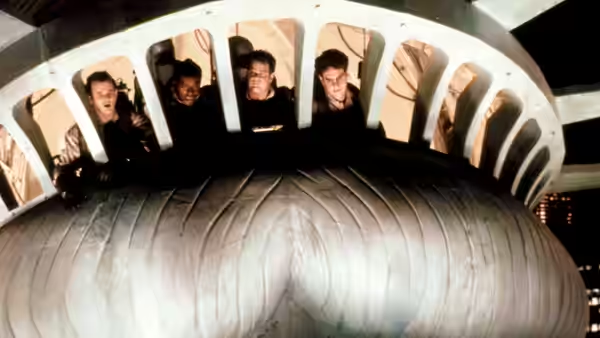
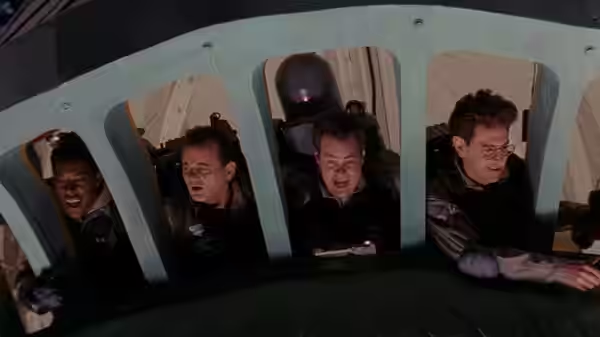
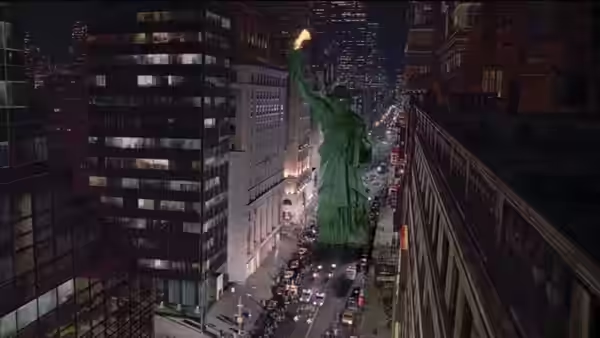
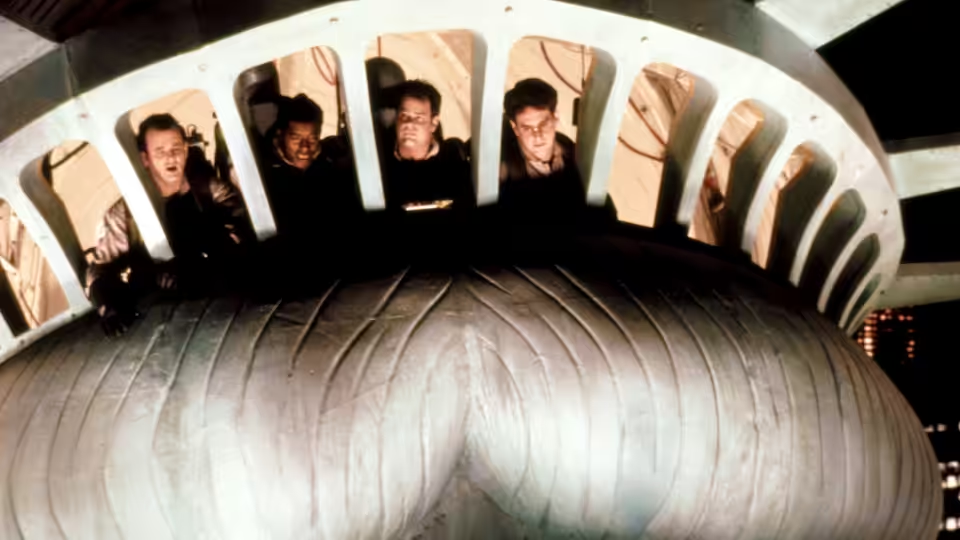
The reservations are about exactly that. A clear minority calls it a lazy retread with a convoluted story, a cast going through the motions and cartoonish set pieces, the Statue of Liberty finale chief among them. The spread is wide: the Los Angeles Times finds the climax tops the first film’s, while Collider considers the whole thing a forced remake. The dissent does not split neatly by date; admirers and detractors turn up in both the original notices and the retrospectives.

Los Angeles Times
16 June 1989 · Sheila Benson
90*

The review praises the sharp one-liners, meticulous production, and grand finale that tops the first film's classic scene. It notes the original cast returns in strong form with a buoyant score and inspired effects keeping the edge intact.

Read the full review →
Empire
1 January 2000 · William Thomas
70*

The script is sharp with an eye on children and the film is funny in a harmless way, with strong supporting turns from the cast. It suffers from repetitions of the first film and an uncomfortable attempt to integrate Murray's character into a relationship.

Read the full review →
The New York Times
16 June 1989 · Vincent Canby
70*

The critic finds the sequel easier to take and funnier than the original, which seemed overproduced and sloppy. It is more modest and less aggressively extravagant while delivering a lively story about negative energy threatening Manhattan.

Read the full review →
Variety
31 December 1988 · Variety Staff
70*

The film is described as babyboomer silliness that appeals to kids with its slime and ghosts while adults enjoy the clever dialogue. Bill Murray anchors the central role amid the team's efforts against the new supernatural threat.

Read the full review →
Radio Times
★★★
60

The film sticks closely to the successful formula of the first with bigger effects and strong turns from Murray and Moranis. The script lacks sparkle and offers little that is new despite the high budget.

Read the full review →
Time Out
10 September 2012 · CM
40*

The sequel fails to recapture the energy of the original despite the familiar cast and plot elements. It serves mainly as an excuse for the team to reunite amid a new supernatural threat involving an endangered child.

Read the full review →

Cast

If you liked this, try…

Ghostbusters poster80

Ghostbusters

1984 · The original, still rude and still frightening in places; see why they came back.

Beetlejuice poster83

Beetlejuice

1988 · Bo Welch’s other haunted house of the decade, with far stranger furniture.

Gremlins 2: The New Batch poster

Gremlins 2: The New Batch

1990 · A sequel that knows it is a sequel and takes the building apart.

Groundhog Day poster88

Groundhog Day

1993 · Murray and Ramis again, this time with a script that gives Murray somewhere to go.

What We Do in the Shadows poster

What We Do in the Shadows

2014 · Monsters sharing a flat and squabbling over the washing-up; the jokes are new.