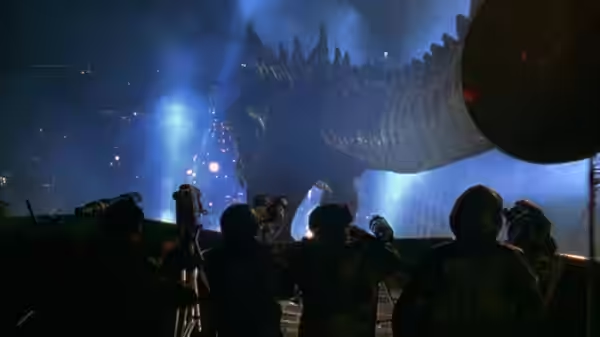
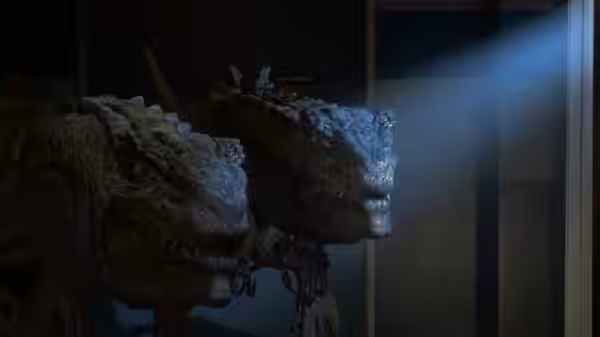
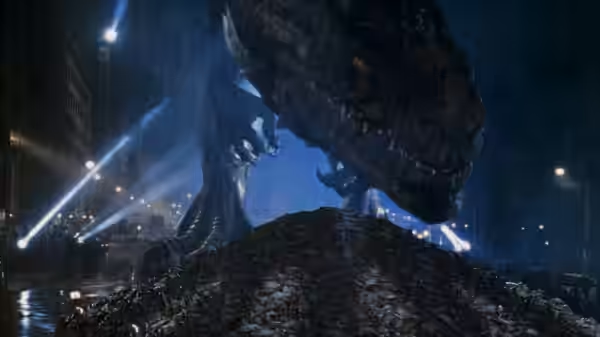
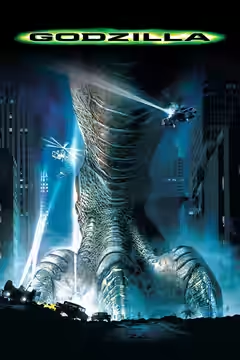
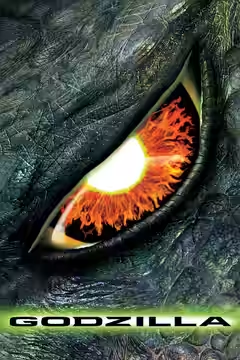
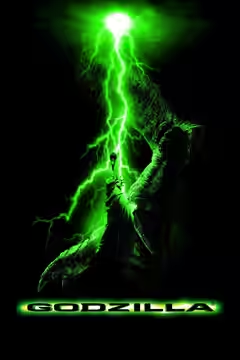
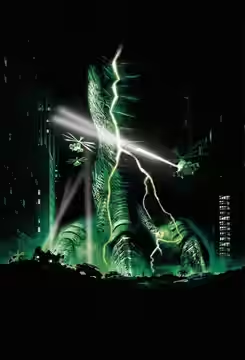
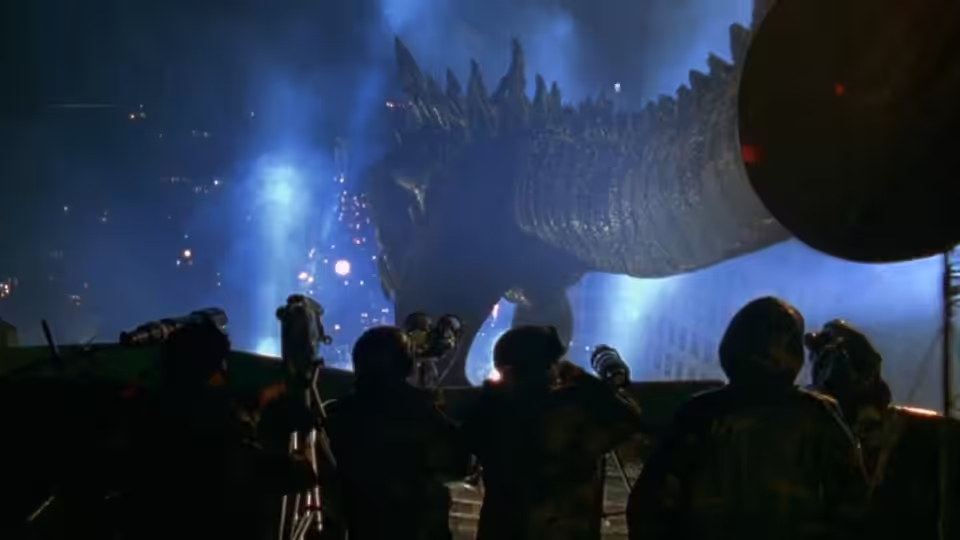
People look up at Godzilla looming over them in a blue-lit city
Film review

Godzilla

1998 · Directed by Roland Emmerich · 2h 18m

In a sentenceA monster the height of a skyscraper spends most of its own film hiding from helicopters in the rain

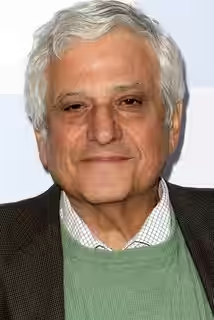
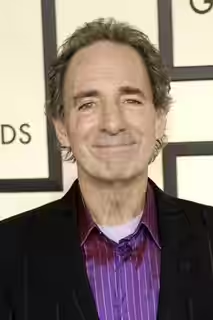
Something enormous sinks a Japanese fishing boat in the Pacific and leaves the men who study such things with more questions than answers. Dr. Niko Tatopoulos (Matthew Broderick), a biologist, is collected by the American military and flown in to look at what it has left behind. Colonel Hicks (Kevin Dunn) wants to know what it is; Philippe Roaché (Jean Reno), who is French and has questions of his own, wants to know before the Americans do. Then the creature walks ashore in Manhattan in the rain, and the city empties. Niko’s old girlfriend Audrey Timmonds (Maria Pitillo), an assistant to anchorman Charles Caiman (Harry Shearer), and her cameraman Victor ‘Animal’ Palotti (Hank Azaria) chase the story, while Mayor Ebert (Michael Lerner) worries about his re-election.

Plays from YouTube when you press play; nothing loads from them until then.

Fi1m review

Roland Emmerich builds a fine wet half hour of waiting, then brings his creature ashore and cannot decide whether it is a monster or a frightened animal. Jean Reno keeps it watchable; the last hour is borrowed from a better dinosaur film.

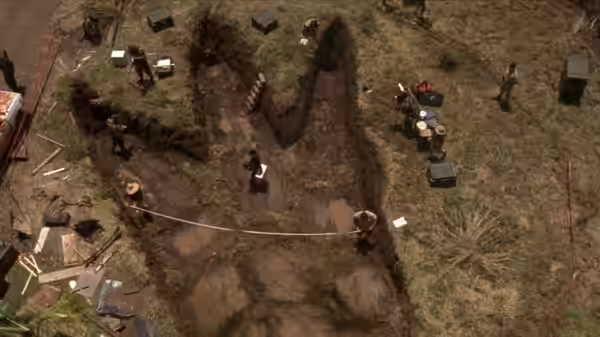
Roland Emmerich’s Godzilla opens well, and it opens slowly, which here amounts to the same thing. Nuclear tests in the Pacific; iguanas on a beach; a Japanese fishing boat struck at night by something we do not see; an old man on a pier with one word for the men who find him. Dr. Niko Tatopoulos (Matthew Broderick) is a biologist the American military collects and flies in, and for half an hour the film is a decent procedural about the traces the thing has left. Then the creature walks ashore in Manhattan and most of what was working stops.

The trouble is a decision, not a budget. Emmerich and Dean Devlin, who wrote the script, have made their monster an animal. It is big, it is quick, it is frightened of helicopters and it has come to New York to lay eggs. Ishirō Honda’s 1954 original had a different idea: his creature was the bomb come back to Japan with a face. This one is a nuisance with a nest, so instead of stamping on things it ducks. It runs down avenues, drops into the subway, doubles back and disappears for twenty minutes at a stretch. A monster that hides is a monster that has been told it is not the star.

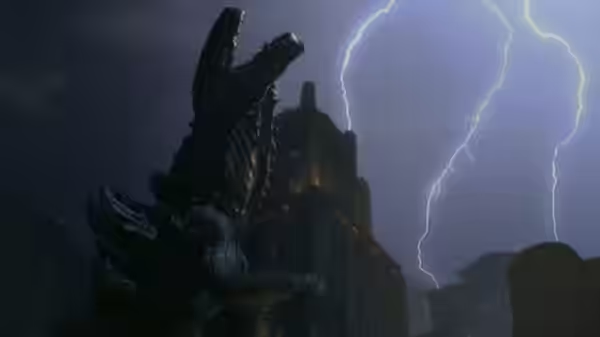
We sat forward for the first landing, and we want to be fair about why. Ueli Steiger shoots the whole picture in rain and at night, and the first sight of a tail sweeping a wet avenue while taxis flip over is done with patience. Oliver Scholl’s Manhattan, all fish markets, scaffolding and stalled traffic, takes the damage as if it weighed something. David Arnold scores it with the brass and drums he brought to Independence Day, and for a while that carries it. Then we waited for the film to top the moment, and it never does. By the third time the army fires into a building the creature has already left, we had stopped being frightened and started counting.

Broderick is the right kind of wrong: mild, bespectacled, pleased to be asked, and nobody else in the film is half as gentle. Jean Reno, as Philippe Roaché, a Frenchman with his own reasons for being there, complains about the coffee, chews his gum and looks at the Americans as if they were an exhibit. He is the one performer who has noticed the film is funny. Maria Pitillo’s Audrey Timmonds, Niko’s old girlfriend turned would-be reporter, is written to betray him for a story and then be forgiven, and Pitillo cannot make either half stick. Hank Azaria shouts. Harry Shearer’s anchorman is smug in the right way. Michael Lerner’s Mayor Ebert and Lorry Goldman’s aide Gene are a joke about two American television critics, and it is run several times in case we missed it.

The last hour goes indoors, and what happens there we will not describe, except to say that if it sounds like Jurassic Park it looks like it too, with worse lighting. David Siegel and Peter Amundson cut it fast without ever making it tense, and it is here that the 138-minute runtime makes itself felt. We were bored indoors, and puzzled that a film built around one enormous thing had gone off to do something small.

Emmerich had made Independence Day two years earlier, and that film knew it was silly and let its cast enjoy it. This one is solemn about a lizard. Against Honda it has nothing to say; against Spielberg it has the effects and not the timing; against its own first half hour it is a let-down. Joseph A. Porro dresses Reno’s Frenchmen in black raincoats, and they are the only people on screen who seem to have checked the forecast.

If your house contains a nine-year-old and a wet Saturday, it will pass the afternoon, and the PG is fair. Everyone else should know that the poster says “Size does matter”, and that the film keeps that promise only in the sense that it runs for 138 minutes.

Critical consensus AI synthesised

44
Positive
1
Mixed
1
Negative
4

Most critics find this American Godzilla a disappointment: a loud, expensive spectacle with little underneath it. Where there is praise, it clusters on the build-up and the set pieces. Several reviews grant that the computer-generated monster is agile and that the early, ominous stretches work, and the Madison Square Garden sequence is singled out as the film’s most energetic passage. The consensus is that it delivers noise competently and not much else.

The reservations are about the creature and the people. The redesigned Godzilla is called generic and short on charisma, the second-half siege involving the hatchlings is found dull and repetitive, and the human story is judged hollow. Radio Times misses the charm of the Japanese original and says the thrills fall short of Jurassic Park. The spread is wide, though, because Eye for Film dissents outright, calling it a cleverly built action film with characters worth caring about and praising Broderick’s soft-centred lead as a counterweight to the military bluster.

The New York Times
19 May 1998 · Janet Maslin
64*

The article text is inaccessible, so its verdict and specific praise or criticism cannot be verified. The URL identifies it as a film review of Godzilla.

Read the full review →
Radio Times
★★ · Alan Jones
40

Jones finds the American reboot dreary and lacking the charm of the original. He criticizes its computer-generated effects and says its thrills fall short of Jurassic Park.

Read the full review →
Empire
1 January 2000 · Andrew Collins
30*

Collins finds the film visually impressive but ultimately disappointing, with little to offer beyond spectacle. He praises the ominous build-up and agile CGI monster, while criticizing the dull, repetitive siege involving the hatchlings.

Read the full review →
Time Out
· TCh
30*

The page’s description suggests a negative verdict on the film’s self-important blockbuster approach. It likens Godzilla’s arrival in America to a very large chicken coming home to roost.

Read the full review →
Variety
18 May 1998 · Joe Leydon
30*

Leydon finds the film an exciting but emotionally hollow spectacle, unlikely to match its commercial ambitions. He praises the high-energy Madison Square Garden sequence, while criticizing Godzilla’s generic design and lack of charisma.

Read the full review →
Eye for Film
19 January 2001 · Angus Wolfe Murray
85*

The critic finds Godzilla an awesome, cleverly crafted action spectacle with characters worth caring about. They single out the strong effects and Broderick’s soft-centred performance as effective counterpoints to the military’s aggression.

Read the full review →

Straight answers AI written, from our review

Is Godzilla worth watching?
Godzilla (1998) is worth watching only for undemanding children on a wet afternoon, and we scored it 46. The first half hour of waiting is well done, and Jean Reno is good company, but Roland Emmerich's creature spends most of the film hiding from helicopters. The last hour goes indoors and borrows heavily from a better dinosaur film.
How long is Godzilla, and what is it rated?
Godzilla runs 2h 18m. It is a science fiction and action film.
Where can I watch Godzilla in Estonia?
Godzilla is not on any streaming or rental service in Estonia at the moment. It is available in 24 other countries; change your country at the top of the page to see where. Availability is checked daily.
How violent or frightening is Godzilla, and is it suitable for children?
Godzilla (1998) carries a UK PG, which we think is fair, and it is more loud than frightening. The monster flips taxis and knocks down buildings in the rain, the army fires a great deal, and nothing on screen is gory. Small children may find the noise and the darkness a lot; a nine-year-old will be fine.
How does Godzilla compare to Godzilla?
Godzilla (1998) is the weaker film by some distance, and the two are different in kind. Ishirō Honda's 1954 original makes its monster the bomb come back to Japan with a face, and the destruction hurts; Roland Emmerich's version makes it a frightened animal looking for a nest. Choose the original if you want to be scared; the remake is for children who want spectacle.
What should I watch after Godzilla?
After Godzilla, try Godzilla (1954, Fi1m 88): Ishirō Honda’s original, where the monster is the bomb and nobody is joking. Then Shin Godzilla (2016, Fi1m 74): Spends half its time in committee rooms and is more frightening for it; and Tremors (1990, Fi1m 82): Small town, big worms, and a script that knows exactly how funny it is.

Cast

Awards

European Film Award - People's Choice Award for Best Director, 1998

Won
European Film Award - People's Choice Award for Best Director

If you liked this, try…

  1. Godzilla (1954, Fi1m 88)Ishirō Honda’s original, where the monster is the bomb and nobody is joking.

  2. Shin Godzilla (2016, Fi1m 74)Spends half its time in committee rooms and is more frightening for it.

  3. Cloverfield (2008) · not on Fi1m yetThe same city knocked down from pavement level, on a camcorder, in under ninety minutes.

  4. The Host (2006) · not on Fi1m yetBong Joon-ho’s monster in the Han River and the hopeless family chasing it.

  5. Tremors (1990, Fi1m 82)Small town, big worms, and a script that knows exactly how funny it is.