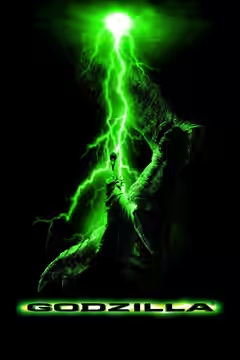
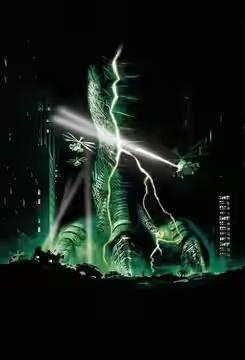
Roland Emmerich builds a fine wet half hour of waiting, then brings his creature ashore and cannot decide whether it is a monster or a frightened animal. Jean Reno keeps it watchable; the last hour is borrowed from a better dinosaur film.
Roland Emmerich’s Godzilla opens well, and it opens slowly, which here amounts to the same thing. Nuclear tests in the Pacific; iguanas on a beach; a Japanese fishing boat struck at night by something we do not see; an old man on a pier with one word for the men who find him. Dr. Niko Tatopoulos (Matthew Broderick) is a biologist the American military collects and flies in, and for half an hour the film is a decent procedural about the traces the thing has left. Then the creature walks ashore in Manhattan and most of what was working stops.
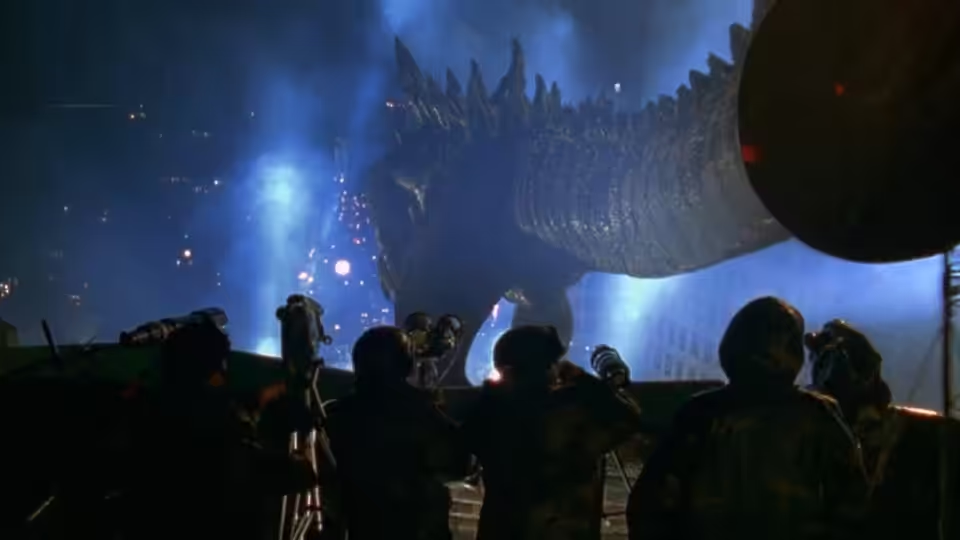
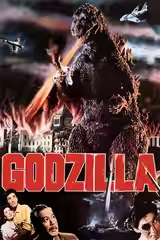
The trouble is a decision, not a budget. Emmerich and Dean Devlin, who wrote the script, have made their monster an animal. It is big, it is quick, it is frightened of helicopters and it has come to New York to lay eggs. Ishirō Honda’s 1954 original had a different idea: his creature was the bomb come back to Japan with a face. This one is a nuisance with a nest, so instead of stamping on things it ducks. It runs down avenues, drops into the subway, doubles back and disappears for twenty minutes at a stretch. A monster that hides is a monster that has been told it is not the star.
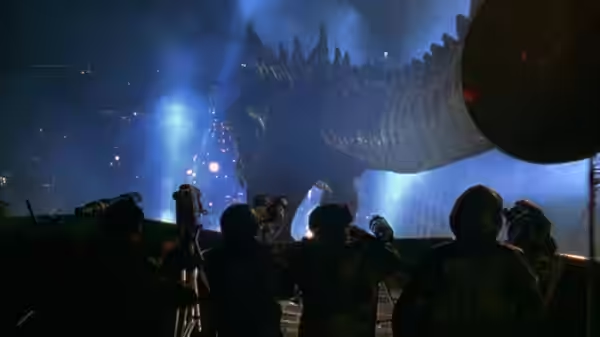
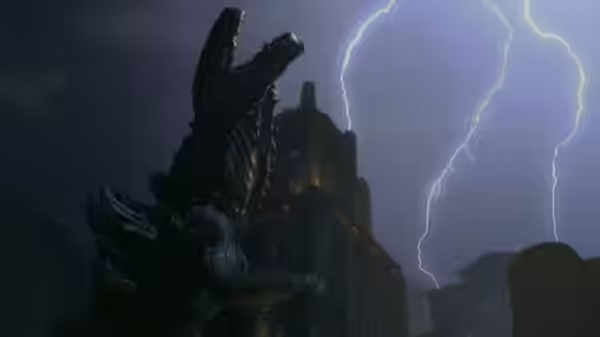
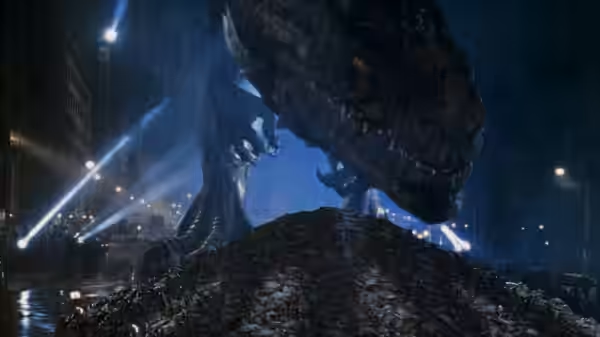
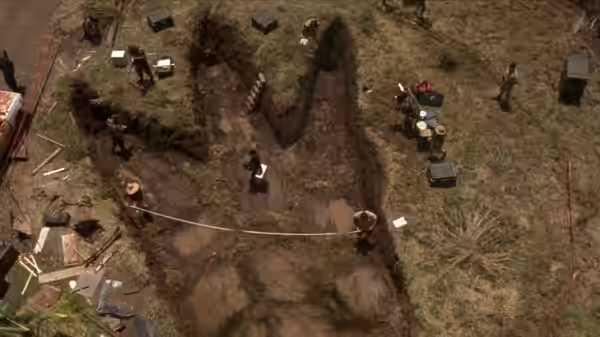
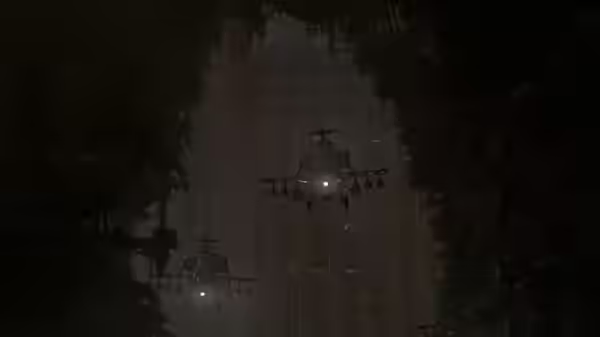
We sat forward for the first landing, and we want to be fair about why. Ueli Steiger shoots the whole picture in rain and at night, and the first sight of a tail sweeping a wet avenue while taxis flip over is done with patience. Oliver Scholl’s Manhattan, all fish markets, scaffolding and stalled traffic, takes the damage as if it weighed something. David Arnold scores it with the brass and drums he brought to Independence Day, and for a while that carries it. Then we waited for the film to top the moment, and it never does. By the third time the army fires into a building the creature has already left, we had stopped being frightened and started counting.
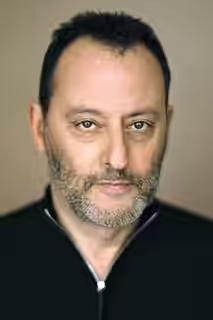
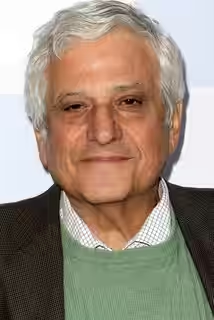
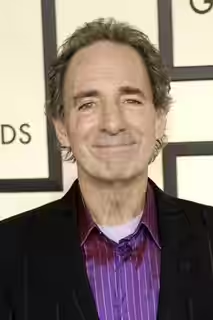
Broderick is the right kind of wrong: mild, bespectacled, pleased to be asked, and nobody else in the film is half as gentle. Jean Reno, as Philippe Roaché, a Frenchman with his own reasons for being there, complains about the coffee, chews his gum and looks at the Americans as if they were an exhibit. He is the one performer who has noticed the film is funny. Maria Pitillo’s Audrey Timmonds, Niko’s old girlfriend turned would-be reporter, is written to betray him for a story and then be forgiven, and Pitillo cannot make either half stick. Hank Azaria shouts. Harry Shearer’s anchorman is smug in the right way. Michael Lerner’s Mayor Ebert and Lorry Goldman’s aide Gene are a joke about two American television critics, and it is run several times in case we missed it.
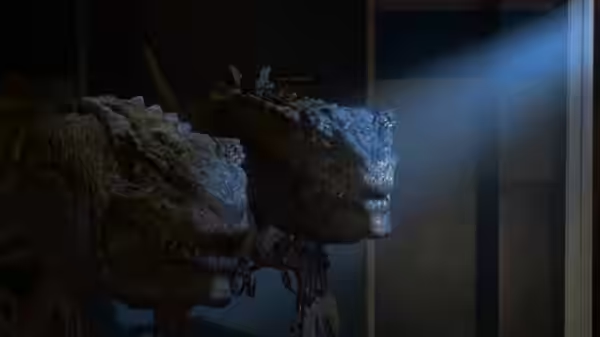
The last hour goes indoors, and what happens there we will not describe, except to say that if it sounds like Jurassic Park it looks like it too, with worse lighting. David Siegel and Peter Amundson cut it fast without ever making it tense, and it is here that the 138-minute runtime makes itself felt. We were bored indoors, and puzzled that a film built around one enormous thing had gone off to do something small.
Emmerich had made Independence Day two years earlier, and that film knew it was silly and let its cast enjoy it. This one is solemn about a lizard. Against Honda it has nothing to say; against Spielberg it has the effects and not the timing; against its own first half hour it is a let-down. Joseph A. Porro dresses Reno’s Frenchmen in black raincoats, and they are the only people on screen who seem to have checked the forecast.
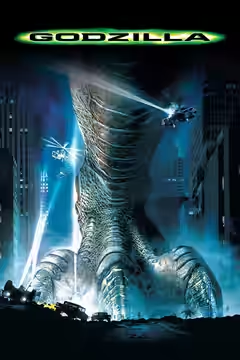
If your house contains a nine-year-old and a wet Saturday, it will pass the afternoon, and the PG is fair. Everyone else should know that the poster says “Size does matter”, and that the film keeps that promise only in the sense that it runs for 138 minutes.