Toho’s answer to the American Godzilla of 1998 gives the monster a new face and a proper night-time entrance, and gives the humans a plot about a rock that will not stay on the seabed. The creature earns his 107 minutes; the people do not.
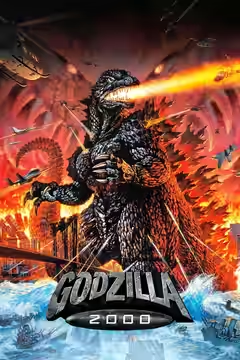
Toho’s answer to the American Godzilla of 1998 was to start again. Godzilla 2000: Millennium throws out every sequel since the 1954 original, gives the monster a new face and puts him back where he belongs, in the rain, at night, walking through a Japanese town built to be broken. Takao Okawara, who directed several of the 1990s entries, knows exactly what the job is. The film he has made does that job well and does almost nothing else.
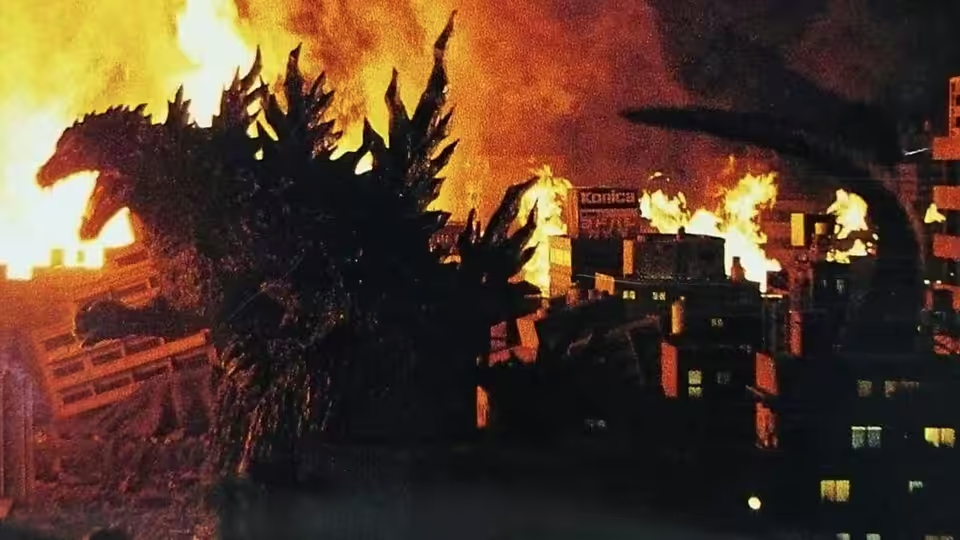
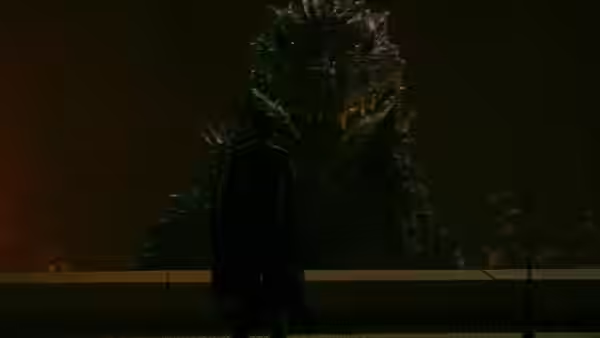
The opening at Nemuro is the best stretch. Yudai Kato lights it almost entirely with what would be there: the sweep of a lighthouse, a van’s headlamps, lightning. A row of dorsal fins slides through black water, the beam catches them, and we felt a jolt of pleasure we had not felt at one of these in years. Then the fins keep coming, and coming, and the lighthouse goes over. Takeshi Shimizu’s miniature streets are the right kind of shabby, wet tarmac and sagging power lines, and when the tail comes through the wall of a road tunnel the rubble looks heavy. We had not expected to feel much, and we were properly pleased.
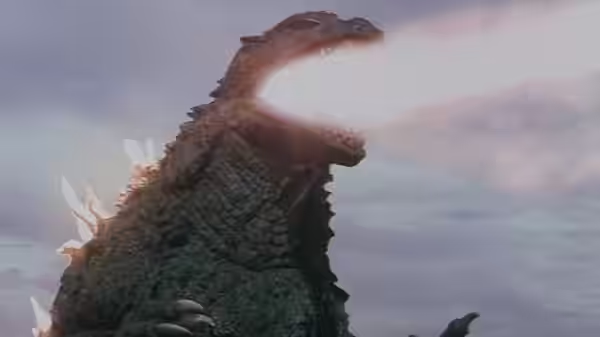
The redesign helps. This Godzilla has a longer jaw, plates down his back that have grown jagged and tinted purple, and a breath that burns orange instead of blue, and in the dark he looks like a new animal rather than a refurbished one. Takayuki Hattori’s score gives him a heavy brass theme and mostly leaves the dialogue scenes alone, which is a kindness. Akira Ifukube’s march from the older films is held back for a long time and lands harder for it.
Then the people start talking. Hiroshi Kashiwabara and Wataru Mimura’s script has Yuji Shinoda (Takehiro Murata) run a shoestring Godzilla Prediction Network from a van, with his daughter Io (Mayu Suzuki) doing the books, and Mitsuo Katagiri (Hiroshi Abe) run the government’s Crisis Control Intelligence from a boardroom. One wants to study the creature’s cells, which heal from anything; the other wants to kill it. That is the whole of the argument, stated in the first twenty minutes and repeated in every scene the two men share. Murata is a pleasant, rumpled presence with nothing to play. Abe stands straight in good suits and glowers, and the film mistakes this for a character. Naomi Nishida’s journalist, Yuki Ichinose, shrieks, trips and drops things, and is meant to be funny.
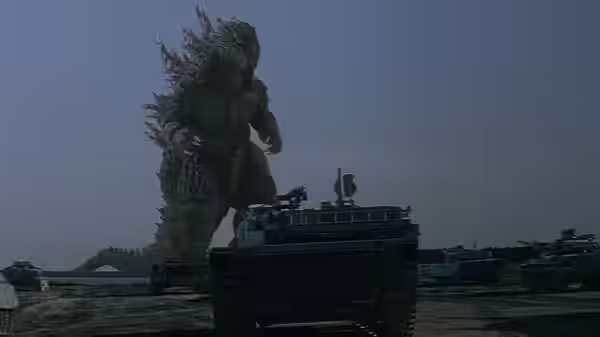
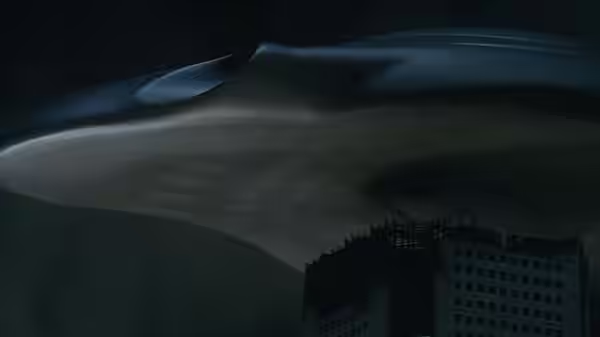
The middle hour is given over to a rock. Katagiri’s people raise a huge meteorite from the Japan Trench, it begins to move once the sun hits it, and a great many men in a great many rooms explain what that might mean. We were bored, and then we were annoyed, because the monster was off screen for stretches long enough to forget the film’s title. When the thing does take to the air over Tokyo in daylight, the seams show: the object sits on the sky like a sticker, and the suit, so good in the wet dark, looks stiff under an ordinary noon. Yoshiyuki Okuhara cuts fast around the worst of it, and cuts the missile attack at the Tokai nuclear plant so that we always know where the helicopters are, which is more than most of these films manage.
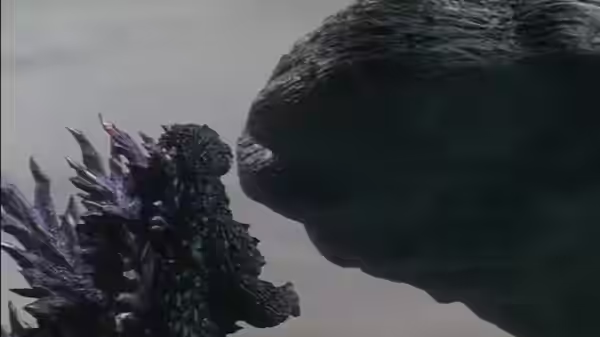
The last half hour delivers what the first half hour promised: a fight in Shinjuku among glass towers, at night again, with buildings coming down in the right order. We will not describe what Godzilla is fighting. It is well staged and the outcome is never in doubt, which is the deal you accept when you sit down.
Against the 1954 film this is middling; the craft is in the creature and the miniatures and nowhere near the script. Against the American film it was made to answer, it wins easily, because it never treats the monster as an embarrassment. A dubbed and shortened version was prepared for American cinemas with jokes added; if you have a choice, take the Japanese one, with subtitles, at 107 minutes. Watch it with the lights off, and forgive it the boardrooms.