Jun Fukuda sends Godzilla against a drill-handed beetle from an undersea kingdom, with a grinning robot to fetch him. Cheaply made, padded with old footage and dull between the fights, it is a poor film with a good tune and one moment nobody forgets.
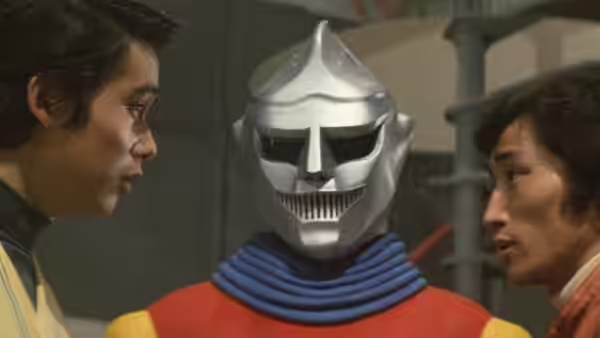
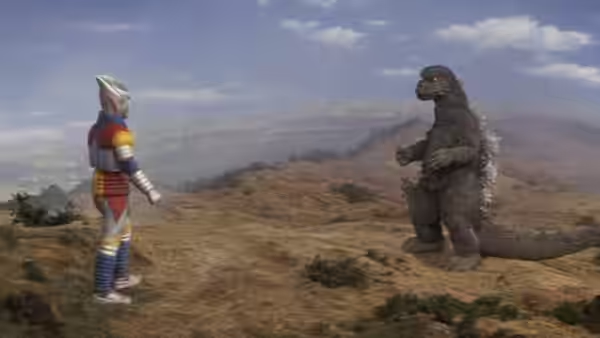
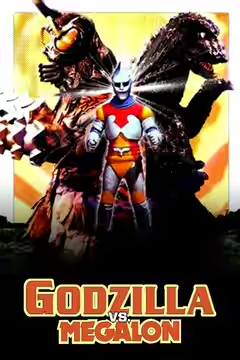
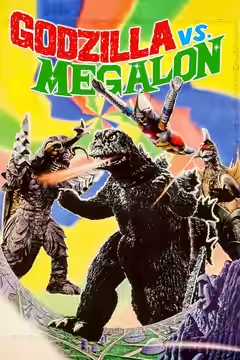
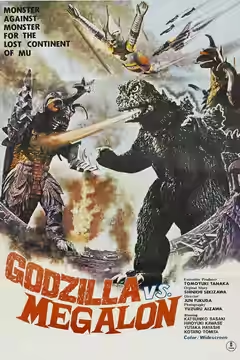
Jun Fukuda directs, from his own screenplay and a story by Shinichi Sekizawa, and what he has made is a Godzilla film for small children, in a hurry. It runs 78 minutes. The undersea kingdom of Seatopia, its cities cracked by nuclear tests on the surface, sends up its god, a giant beetle called Megalon, to knock down Tokyo. To steer it, Seatopian agents seize Jet Jaguar, a man-sized robot with a fixed grin built by the inventor Goro Ibuki (Katsuhiko Sasaki). Godzilla is in the title and on the poster and spends most of the film elsewhere. It is poor, and cheaply made, and we can see exactly who it was for.
The humans take up most of the running time, which is the first mistake. Goro, his friend Hiroshi Jinkawa (Yutaka Hayashi) and his small brother Rokuro (Hiroyuki Kawase) are gassed in Goro’s own laboratory by two Seatopian agents (Kotaro Tomita and Ulf Otsuki), and spend the rest of the picture being kidnapped, escaping, being kidnapped again and shouting the robot’s name at the sky. Kawase, in shorts and a cap, is asked to yell most of his lines and does. The one stretch with any pace is a truck chase along a mountain road with the three of them locked in a container in the back, because for once nobody is standing in a laboratory explaining what a robot is.
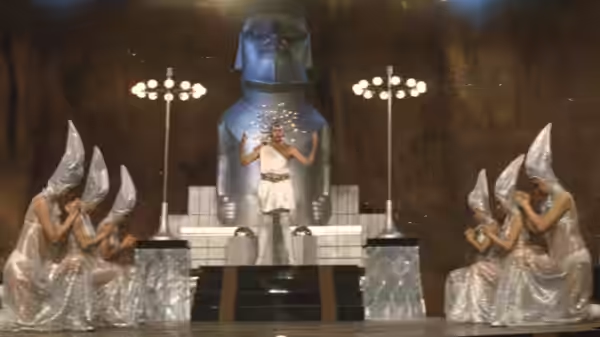
Yuzuru Aizawa shoots everything in flat, bright daylight, so the laboratory looks like a set and the mountain road looks like a mountain road on a Tuesday. Michiko Ikeda’s cut has to carry a good deal of footage lifted from earlier Godzilla films, and the joins show: the monster’s skin changes between shots, buildings fall in different weather from the weather they were standing in, and the tanks sent against Megalon are plainly tanks that were sent against somebody else. Yoshifumi Honda’s Seatopia is one room with a throne, some columns and a stone tablet, lit like a school play about the Romans. It is the whole of a civilisation, and the film asks us to feel for it.
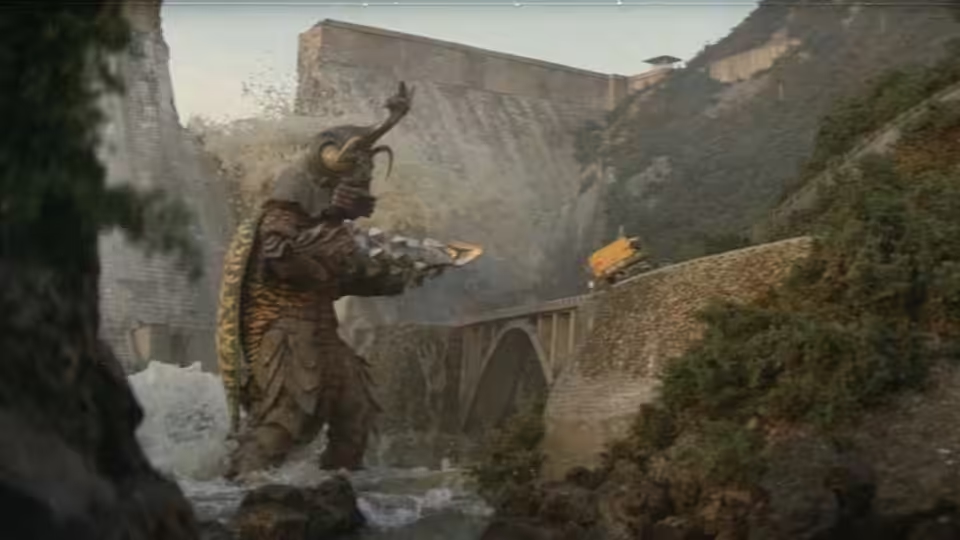
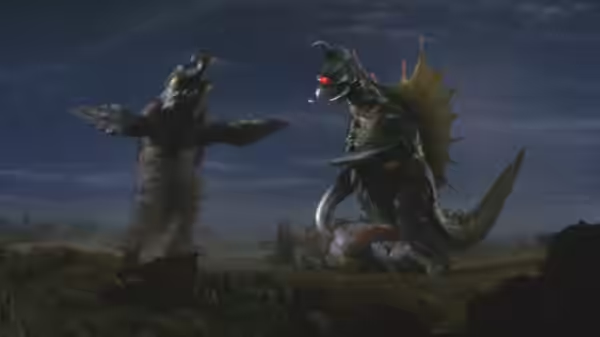
Some of it works, and most of what works is Riichirō Manabe’s score. It is brass and drums and a marching tune for the robot that sounds like the theme to a children’s programme, which is what it is, and we were humming it in the kitchen the next morning. Robert Dunham plays Emperor Antonio of Seatopia in a toga and a beard and gives the order to destroy the surface world with the gravity of a man reading the shipping forecast. Megalon himself, a stag beetle stood upright with drills for hands and a horn that fires lightning, is a good idea for a monster, and the costume by Nobuyuki Yasumaru and Tomoki Kobayashi gives him a heavy, swaying walk that suits a creature who has never seen the sun.
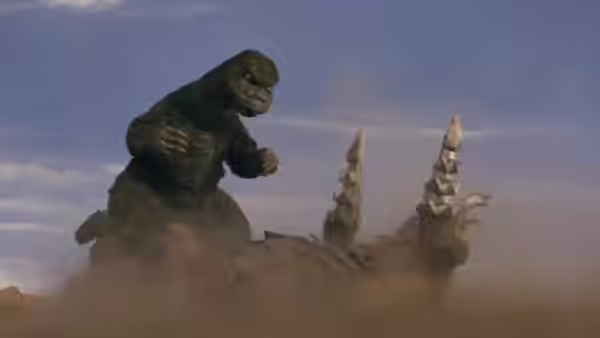
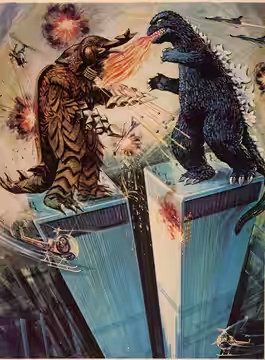
The Godzilla suit, worn by Shinji Takagi, has a soft face and large forward eyes, so he looks less like a monster than like a big friendly dog, and the film treats him as one: he is fetched, he arrives, he sorts things out. The fight in the quarry, when it finally comes, is wrestling with rocks, staged as a tag match. Before it we had been bored for a good twenty minutes, by the shouting and the laboratory and a second kidnap much like the first. Then we laughed, once and very loudly, at something Godzilla does with his tail in the last reel, which we will not describe and which has kept this film in circulation for fifty years. The laugh was with the picture, because Fukuda knows the move is silly and shoots it with a straight face anyway.
Fukuda had made Godzilla vs. Gigan only the year before, and this is that film with less money and a robot. The series began in 1954 as a picture about a city burned by something men had made; by now the something lives on an island and comes when called. That is not a crime, and children do not want to be frightened by a friend. It does mean the monster no longer matters, and once the monster does not matter it is hard to say what the 78 minutes are for.
It is for children under ten, and for adults who were children under ten when they saw it and want to check what they were on about. Everyone else should keep the tune and skip the rest. If you watch it, watch it with people, and let the children do the shouting.